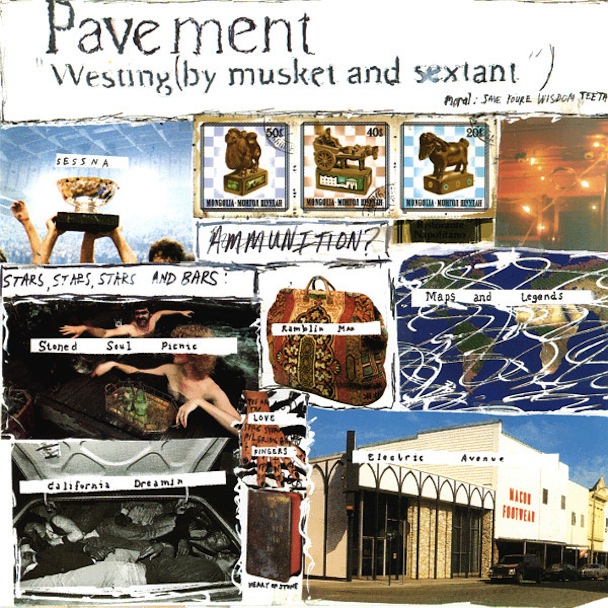
6. Westing (By Musket And Sextant) (1993): Released by Drag City to cash in on the Pavemania that had gripped teens on either side of the Atlantic, Westing collects three EPs, the “Summer Babe” single, and two songs from compilations. Recording quality is poor, but like most lo-fi classics, it ain’t that bad. Anyway, the unpolished approach was one borne more from necessity than philosophy. About Slay Tracks (1933-1969): “You’re Killing Me” places static where the drums would go, and “Box Elder” plays like tract-home Sonic Youth (with a bridge and everything!), while Pavement tries to resuscitate “She Believes” with SY-style full-band clatter. Demolition Plot J-7 started life in the hands of Scott Kannberg and one-time-only drummer Jason Turner, which may explain the overbearing keyboard line in “Forklift” and the astoundingly trad rock and roll of “Spizzle Trunk.” The frantic, effects-laden “Internal K-Dart” blooms into something majestic; it’s the best thing here. Perfect Sound Forever focuses on the guitar grunge, and while Malkmus wasn’t yet coming correct with the lyrical science, tracks like “Debris Slide” show a band well on its melodic way. As for the rest … while Pavement has quite the reputation for B-sides and extras, stacked between the promise and its fulfillment, these leftovers do little more than sit there.
In a sense, Pavement was the ideal mixtape band: Their tracks rarely broke the five-minute barrier, and nearly every one could yield gnomic postulates for the title (or at least the subtitle). The first few records, too, looked like musical care packages, blanketed with indecipherable fragments, collaged scraps, and detourned photos. Of course, it took a lot of sweat to produce something so seemingly tossed-off.
Hardcore's initial capital investment reaped college rock dividends, and after kicking around in a few Stockton, CA punk bands, Stephen Malkmus attended the University of Virginia, where he shared campus-DJ duties with David Berman and Yo La Tengo's James McNew. Upon graduation, Malkmus, Berman, and future Pavement percussionist Bob Nastanovich got jobs as security guards at the Whitney. True to the insular nature of the early American underground, Malkmus and Scott Kannberg (AKA Spiral Stairs) started Pavement in Stockton back in '89; at UVA, Malkmus started the group Ectoslavia with Berman and Nastanovich. Bored and buzzed in NYC, the three began fucking around with recording songs, eventually spawning both the Silver Jews and (with the re-introduction of Kannberg and drummer Gary Young and the addition of bassist Mark Ibold) Pavement.
Pavement upended the established dynamics of rigorous touring behind increasingly ambitious works. Their early shows were notoriously sloppy (think Guided by Voices, but not nearly as performative), and after three EPs in three years whetted the underground's appetite, Slanted And Enchanted dropped, an instant cult classic that packed a moving truck's worth of ideas and approaches into a stunningly assured debut.
One way to tell how unique Pavement sounded, and how delicate their compositional balance was (besides, like, listening), is to note their astounding ratio of admirers to imitators. The band bore the "slack" label gamely, but it always seemed more of a marketing concept. Pavement claimed new territory on every album, invigorating their sonic vocabulary with dips into country, classic rock, and post-punk. And while Malkmus's famed lyrics were often the result of a casual process (sometimes happening after the track was recorded), it was still a process. Five albums, nine EPs and a slew of B-sides in a decade isn't shabby. The Pavement sound may or may not be perfect, and it may or may not last forever, but it dovetailed with indie rock's growing pains splendidly.
What follows is some kind of ordered reckoning that includes all Pavement's studio albums and one EP collection. Extracurricular pursuits are not included; Free Kitten fans, find each other in the comments.
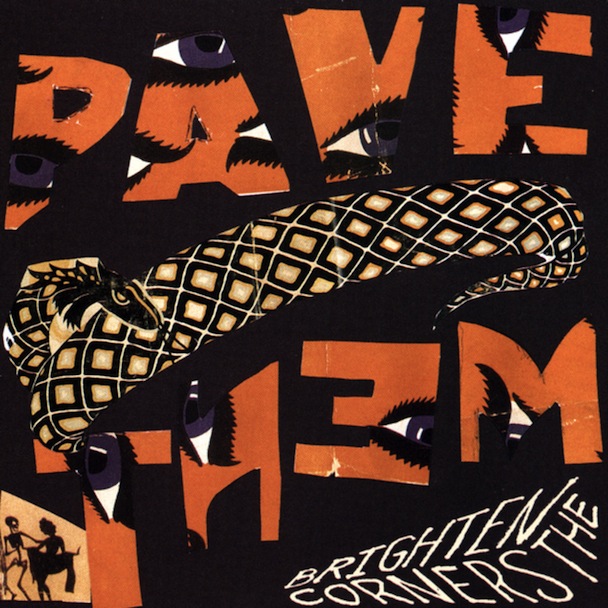
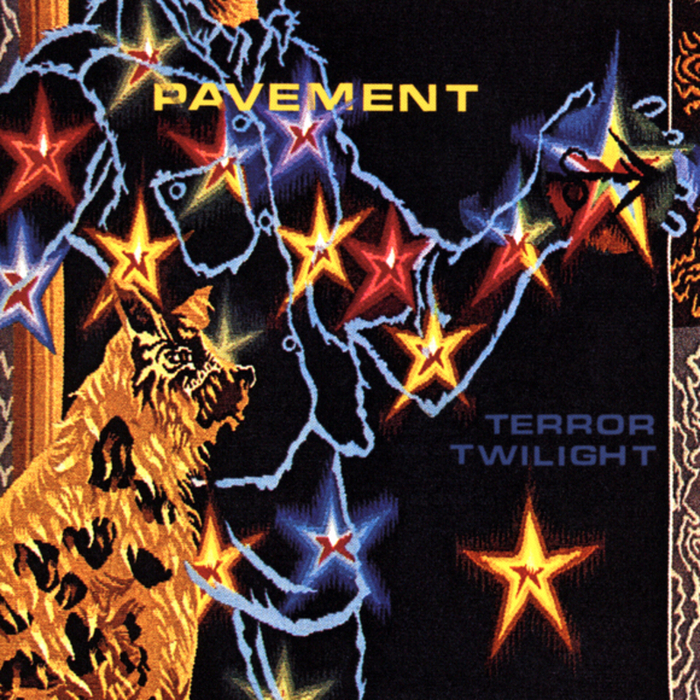
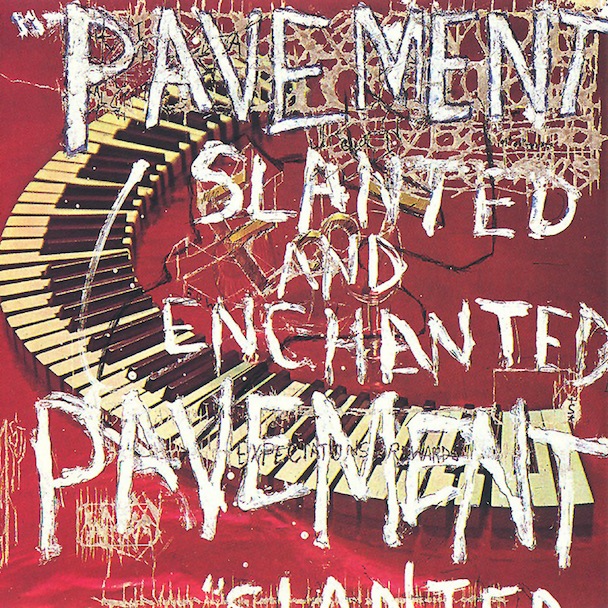
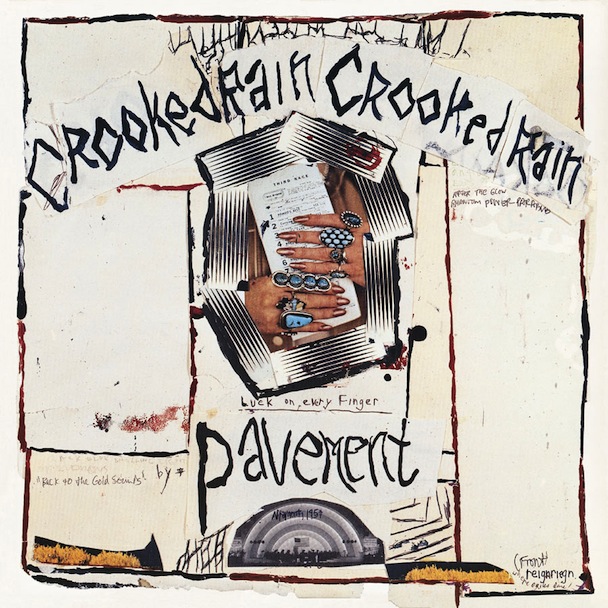
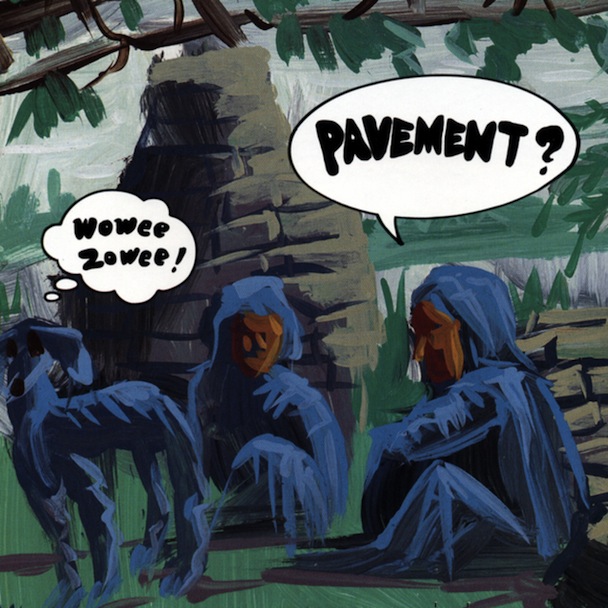
5. Brighten The Corners (1997): After the wigged-out alt-grandiosity of Wowee Zowee, a comedown could be, if not guaranteed, then expected. The bass-led "Stereo" brings back the spirit of '94 (and perhaps '91) with a quiet-loud-quiet shaggy-dog story that explodes with the best chorus this notoriously refrain-challenged band ever wrote. From there, though, it's a largely chill affair. Malkmus's lyrical approach starts to calcify, with several rhymes ("men in dashikis and their leftist weeklies," "there's no women in Alaska / there's no coast of Nebraska") approaching self-parody. Kannberg and Malkmus turned 30 during Brighten The Corners' year of recording, and it's hard not to hear the settled sounds as a reaction to that. The former contributed two songs, each referencing a brand: the classic-rock cautionary tale "Passat Dream" and the Big Star tribute "Date With IKEA." There are still triumphs, for sure: the Televisionary twin-guitar soloing on the graceful "Type Slowly," for instance, or the gorgeous slo-mo boogie of closer "Fin," featuring one hell of a stemwinding solo. Both tracks clock in at 5+ minutes; that nearly everything else on the album sounds just as long is a bit of a problem.4. Terror Twilight (1999): From Brightness to Twilight in two years. While it'd be a mistake to call this a valedictory record -- the breakup occurred only after the album-supporting tour -- geniality and introspection rule the day. Intro "Spit On A Stranger" encapsulates the approach: teasing with a two-second, driving snare intro, then substituting a chiming, staid tune about Feelings that swipes cadence from "Mr. Bojangles." It's not all sunshine and musings, of course: The slow, dread "Hexx" is perhaps their most unsettling tune, the line about architecture students notwithstanding. "Cream Of Gold" is a straight-up paranoid psych-rock gem. Malkmus's guitar prowess is on its fullest display yet, whether via classical solos (the two previously mentioned songs) or acoustic fingerwork ("Speak, See, Remember"). Producer Nigel Godrich, best known for his work with Radiohead and Beck, presides over some of the band's strongest pop material, even enlisting Jonny Greenwood to play harmonica on two tracks. By now a thoroughly seasoned outfit, Pavement tosses off a little of everything, from banjo-flecked country-rock ("Folk Jam") to the fried boogie of "Platform Blues" (which had a working title of "Ground Beef Heart" as a tribute to both the Groundhogs and the Captain). While a couple tracks are merely pleasant, the dialed-back expressionism serves the material wonderfully, and the gentle wah and generous groupsing of "Carrot Rope" yields a gracious exit.3. Slanted And Enchanted (1992): Unwinding in just 39 minutes, with some of the least complicated cuts in their catalog, Slanted puts them closest to indie's punk origins. Still, it ain't that close: Any yelling on this record is either sardonic (cf. Kannberg's "Two States," possibly the greatest anti-anthem of the era) or the wail of an undergrad trying to win an argument. The band hit big out of the gate: "Summer Babe - Winter Version" is as perfect an album opener as any, and the winkingly churchy "Here" was, apparently, the go-to ballad for the mixmaking set. But the most interesting moments relate to tone and timbre. "Fame Throwa" opens with a remarkably synth-like guitar figure; the electronic affectation continues on the baggy "Jackals, False Grails: The Lonesome Era." "I've been crowned the King of Id," Malkmus sings on "In The Mouth A Desert." He was almost there.2. Crooked Rain, Crooked Rain (1994): Crooked Rain, Crooked Rain features a complete turnover in Pavement's rhythm section, as Mark Ibold relieved Kannberg of his bass duties while Steve West and Bob Nastanovich combined on percussion to replace Gary Young. It was their best seller by a sight five years ago, and for all I know still is. Three of the best-known cuts -- "Range Life," "Cut Your Hair," and "Gold Soundz" -- all touch at least tangentially on musicmaking itself (and were each made into rather terrible music videos). While their blithe jibes at the nature of "making it" (as well as potshots at contemporaries Smashing Pumpkins and Stone Temple Pilots) earned them a reputation as indie-rock gatekeepers, Crooked Rain displayed a band committing to honing its own chops. From the sly Laurel Canyon twang of "Range Life" to the Brubeck-poking instrumental "5-4=Unity" to the reverb'd epic "Fillmore Jive," this is the sophomore slumpbuster to beat all. Recorded in New York City, it's a suburban California record through and through: cynical, but too mellow to ever really rage. Jangle and hooks galore.1. Wowee Zowee (1995): Unlike their previous two records, Wowee Zowee opens with something less of a triumph: "We Dance" reads like an indie slow-jam piss-take on David Bowie, albeit one that begins with castration fear and features an inexplicable patrician/British accent. Hopefully, the listener's expectations have been subverted and prepared for the rangiest triumph in Pavement's career. Four songs are under two minutes; five are over four. In between are Malkmus's best ballad ("Father To A Sister Of A Thought") and a shoutout to the Jacob K. Javits Convention Center ("AT+T"). This is the Difficult Third Record -- cello and all -- and Malkmus pushes the expressive capabilities of his voice in peculiar directions: numbing flatness here, a cod-black metal howl there, and an approximation of Zeppelin's "Dancing Days" on "Rattled By The Rush." And while previous records fucked with structure, Wowee Zowee is like one giant thrown loop. "Father To A Sister" anticipates the high-lonesome jangle of R.E.M.'s New Adventures In Hi-Fi, at least until the outro gets chased by a bluesy riff. "Half A Canyon" dangles and inverts a greasy riff for the first half, then cedes to shit-eating motorik. And as if to out-jam Pearl Jam, Pavement dips back into punk for a couple numbers. Whatever you prize about Pavement, it's here in spades.