
September 10, 1988
- STAYED AT #1:2 Weeks
In The Alternative Number Ones, I'm reviewing every single #1 single in the history of the Billboard Modern Rock Tracks/Alternative Songs, starting with the moment that the chart launched in 1988. This column is a companion piece to The Number Ones, and it's for subscribers only. Thank you to everyone who's helping to keep Stereogum afloat.
In September 1988, Billboard tried something new. The magazine already had its big charts for singles and albums, and it had genre-specific lists for R&B, country, adult contemporary, dance, Latin, and "hits of the world," as well as plain ol' regular "rock." But something was happening on the margins, and a few radio stations were doing their best to capture and capitalize on that thing. The new Billboard chart, announced to very little fanfare, would attempt to chronicle that thing.
There was no hard definition for this new chart's genre, but the Billboard headline announcing the new chart used the term "alternative rock." For its first 21 years, the chart itself was called Modern Rock Tracks -- "modern rock" being a descriptor that's really just as vague and frustrating as "alternative." The new chart covered radio airplay at the 29 stations that reported. (Eleven of them were college radio stations; the rest were commercial.) What counted as modern rock? Well, the people who programmed music at those stations got to decide, and their definition changed radically over the decades.
The new chart came along at a strange inflection point in the history of whatever we're calling alternative rock. The stations that reported in to Billboard were playing artists who were commercial but not too commercial. They had some relationship to the fringes. The UK's punk rock earthquake was more than a decade in the past, but its aftershocks were still reverberating. At the same time, American college-rock overlords like R.E.M. were thriving. (R.E.M. themselves had just signed a major-label deal, and they had big things ahead of them.) The Second British Invasion -- the whole wave of artsy, floofy-haired synthpop acts that took over MTV in the network's early days -- was dying out, but other things were coming along to replace it.
Billboard didn't really have an agenda when it first started publishing the Modern Rock Tracks chart. In its typically dry announcement, Billboard said that the chart was a response to "industry demand for consistent information on alternative airplay," and it was "specifically geared to be of use to commercial programmers." There's not much romance in that language. But this was also a trade publication reading some tea leaves: "Earlier this year, Billboard reported that as mainstream rock outlets tightened their playlists, more labels were turning to alternative stations for airplay." One system was becoming moribund, so another would have to rise in its place. (That week, the #1 song on Billboard's Album Rock Tracks chart was Little Feat's "Hate To Lose Your Lovin'.")
Billboard also noticed that some artists were crossing over from the alternative stations and finding mass success. The magazine's announcement cited "the #1 album success of Tracy Chapman, the multiformat reach of Ziggy Marley & The Melody Makers, and the continuing sales and/or concert success of such acts as 10,000 Maniacs, Depeche Mode, and the Cure." The first Modern Rock Tracks chart included rising mainstream hits like Edie Brickell & The New Bohemians' "What I Am" and the Escape Club's "Wild, Wild West," the latter of which would top the Hot 100 within a couple of months.
In some ways, it's more telling to consider the stuff that didn't appear on the Modern Rock chart in its early days. The more extreme edges of American underground rock -- hardcore, art-punk, noise-rock, the whole SST thing, all the swirling currents that would soon lead Nirvana to the promised land -- were almost entirely absent. Industrial music, which thrived in dank and cavelike clubs, was nowhere to be found. There was absolutely no rap, though some of the groups on the chart did play around with rap aesthetics. Prince, probably the most modern rock star of his era, was a vast omission.
Alt-rock radio didn't run on critical acclaim. The two most press-beloved albums of 1988, per the Village Voice’s Pazz & Jop critics' poll, were Public Enemy's It Takes A Nation Of Millions To Hold Us Back and Sonic Youth's Daydream Nation. Neither of them were a factor on the Modern Rock charts. Instead, Modern Rock Tracks offered up a strange mix of other stuff. The chart had folky singer-songwriters like Tracy Chapman and Joan Armatrading. It had later-period hits from punk legends like Patti Smith and Debbie Harry. It had fluffy pop-reggae from UB40 and Ziggy Marley. And it had so, so many British bands. (A few years ago, Larry Fitzmaurice wrote a great rundown of all the songs on that first chart.)
In the late '80s, alt-rock radio loved just about anyone with a British accent. The Smiths had broken up by the time the chart launched, but their ghost hung heavy over it. Broody UK acts like the Cure and Depeche Mode were finding stardom in America, and they found a consistent home at alternative radio. In a fascinating 2013 piece on the history of the alternative chart, Chris Molanphy points out that American alternative stations' British fixation really dominated the first five years of the chart, even into the early grunge era. Aging first-wave punks tended to do very well on the chart, and many of them were still making fascinating, challenging music.
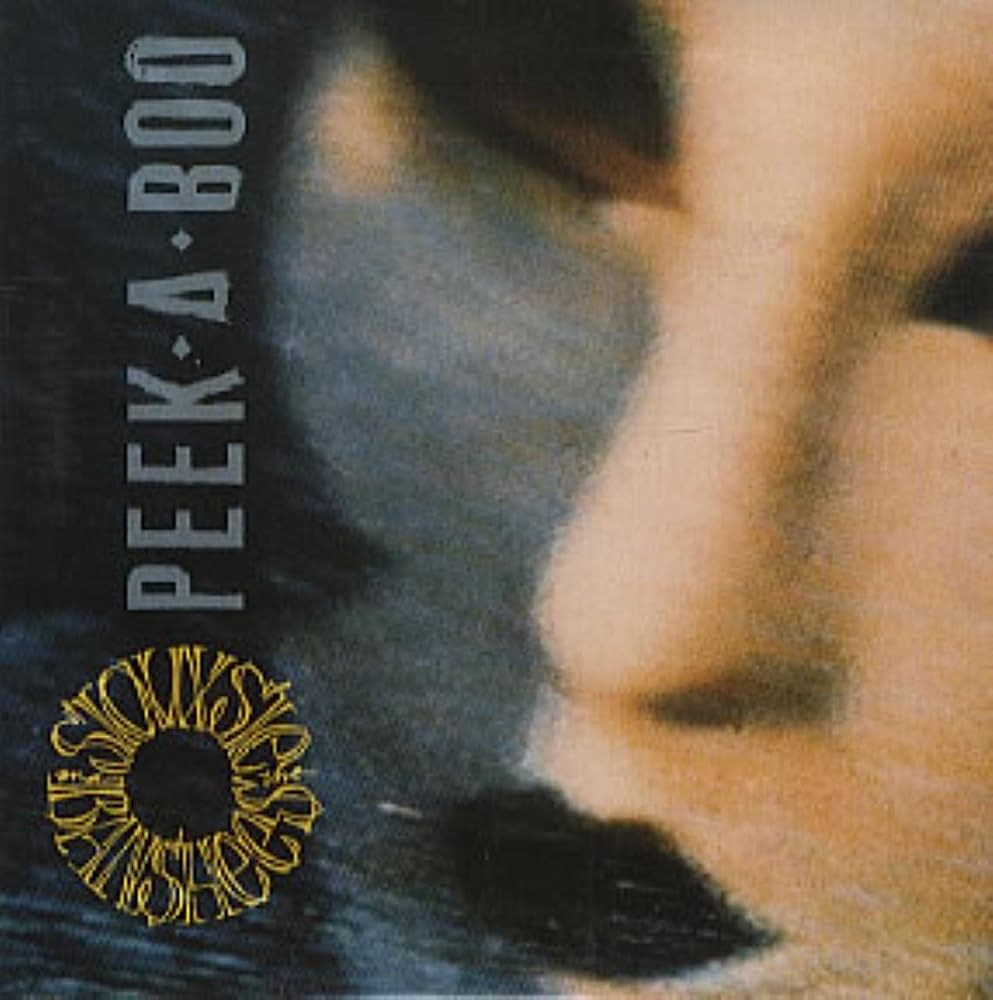
The first #1 hit on the new chart was a best-case scenario for this vague and frustrating definition of alternative rock -- a massively influential punk veteran throwing the rulebook out, making a skronky dancefloor freakout that looked backwards and forwards at the same time, creating something that nobody else could've possibly made. Today, 35 years later, Siouxsie And The Banshees' "Peek-A-Boo" still feels a little like a transmission from the future.
In their effort to sell "Peek-A-Boo" to American audiences, Siouxsie And The Banshees showed up on Club MTV, the network's attempt to forge its own equivalent to American Bandstand or Soul Train. In that footage, the Banshees gamely mime their way through the song, with Siouxsie Sioux doing her version of a Liza Minnelli top-hat showgirl routine, and then Downtown Julie Brown corners Siouxsie for a quick interview.
Julie says, "Now, you've never really gone commercial," and Siouxsie seems amused and horrified at the same time. "We tried to be commercial, she says. "We've always wanted to be commercial." Julie ends the conversation by saying, "Well, this guy is definitely commercial." A DJ cues up George Michael's "Monkey," and the audience boogies down.
https://youtube.com/watch?v=rqhjb4Kzaw4&ab_channel=ClubMTVFanPage
That's the Siouxsie story in miniature. Siouxsie Sioux wanted to be a star, and on some level, she succeeded. But in trying to make a commercial single, Siouxsie came up with something as bugged-out as "Peek-A-Boo." When that's your idea of commercial, you can't really compete with George Michael.
Susan Ballion grew up in the farflung suburbs of London. Her Belgian-born father was a bacteriologist who, per Siouxsie, "milked snakes" for poison. But her father lost his job, developed a serious alcohol problem, and died when she was 14. Siouxsie was sexually assaulted as a kid, and her parents and the authorities did nothing about it. Siouxsie quit school and fell in love with glam rock. She was a teeanger when she met Steven Bailey, soon to be known as Steve Severin, at a Roxy Music gig.
Early in 1976, Siouxsie and Severin went to their first Sex Pistols show together. From there, the two of them followed the Pistols around, going to every show and entering the band's extended orbit. Later that year, the Pistols were on the BBC, being interviewed by drunken-lout host Bill Grundy. That interview caused a moral panic in England because Steve Jones called Grundy a "dirty fucker" and a "fucking rotter" when Grundy tried to hit on Siouxsie. Today, that interview would still cause a moral panic because one of the Pistols' buddies was wearing a swastika armband.
So. Yeah. In my memory, Siouxsie was the one with the swastika, and I'm glad I was wrong about that. But Siouxsie did sometimes wear a swastika, as did many of the punks in that particular scene. She also intended to sing the lyric "too many Jews for my liking" on the single "Love In A Void" until her label objected. (She changed it to "too many bigots," which is a bit rich.) We're going to run into this kind of bullshit pretty often in this column, especially since people from that scene stuck around on the alternative charts for years.
I don't think Siouxsie Sioux is or was a Nazi. The British punks played around with Nazi signifiers for pure shock value. It was a brainless anti-authority thing; many of their parents and elders had actually fought Nazis. But that shit was truly gross and not worth excusing, and it brought plenty of real neo-Nazis into the fold. Later micro-generations of punks would fight against that encroaching fascism. Siouxsie and her friends were not especially helpful there. I love Siouxsie And The Banshees, just as I love a lot of first-wave British punk bands, but I don't want to hand-wave or excuse any of that bullshit. Those swastikas look dumb as fuck now, and I bet they looked dumb as fuck then, too.
In September 1976, Siouxsie and Steve Severin played their first show as Siouxsie And The Banshees. They filled in at the last minute on the bill of the 100 Club Punk Special, a mini-festival that Pistols manager Malcolm McLaren organized. The Banshees opened for the Pistols and the Clash. It was Siouxsie, Severin, future Adam And The Ants member Marco Pirroni, and Sid Vicious on drums. Sid wasn't a Pistol yet, but he was already using that stage name. Reportedly, the Banshees' set was a noisy, slapdash, improvised riff on the Lord's Prayer. (The Banshees later included a Patti Smith-esque 14-minute rendition of the Lord's Prayer on their 1979 album Join Hands.)
Siouxsie and Severin quickly put together a slightly more stable version of the Banshees, and they developed an icy, glamorous version of punk. Siouxsie was a born star -- a severe fashion plate with a guttural, instinctive singing voice. She was into romanticism and mysticism, and the Banshees immediately stood out as something more psychedelic than their peers. That style would help bring entire genres -- post-punk, goth, death-rock -- into being. The Banshees didn't take long to sign with Polydor, and their 1978 debut single "Hong Kong Garden" was a full-on top-10 pop hit in the UK. Siouxsie later said that the song was her tribute to her local Chinese restaurant and her fuck-you to the skinheads who would sometimes victimize the staff.
Siouxsie And The Banshees worked quickly, cranking out five albums in their first five years. Their lineup kept shifting. Former Slits drummer Peter "Budgie" Clark joined the band in 1979. He and Siouxsie became a couple, and they married in 1991. (They've since broken up.) Budgie joined Severin as the only permanent Banshees; the rest of the lineup was a revolving door. The band's sound kept shifting, too. It gradually became darker and more cinematic. As punk gave way to more austere and evocative sounds, the Banshees remained relevant. The Cure's Robert Smith, a huge fan, had a couple of brief stints as the Banshees' guitarist. He happened to play on the Banshees' biggest-ever UK hit: their gorgeous and starry-eyed cover of the Beatles' "Dear Prudence," which went all the way to #3. I love that fucking song, and I think the Banshees' version is better than the original. (The Cure will eventually appear in this column.)
In the UK, Siouxsie And The Banshees became a kind of bohemian cultural institution. (Consider: Shoegaze greats Slowdive are named after a particularly sick 1982 Banshees single.) In the US, they were completely off the radar for years. The Banshees were already three albums deep into their career when they got around to playing their first New York show. They didn't even make the Billboard album charts until 1984's Hyæna, their fifth LP, peaked way down at #157. Maybe they just didn't need America. The footage of Siouxsie And The Banshees playing British shows around this time is -- forgive me -- spellbinding.
Siouxsie And The Banshees went through tons of different sounds, aesthetics, and band members by the time they made their 1988 album Peepshow. For "Peek-A-Boo," the Banshees sampled themselves. On Through The Looking Glass, an album of covers that they released in 1987, the Banshees included their take on "Gun," a song that former Velvet Underground member John Cale released in 1974. That track found the Banshees getting uncommonly funky, using feverish horn-stabs and a thumping beat that could've been mistaken for dance music. Playing around in the studio, longtime producer Mike Hedges tried playing the "Gun" beat backwards. Everyone liked it, and they kept it in their back pocket.
Eventually, the Banshees went to work with that backwards beat. Hedges slowed it down, and then Budgie played his own drums over it, so it had drums going both backwards and forwards. Multi-instrumentalist Martin McCarrick added accordion. Singing over that strange racket, Siouxsie Sioux whooped out lines about a sex worker in a peepshow: "She has many guises/ She'll do what you want her to/ Playing dead and sweet submission/ Cracks the whip, deadpan, on cue."
Souxsie also sneers at the woman's clients -- "Reeking like a pigsty, peeling back and gagging free, flaccid ego in your hand" -- and riffs on a couple of lines from "Jeepers Creepers," a jazz standard that Louis Armstrong first sang in the 1938 Hollywood musical Going Places. As a result, Siouxsie And The Banshees had to give songwriting credits to "Jeepers Creepers" writers Harry Warren and Johnny Mercer, even though both of them were no longer alive. Copyright law, after all, does not distinguish the living from the dead, which means "Peek-A-Boo" officially shares songwriters with "That's Amore" and "Moon River."
https://youtube.com/watch?v=dQXyiH5ddnQ&ab_channel=hoffmannjazzHoffmann
"Peek-A-Boo" is just a wild song. It has none of the swirling romanticism of plenty of Siouxsie's other singles. Instead, it's this feverish bricolage -- samples, backwards drums, dinging bells, honking accordions. Siouxsie's vocals are all hacked up, and they bounce around speaker channels, so it sounds like she's coming from every direction. The drums are huge and almost punishing. It's a meditation on the degradation and power of sex work, and it sounds alternately disgusted and excited. It's also fun; the freaked-out intensity is just part of the party.
Nobody in the world sounds like Souxsie Sioux. You can detect traces of past greats -- Patti Smith, David Bowie, probably some musical-theater types that I don't know well enough to cite -- in her delivery. But Siouxsie herself is a performer with absolute passion and confidence, and she can bring a wild playfulness to a song like "Peek-A-Boo" without losing its serious stakes. The track's dense, echoing web of sounds evokes music-hall singalongs and the shouty, 808-heavy rap that was in vogue at the time. Those elements should not work together, but they do.
In the cut-up aesthetic of "Peek-A-Boo," I also hear Siouxsie And The Banshees offering their take on acid house, the sound that was sweeping across the UK at the time. Acid house was descended directly from underground American dance music, but America didn't know what to do with that stuff. For all the Anglophilia on that first Modern Rock chart, there isn't much beyond "Peek-A-Boo" that reflects the music that was causing an actual cultural revolution in England at that moment. Plenty of the bands on that first chart were messing around with sampling, but the only track that sounded anything like acid house was "What's On Your Mind (Pure Energy)," a single from the Minneapolis synthpop group Information Society. ("What's On Your Mind" peaked on the Modern Rock chart at #10, and it also topped the dance chart and eventually reached #3 on the Hot 100. It's an 8.)
I can actually tell you exactly where I was on the day that Billboard ran its first Modern Rock chart. I was standing in a field in England, watching fighter planes fly loop-de-loops. It was my ninth birthday. My family had just moved to London for the year, and I wanted to watch planes go vroom. This was the end of the Second Summer Of Love, the fabled moment when rave culture swept the UK. I didn't know anything about that, but I loved the acid house I heard over there; it was some of the first music that really captured my imagination. I started watching Top Of The Pops religiously, and I probably just missed Siouxsie And The Banshees' theatrical, absurdist "Peek-A-Boo" lip-sync on that show by a couple of weeks. If I'd seen it, I definitely would've remembered it.
It's crazy to think that "Peek-A-Boo" ever registered as a pop song in any capacity. In the UK, it was a top-20 hit. In America, it was Siouxsie's breakthrough. A few Siouxsie singles had made the made slight impacts on the dance chart, and 1985's great "Cities In Dust" had reached that chart's top 20. But "Peek-A-Boo" was Siouxsie's first Hot 100 hit, though it only reached #53. The Modern Rock chart was a place where Siouxsie could reign supreme. As far as I'm concerned, that alone justifies the chart's existence. Siouxsie And The Banshees would land more hits on that chart, too. Their elegant, sweeping "Peek-A-Boo" follow-up "The Killing Jar" peaked at #2. (It's a 9.) We'll see Siouxsie in this column again.
I have a lot of frustrations with alternative-rock radio. To my mind, the institution has always been a little blinkered and retrograde about what counts as modern rock and what doesn't. Often, the chart has left out Black artists, or at least Black artists who played to Black audiences. It's fueled some some vast, earthshaking musical movements while ignoring a lot of others. It's always been defined as much by what it's not as by what it is. Eventually, the chart became the domain of post-grunge butt-rock grunters, and I'm not really looking forward to writing about those songs. But alternative rock radio was also super-important to my development as a listener. It's the first place where I heard a lot of stuff that resonates with me deeply.
For me, Siouxsie And The Banshees were basically a legacy act; I probably heard "Peek-A-Boo" for the first time on a greatest-hits album that I bought used in the late '90s. (Twice Upon A Time was just bangers on bangers. That was a good purchase.) I didn't start listening to alternative rock radio until the early '90s, but when I did, a lot of the songs from the early years of the Modern Rock chart were still in light rotation. That means I have a lot of nostalgic affection for those songs, and you'll probably see me hand out a lot of high scores in this column. But I don't need to rely on nostalgia to tell you that "Peek-A-Boo" is a great fucking song, or that Siouxsie And The Banshees were a great fucking band.
GRADE: 9/10
BONUS BEATS: Here's Beavis and Butt-Head watching the "Peek-A-Boo" video and deciding that "it's music for people who, ummm, don't have any friends":
THE 10S: The Primitives' shimmer-sparkle breakup-bomb "Crash" peaked at #3 behind "Peek-A-Boo." Shut up, shut your mouth, it's a 10.