
December 15, 1990
- STAYED AT #1:5 Weeks
In The Alternative Number Ones, I'm reviewing every #1 single in the history of the Billboard Modern Rock Tracks/Alternative Songs, starting with the moment that the chart launched in 1988. This column is a companion piece to The Number Ones, and it's for members only. Thank you to everyone who's helping to keep Stereogum afloat.
Lollapalooza wasn't the only ambitious, genre-agnostic alternative music festival that toured the US in 1991; it was just the only one that succeeded. In fall 1990, the Cult's Ian Astbury brought his Gathering Of The Tribes fest, an important Lollapalooza precursor, to a couple of California venues. In 1990, someone tried to turn Gathering Of The Tribes into a nationwide touring festival, with X, Steve Earle, EPMD, the Hoodoo Gurus, King's X, and future Lollapalooza bands Fishbone and Primus. That tour was a total failure, and many of its dates were cancelled for lack of ticket sales.
Since the Cult never played a Gathering Of The Tribes festival, that enterprise didn't have a charismatic, shamanic figure like Jane's Addiction leader Perry Farrell to serve as a rallying point. Farrell, one of Lollapalooza's co-founders, played a crucial role as a kind of envoy for that festival -- someone who could personally speak the vision that he wanted to bring to life. The other big 1991 festival had another guy like that, but he didn't help much. That festival was the Tune In, Turn On, Burn Out tour -- a catchier name might've helped -- and the figure in question was Sisters Of Mercy leader Andrew Eldritch.
The Tune In, Turn On, Burn Out tour was basically conceived as a way for the Sisters Of Mercy to hit the road with Public Enemy, another theatrical group who favorited booming drum machines and strident end-times imagery. The tour also included Gang Of Four, a group that came out of the same Leeds post-punk scene as the Sisters Of Mercy, as well as prog-metal band Warrior Soul and Young Black Teenagers, a PE-affiliated white rap crew with a disastrously misconceived name. The tour had one big problem: People were less likely to go see the Sisters Of Mercy and Public Enemy together than they were to see those two groups on their own. The tour sold fewer tickets than each group's previous headlining tour, and it was cancelled when it was about halfway through.
Andrew Eldritch blamed his record label. He blamed his record label for a lot of things, but he particularly thought that EastWest Records dropped the ball in promoting his tour. After the tour's end, the Sisters Of Mercy headlined the UK's Reading Festival. Backstage, an MTV reporter in a Lollapalooza shirt caught up with Eldritch and asked him what went wrong. Eldritch responded, "America still has a very big problem with white crowds and Black crowds in the same place at the same time, in addition to which our record company is thoroughly useless and doesn't like Black bands. Bit of a problem." Eldritch also said that the Sisters Of Mercy were about to get to work on a new album. It's been 33 years, and we're still waiting on that one.
At some point, Andrew Eldritch decided that he was never going to record one more song for EastWest Records or for the Warner Music Group, its parent company. Since Eldritch was the only permanent member of the Sisters Of Mercy, this meant no more Sisters Of Mercy music. To this day, the Sisters Of Mercy continue to tour and to play new songs onstage. But they haven't released an album since 1990, and they'll probably never make another one. Eldritch's experience with the record industry was poisonous enough that he simply opted out. If the Sisters Of Mercy can still make money on the road, which they can, then why bother with the rigamarole of releasing new records and dealing with the people who Eldritch despises?
Andrew Eldritch and Perry Farrell are very different people, and I get the feeling that they probably wouldn't get along if anyone shoved the two of them into the same room. But those two frontmen both understood the power of grand gestures, larger-than-life poses, and big riffs. Jane's Addiction and the Sisters Of Mercy both combined the spacey, confrontational architecture of British post-punk with the headbanging catharsis of arena-ready heavy metal, and that combination was powerful enough to dominate the modern rock airwaves at the end of 1990. But while both bands were ending their runs as recording artists, Jane's Addiction became symbolic standard-bearers for the decade to come, while the Sisters Of Mercy are a cult act, now and forever.
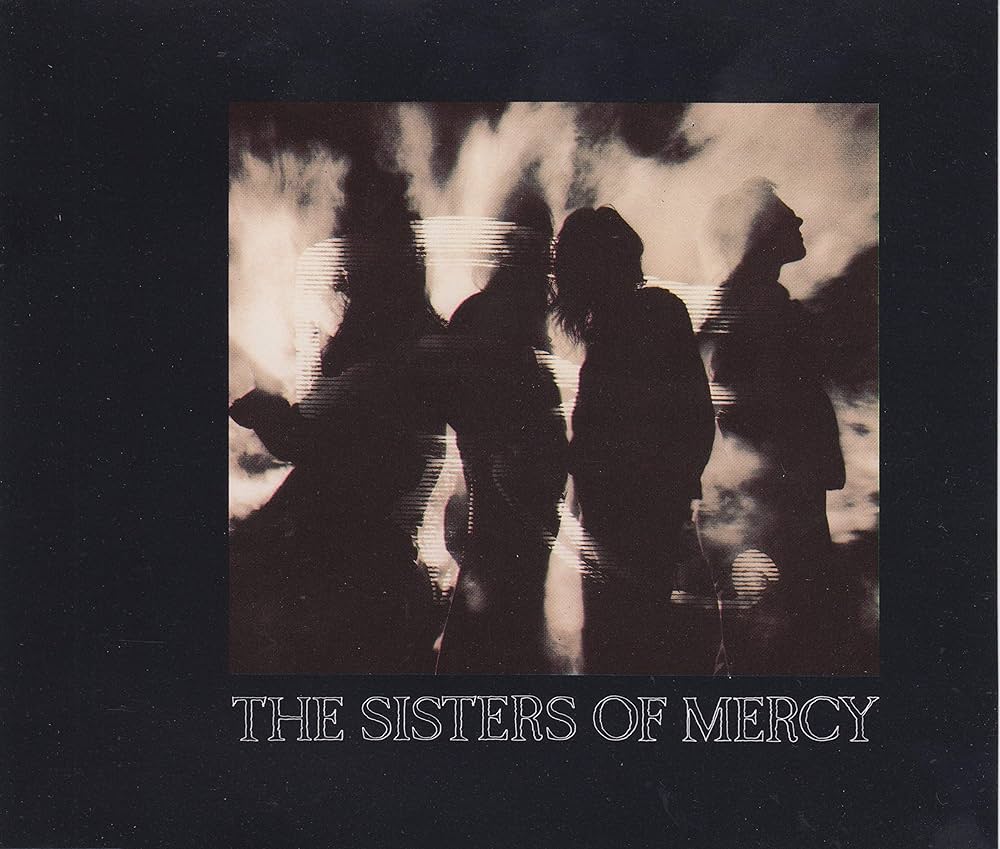
That's cool with me. Most of the time, I'd rather hear the Sisters Of Mercy. And while Jane's Addiction have already been in this column with two great 1990 singles, I'd give the slight edge to "More," the absurd throbbing banger that the Sisters took to #1 right after "Been Caught Stealing" fell out of that spot.
Andrew Eldritch grew up in the small English town of Ely, and he studied French and German literature at Oxford before transferring to the University Of Leeds to study Mandarin. In Leeds, Eldritch fell into the local punk scene and played drums in a couple of bands. In 1980, Eldritch and his friend Gary Marx started the Sisters Of Mercy, naming their band after the Leonard Cohen song. Before the band played their first show, Eldritch designed their logo and T-shirt. A bunch of different musicians played short stints in the band; future Mekons leader Jon Langford was their keyboard player for a hot minute, and the Mekons' 1987 song "Prince Of Darkness" is about Eldritch. But the creative core of the Sisters Of Mercy was Eldritch and Marx, who alternated the frontman role.
On the Sisters Of Mercy's 1980 debut single "The Damage Done," Eldritch sang and played drums at the same time. Eldritch quickly switched out his own drums for a drum machine that he called Doktor Avalanche, which was listed as a band member in liner notes. (The band went through a bunch of different drum machines over the years, but they were all called Doktor Avalanche, so you could sort of say that Doktor Avalanche was the only long-term collaborator who never broke ranks.) The Sisters Of Mercy released a handful of singles and EPs independently, and the Psychedelic Furs' John Ashton produced 1983's "Alice." After the cult success of 1983's "Temple Of Love," the Sisters Of Mercy signed with Warner.
In the video for the Sisters Of Mercy's first major-label single, 1984's "Body And Soul," you can see the band's fully formed visual sensibility at work: Plumes of smoke, leather gloves, wind machines, sunglasses, bonfires, Andrew Eldritch's cheekbones. Eldritch has always sniffed at the idea of goth, but his stylistic trademarks -- the deep baritone, the icy minor-key guitar riffs, the smeary keyboards, the unrelenting drum-machine thud -- were already hallmarks of that subculture. "Body And Soul" made it onto the British singles chart, and the band's first full-length, 1985's First And Last And Always, was a minor UK hit.
While recording and touring behind First And Last And Always, Andrew Eldritch got into nasty and sometimes public spats with his bandmates. Co-founder Gary Marx left the Sisters mid-tour and started the duo Ghost Dance with former Skeletal Family singer Anne-Marie Hurst. Two other Sisters Of Mercy members, guitarist Wayne Hussey and bassist Craig Adams, left in 1986, splitting off to form their own band. They were going to call it the Sisterhood as a direct rebuke to Eldritch. He realized what they were doing and beat them to it, using the Sisterhood name to release the solo single "Giving Ground." The Sisterhood existed pretty much entirely so those other guys couldn't use the name, but Eldritch kept it going for long enough to release the 1986 album Gift. The ex-Sisters Of Mercy guys called their new band the Mission instead, and they've had a long run. (Over here, they're known as the Mission UK, and their highest-charting Modern Rock hit, 1990's "Deliverance," peaked at #6. It's a 7.)
While working on the Sisterhood stuff, Andrew Eldritch recruited Patricia Morrison, an American singer and bassist who'd already been in the Bags and the Gun Club and who was living in London. Morrison became a Sister Of Mercy, but Eldritch recorded the band's second album, 1987's Floodland, mostly on his own. All three Sisters albums are worth your time, but Floodland is probably their masterpiece. Eldritch kept the Sisters Of Mercy name, but Floodland is basically a solo album full of arch vocals and synthy textures. In an inspired touch, Eldritch recorded a couple of tracks with the late Jim Steinman, one of the all-time great theatrical rock maximalists.
Jim Steinman was the guy behind Bat Out Of Hell and "Total Eclipse Of The Heart" and "It's All Coming Back To Me Now." He was never associated with anything even remotely punk, but he was an oddly perfect match for Eldritch's over-the-top style. By teaming up with Steinman, Andrew Eldritch flew directly in the face of whatever people must've wanted him to represent at the time. In embracing the grandest-scale version of pop that's ever been possible, Eldritch probably seemed painfully uncool at the moment. Now, that decision seems a whole lot cooler than anything that his contemporaries were doing. Steinman produced the single "This Corrosion," which became probably the biggest Sisters Of Mercy song ever.
"This Corrosion" is an absolute fucking banger. It's sweeping and theatrical and ridiculous, like a British Jim Morrison coming in as the new lead singer for a techno-futuristic future version of ABBA. The combination of hard synth-dance production and howling, operatic, gospel-derived backup vocals must've been a huge influence on pretty much all the clubby industrial music that came out in the '90s. KMFDM technically existed before "This Corrosion," but "This Corrosion" still sounds like the blueprint for that band. The song did well on American college radio, and it was a full-on pop hit in the UK, where it peaked at #7. The Sisters Of Mercy landed another top-20 UK hit with "Dominion," another Steinman collaboration. That one's a banger, too.
The Sisters Of Mercy didn't tour behind Floodland. Instead, they made videos, and those videos look ridiculously cool. "Lucretia My Reflection," another Floodland single, reached #20 in the UK, and it's now the Sisters Of Mercy's most-streamed song. All of those tracks got club play in America, but Floodland didn't get past #101 on the US album charts, which still makes it the band's highest-charting LP.
When the Sisters Of Mercy recorded 1990's Vision Thing, still their most recent album, they were again in a state of flux. Andrew Eldritch kicked Patricia Morrison out of the band while the record was in process. He was living in Hamburg at the time, and he recruited an unknown German guitarist, as well as former members of bands like Generation X and All About Eve. It's a little unclear who played what on Vision Thing, but the album belongs to Eldritch, who wrote and produced almost everything. For lead single "More," Eldritch once again joined forces with Jim Steinman.
Even in the parts of Vision Thing that Jim Steinman didn't touch, you can hear his ridiculous ambition. Vision Thing was named after a quote from George H.W. Bush, and Andrew Eldritch intended it to be a kind of conceptual protest album. But his version of protest was to crank excess-levels beyond all reason, and I wonder how many people caught the irony in it. Vision Thing opens with Eldritch braying about "25 whores in the room next door" over a cranked-up glam metal riff, and I can see how he could've alienated a lot of Sisters Of Mercy fans by exaggerating everything so wildly. For me, though, that level of exaggeration absolutely works. I think the whole album rocks, and nothing rocks harder than "More."
In its album version, "More" sprawls out over nine minutes. Even the radio edit of "More" feels extremely long and repetitive in the most tranced-out sense. It opens with a whole lot of gathering tension. A mechanized string-riff sounds like a horror-movie soundtrack, or like the kind of thing that was already starting to anchor rave singles. Organs and pianos sound more sinister notes. The Doktor Avalanche beat machine dials up an itchy hi-hat and a thumping disco kick-drum. (Later on, Doktor Avalache plays fills, which makes me think a human drummer might've gotten involved at some point.) Eldritch whisper-moans about how some people get by with a little understanding but he wants more. About 77 seconds into the track, the hammer drops, and the guitars come crunching in. It sounds so awesome.
When "More" achieves its destiny as a howling rock rager, Andrew Eldritch pretty much steps away from lead-vocal duties. He's still the person in charge of declaiming most of the lyrics, but Scottish backup singer Maggie Reilly, mostly known for working with "Tubular Bells" guy Mike Oldfield, really seizes the spotlight. Reilly's voice is multitracked to sound like a gospel choir, and she wails about needing all the love that she can get as the music churns and explodes around her.
"More" barely has any structure. Technically, there are verses, but most of the song is a back-and-forth call-and-response -- Eldritch saying he wants more, Reilly insisting that she needs all the love that she can get. Sometimes, Eldritch just does ghostly ad-libs, rasping and growling against that choir of Reillys. Eventually, the guitars and keyboards drop away, with only a florid piano remaining, but Eldritch and Reilly don't stop what they're doing. They barely seem to notice. Instead, they keeps keep singing in each other's direction until the track finally sputters to a halt.
You can't really listen to "More" multiple times in a row. If you try, the infinite-repeat chorus starts to grow oppressive. Plenty of people probably get sick of it before their first listen is over. But when you encounter "More" at the right moment, it sounds like worlds combusting. The best way that you could possibly hear "More" would be late at night, in a deconsecrated church that's been remodeled into a dance club. I don't really understand why "More" never soundtracked a nightclub shootout in a '90s action movie; it would've been perfect for one of those. I've never heard "More" in those circumstances, so I can only imagine how it must've hit at the time. But when I hear "More" while I'm slightly high and walking my dogs at night, it starts to feel like I'm in one of those cathedral clubs. That's a good feeling.
The repetition in "More" is an intentional choice, and I have to imagine that it's satirical. But even as Andrew Eldritch lampoons people's endless appetites, "More" celebrates those appetites. It finds cathartic beauty in the endless pursuit of more feeling, more intensity, more emotion. Eldritch says that he doesn't know why you gotta be so undemanding, and he asks if you're scared to feel or to let somebody touch you. Whether or not it's intentional, "More" sounds like a good argument for living on the edge, for not being a prisoner of your own comfort zone.
Like so many great Jim Steinman joints, "More" has a ridiculous video full of fast cuts and spotlights. Andrew Eldritch looks the the aristocratic vampire version of Glenn Danzig. I love it. The track reached #14 in the UK, and it held the #1 spot on the Modern Rock chart for a while. But "More" didn't make any other American charts, and the Sisters Of Mercy never had another alternative-radio hit over here. Even in the UK, none of the other Vision Thing tracks did all that well.
Andrew Eldritch was quickly growing more and more resentful of his label bosses, but he went along with their demands to re-record the Sister Of Mercy's 1983 single "Temple Of Love" for 1992's Some Girls Wander By Mistake, a compilation of the band's early independent work. The 1992 version of "Temple Of Love," with rave-charged production and backup vocals from the late Israeli singer Ofra Haza, became a huge UK hit, peaking at #3. It didn't do anything in the US.
The Sisters Of Mercy released a best-of collection called A Slight Case Of Overbombing in 1993, and they included the bonus track "Under The Gun," a duet between Andrew Eldritch and Berlin singer Terri Nunn. To date, that's the last Sisters Of Mercy song. The band owed their label a couple more albums, but Eldritch refused to record, saying that he was going on strike against the label. Their deal ended in 1997, when Eldritch recorded an instrumental electronic album under the name SSV. That record has apparently never come out, though it's been widely bootlegged.
In the past few decades, Andrew Eldritch has repeatedly said that he has no interest in recording another album. It wouldn't be worth the money that it would cost, and he doesn't need to make another record to feed his ego. In 2016, Eldritch told one interviewer that he might record another Sisters Of Mercy album if Donald Trump was elected president, but that happened, and we didn't get another Sisters Of Mercy album. Maybe it's for the best. The Sisters Of Mercy have a three-LP discography with absolutely no weak spots, and almost none of their contemporaries can say the same. Last year, they toured the US for the first time in 15 years. They can keep playing those songs for as long as they're able, as long as they don't want anything more.
GRADE: 9/10
BONUS BEATS: In 2003, Jim Steinman produced the songs for a made-for-MTV musical adaptation of Wuthering Heights, and one of the songs on the soundtrack was a nü-metal-adjacent version of "More" from stars Erika Christensen and Mike Vogel. I wish I could find that scene from the movie online, but you're going to have to make do with the audio:
BONUS BONUS BEATS: Jim Steinman's late collaborator Meat Loaf covered "More" on his final album, 2016's Braver Than We Are. Here's his version: