
May 11, 1991
- STAYED AT #1:2 Weeks
In The Alternative Number Ones, I'm reviewing every #1 single in the history of the Billboard Modern Rock Tracks/Alternative Songs, starting with the moment that the chart launched in 1988. This column is a companion piece to The Number Ones, and it's for members only. Thank you to everyone who's helping to keep Stereogum afloat.
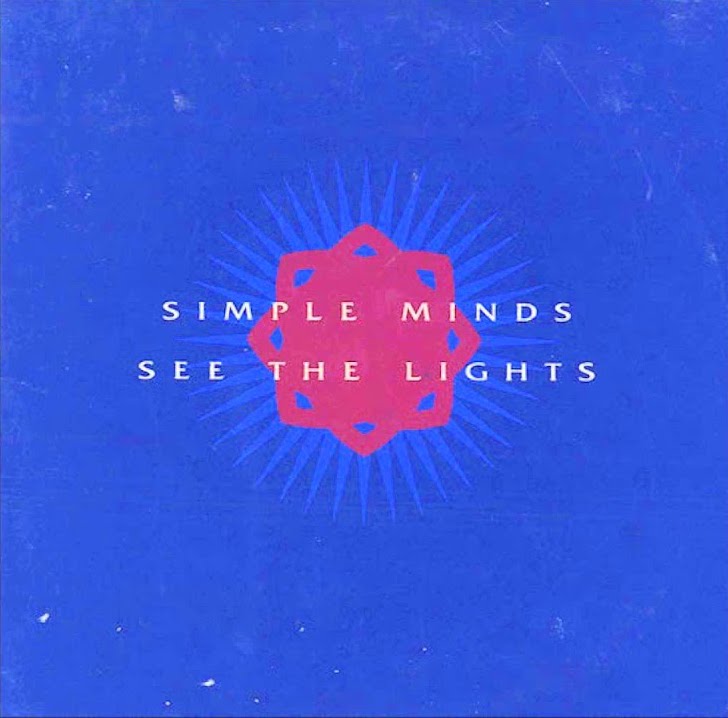
Anglophilia is a hell of a drug. Simple Minds are Scottish, not English, but the point stands. How else do you account for this? The song that finally knocked "Losing My Religion" out of the #1 spot on 1991 alternative radio was a puffed-up, self-serious, ultra-produced track from an across-the-pond band that was six years past its biggest hit. It's not like Simple Minds were all over 120 Minutes in 1991. It's not like they were in the same cultural conversation as the Cure and Depeche Mode. They were a big mainstream band making big mainstream music, but they were just British enough for America's modern rock radio programmers. That's all I can really tell you.
It's not that "See The Lights," Simple Minds' one chart-topper on the Billboard Modern Rock chart, is a bad song. It's that "See The Lights" represents a sound, and maybe even an outlook, that was about to be wiped off the planet. Listening to "See The Lights" today is like imagining daily life in Pompeii just before the eruption. I'm being overdramatic here, but "See The Lights" is overdramatic, too. The '90s alt-rock revolution wasn't as quick or merciless as I'm making it out to be, and Simple Minds were able to elbow their way into alt-rock radio rotation as late as 1995. Still, songs like this are now extinct beasts. They truly don't make 'em like this anymore.
I really like Simple Minds. And by that, I mean that I really like two Simple Minds songs. They're the two biggest Simple Minds songs, the two songs that probably pop into your mind when you run across the phrase "Simple Minds." Before working on The Number Ones, I had never given too much thought to Simple Minds or their place in history. I did not, for instance, know that Simple Minds were Scottish rather than English. And I did not know that "Don't You (Forget About Me)," their absolute motherfucking banger of a #1 hit, did not come from the band -- that it was written by an outside pop producer, for the express purpose of soundtracking the image of Judd Nelson's fist in the air at the end of The Breakfast Club.
The other Simple Minds song that I know and love is "Alive And Kicking," which the band actually did write. "Alive And Kicking" came out right after "Don't You (Forget About Me)." Before the Breakfast Club song, Simple Minds were fairly popular in the UK, and they were a total nonentity in the US. "Don't You (Forget About Me)" changed their trajectory, and it afforded them the chance to work with big-deal producers Bob Clearmountain and Jimmy Iovine on their album Once Upon A Time, which came out a few months after they topped the Hot 100. "Alive And Kicking" was that album's first single, and it presented Simple Minds as something akin to U2. Simple Minds had more keyboards and fewer pretensions, but the messianic fervor was just the same. It worked. Once Upon A Time went gold, and "Alive And Kicking" made it to #3 on the Hot 100. I love that fucking song.
If your only exposure to Simple Minds was "Don't You (Forget About Me)" and "Alive And Kicking," then you probably wouldn't guess that Simple Minds had their origins in the UK punk scene. Actually, scratch that. Just about every British pop group who blew up in the US in the early-MTV era had some roots in the UK punk scene, but most of them didn't start out with really fun punk-band names. The progenitor to Simple Minds was a Glasgow group with the excellent name Johnny & The Self-Abusers. You don't find many punk names better than that.
The Johnny in question was local scene guy John Milarky, who recruited singer/keyboardist Jim Kerr and guitarist Charlie Burchill. Johnny & The Self-Abusers started in 1977 and lasted long enough to make the pretty fun single "Saints And Sinners" and to open one local show for actually-big punk band Generation X. ("Saints And Sinners" came out on Chiswick Records, which means the Self-Abusers were briefly labelmates with Motörhead, Joe Strummer's pre-Clash band the 101'ers, and -- yikes -- notorious white power skinhead band Skrewdriver. They didn't become a white power band until later, but the yikes remains.)
Jim Kerr and Charlie Burchill, childhood friends before they became Self-Abusers, liked making music enough to stay together. After their first band ended, they started a new group called Simple Minds, which took its name from a line in the classic 1973 David Bowie song "The Jean Genie”: "He's so simple minded, he can't drive his module/ He bites on the neon and sleeps in the capsule." Simple Minds put on makeup to play local shows in Glasgow, and they signed with Zoom Records, a local label that had distribution through Arista. "Life In A Day," their keyboard-heavy 1979 debut single, grazed the UK charts. At least in the beginning, they sounded like Scottish punks who were trying to sound like Devo.
In their first few years, Simple Minds went full new-wave art-pop, making nervous and sparkly records that got some critical attention and sometimes landed on the British charts. They opened shows for people like Gary Numan and Peter Gabriel, the latter of whom will eventually appear in this column. Eventually, they jumped over to Virgin Records, and they found their first real success with their fifth album, 1982's New Gold Dream (81–82–83–84). (Simple Minds knocked out five albums in their first four years, and one of those was a double LP.) Two singles from New Gold Dream, "Promised You A Miracle" and "Glittering Prize," went top-20 on the UK charts. The album also made a brief appearance on the American album charts. It only reached #69, but they were at least starting to get some buzz here.
By 1984, Simple Minds were big stars in the UK. Sparkle In The Rain, the album that they released that year, debuted at #1. That same year, Jim Kerr married Pretenders leader Chrissie Hynde, and you have to imagine that this increased his profile pretty significantly. (The Pretenders' highest-charting Modern Rock single, 1994's "Night In My Veins," peaked at #2. It's an 8.) Simple Minds recorded Sparkle In The Rain with U2 collaborator Steve Lillywhite, and you can totally tell. The album launched another couple of top-20 UK hits. One of them was "Waterfront," which -- at least according to this list -- was a college-radio hit in the US. In "Waterfront," you can hear some of the majesty of later Simple Minds records starting to take shape.
I bet "Waterfront" was the reason that Giorgio Moroder/Billy Idol collaborator Keith Forsey wanted Simple Minds to record his song "(Don't You) Forget About Me." The band was Forsey's first choice, but they didn't like the idea of recording a song that they didn't write, and they turned it down multiple times. Forsey offered the song to Bryan Ferry and Billy Idol before bringing it back to Simple Minds. At that point, Chrissie Hynde told Jim Kerr to stop being such a snob, and he relented. Simple Minds never had so much as a single Hot 100 entry before "(Don't You) Forget About Me" went all the way to #1. That song and "Alive And Kicking" were both pop hits that got heavy college-radio play. In America, that little run represented the band's peak. It happened before Billboard started its Modern Rock chart, but when that chart began in 1988, Simple Minds were still a factor.
After they blew up, Simple Minds got really into advocating for righteous political causes: freeing Nelson Mandela, tearing down the Berlin Wall, refusing to let the US park its nuclear submarines off the Scottish coast. They were in that mode when they recorded their 1989 album Street Fighting Years with big-deal producers Trevor Horn and Stephen Lipson. (Horn was the bigger name, but he and Lipson worked together on records from people like Frankie Goes To Hollywood, Grace Jones, and Pet Shop Boys.) By this point, a couple of longtime Simple Minds had broken away from the group, and the core of it was just Jim Kerr and Charlie Burchill, along with whatever musicians they had along with them at the moment. Kerr became a bit of a critical target for being a self-serious blowhard, but self-serious blowhards were having a moment in 1988.
The lead single from Street Fighting Years was "Belfast Child," a grand ballad about the Troubles in Northern Ireland. That song didn't do anything in the US, but it became Simple Minds' first and only #1 hit in the UK. None of the Street Fighting Years singles made the Hot 100. Still, modern rock radio was on board, and three of the album's singles landed on the Modern Rock chart. The biggest of them was "This Is Your Land," which isn't a terribly interesting song but has a guest vocal from Lou Reed. ("This Is Your Land" peaked at #12 on the Modern Rock chart. Lou Reed has been in this column once, and he'll be back soon.)
I think it's cool that Jim Kerr was into political causes, but I can't really defend the stuff that Simple Minds made in the late '80s -- not because of his posturing but because the stuff just sounds pompous. Late-'80s session-musician sheen was all over those tracks, and it clashed badly with Kerr's general sincerity. At this point, Simple Minds were a big enough deal to headline Wembley Stadium, but I can't imagine how this shit must've sounded on modern rock radio.
Simple Minds recorded their next album, 1991's Real Life, with Stephen Lipson but not Trevor Horn, and it sounds like ass. The album came in the wake of some personal upheaval, since Jim Kerr and Chrissie Hynde divorced in 1990. (In 1992, Kerr married Patsy Kensit, the actress who is most famous in my head for playing the really hot South African lady in Lethal Weapon 2. Kerr and Kensit broke up in 1996, and a year later, Kensit married Liam Gallagher, another guy who will eventually appear in this column.) It makes sense that Real Life goes a little less hard on the political stuff, though Kerr still made room for things like the dire world-music experiment "African Skies." The session-musician sheen remained. Lots of the tracks on Real Life have the same guitar tone as the Beverly Hills 90210 theme song. It's not what you want.
Jim Kerr and Charlie Burchill wrote almost every song on Real Life together, including the single "See The Lights," which is pretty clearly the lament of a freshly divorced guy. Kerr wails about the growing distance between two people: "I've got a heart of stone, and it's sinking deep inside/ I want to tell you love, I'm too proud to cry." He sings about storms gathering while a deep piano note imitates the rumble of actual thunder. Burchill plays a guitar solo that somehow sounds tortured and ultra-clean at the same time, and then the strings and gospel choirs come in. It's an expression of anguish, as delivered by a big-money early-'90s rock band that's recording in the Netherlands for some reason.
The feelings on "See The Lights" are real, and they're also resonant. I like Jim Kerr's voice. He starts out "See The Lights" with a bit of Chris Isaak-style rockabilly quaver before he starts yelling the lights down, and he delivers all of it with conviction and assurance. The music is kind of fun in that mega-produced turn-of-the-'90s style, too -- Pino Palladino-esque bass burbles, processed guitar chimes, walls of power-ballad effects. But there's a disconnect between all that production and the real human emotion underneath. I like big production, but that stuff can hide the meat of a song, at least when the song itself isn't a bulletproof banger.
I wonder how "See The Lights" might sound without all that studio frippery. There are plenty of live versions of "See The Lights" on YouTube, but even those tend to sound pretty produced. Maybe all the layers of sound are just inextricable from the song itself. Maybe "See The Lights" just doesn't have what it takes to shine beyond all that. In its final form, I think "See The Lights" is decent enough, but it simply cannot summon the hooky catharsis of the two Simple Minds songs that I really know and love.
The "See The Lights" video shows the song to be the VH1-core nugget that it was probably always supposed to be. The clip is shot in crisp black-and-white, and it goes back and forth between shots of the band playing in a room and driving somewhere in what's either an expensive classic car or an old-school British taxi. At one point, Jim Kerr aims a bicycle kick at the camera, and I always like it when rock singers do that. "See The Lights" made it to #20 in the UK and #40 on the Hot 100. I don't remember hearing the song on my local alt-rock station, but I could've just ignored it when it was on. That station, I should note, was still playing "Don't You (Forget About Me)" pretty often, and I was always happy to hear that one.
Simple Minds followed "See The Lights" with the harder-charging but similarly way-too-slick "Stand By Love," which made it to #4 on the Modern Rock chart. (It's a 5.) After that, the band took some time off before reuniting with their "Don't You (Forget About Me)" collaborator Keith Forsey on 1995's Good News From The Next World. By that time, as you might imagine, the American alt-rock landscape was significantly different, and the album didn't leave much of an impact. Simple Minds still managed to reach #10 with lead single "She's A River." (It's a 6.)
"She's A River" was a top-10 hit in the UK. It peaked at #52 on the Hot 100, and it was Simple Minds' last time on that chart. The band kept going, and they continued racking up big UK hits into the late '90s. These days, they're an active independent act, and Jim Kerr and Charlie Burchill both live on Sicily, which must be nice. Direction Of The Heart, their most recent album, came out in 2022.
In the context of this column and the alt-rock charts, Simple Minds belong in the same category as INXS -- big, gleaming, arena-status pop-rock acts who were just past their prime when the Modern Rock chart started and who were grandfathered in, partly because of some tertiary punk connection and partly because the modern rock programmers of the moment loved stuff that wasn't American. They didn't have anything to do with where this music was going, but they were still good at what they did.
When I say that Simple Minds have two songs that I love, that looks like faint praise. I don't mean it that way. Most people don't have two songs that I love. Simple Minds' peak came at the convergence of a bunch of things -- early-MTV embrace of new wave, Flashdance-style '80s soundtrack-core, grandly theatrical '80s-rock production. They had a moment, and the moment didn't last, but they still had enough momentum to eke out a #1 Modern Rock hit. That's not nothing, but it's also not enough to make them important to the story of the '90s alt-rock explosion. That story doesn't have much to do with the Simple Minds.
GRADE: 5/10
BONUS BEATS: As you're about to see, I'm working with limited options here. This one is a little convoluted, so you're going to have to take a walk with me. The ABC show Nashville, which followed a bunch of country-music figures, was on from 2012 to 2016. I watched the first season or two, and I thought it was pretty good. Last year, for whatever reason, a bunch of former Nashville cast members went on a reunion tour in the UK. Here's Jonathan Jackson, the former soap-opera actor who played country bad-boy type Avery Barkley, covering "See The Lights" in Glasgow:
THE ALTERNA-TWOS: The La's' gorgeously simple, presumably heroin-inspired shimmer-shimmy power-pop gem "There She Goes" peaked at #2 behind "See The Lights." It's a 9.
The Violent Femmes' insidiously catchy banger "American Music," a kind of garage-rock campfire singalong, also peaked at #2 behind "See The Lights," which sadly means that I won't get to write about the Violent Femmes in this column. I like "American Music." It's another 9.