
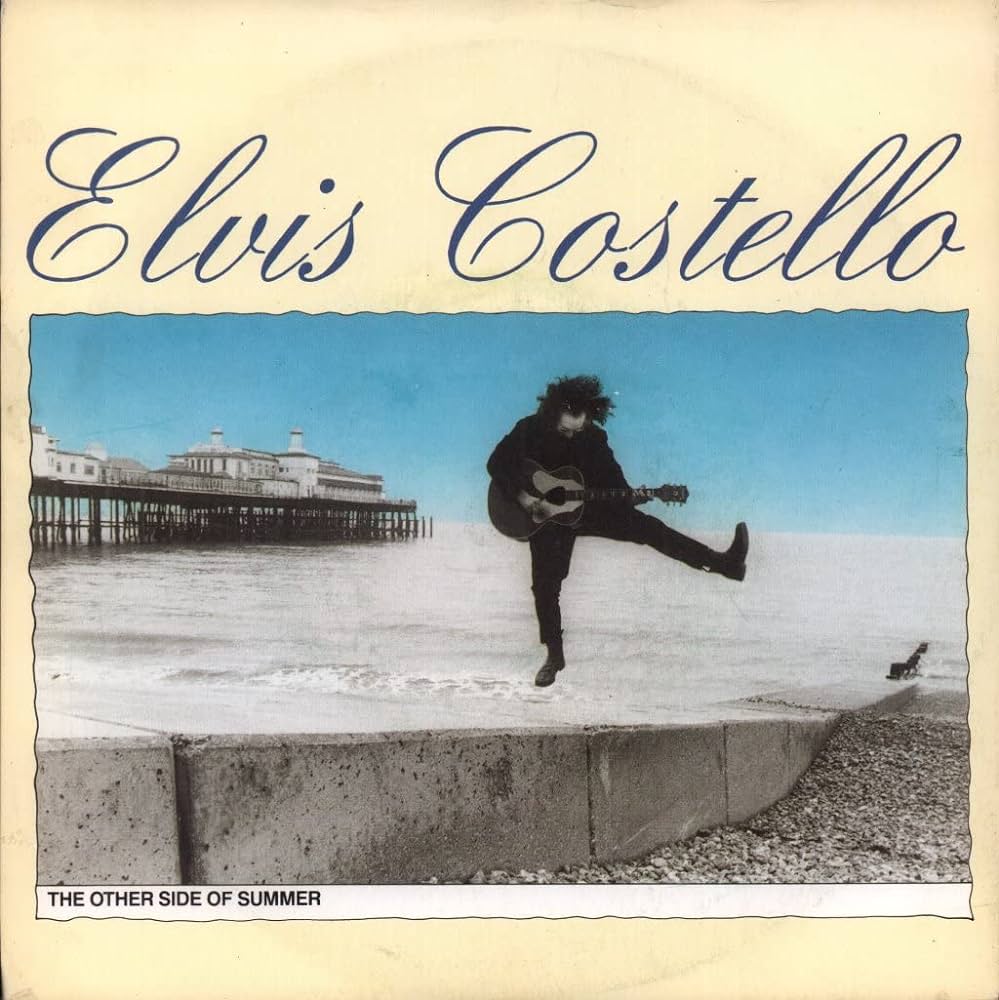
May 25, 1991
- STAYED AT #1:4 Weeks
In The Alternative Number Ones, I'm reviewing every #1 single in the history of the Billboard Modern Rock Tracks/Alternative Songs, starting with the moment that the chart launched in 1988. This column is a companion piece to The Number Ones, and it's for members only. Thank you to everyone who's helping to keep Stereogum afloat.
We all have irrational emotional attachments. When you decide that you love something, it's hard to admit when the thing just stops being any good. It happens more with music than it does with anything else. Music shapes you. It helps you define yourself, how you feel about the world. The musicians who are important to you will always be important to you.
I might sit here and tell you that every single 21st-century Rancid album has at last three or four absolute bangers. That's the truth! Those songs hit! But it's my truth. Your mileage may vary. If Rancid didn't rearrange my entire universe when I was 15 years old, then I might not bother with Trouble Maker deep cuts. I'd be missing out, but it happens.
Why should modern rock radio programmers be any different? I have to imagine that those guys loved Elvis Costello. Who could blame them? There are worse people to feel irrational emotional attachments to than Elvis Costello. He seems like a mensch. He's got classics for days. He knows pop music backwards and forwards, and he's the type of restless mind who seems to set himself ridiculous tasks just for the fuck of it. (As someone who's currently reviewing every #1 hit on two different charts, I must respect this.) When a new Elvis Costello record just didn't have the juice, these guys must've been the last to know.
Sometimes, a new Elvis Costello record doesn't have the juice. "The Other Side Of Summer" never should've spent four straight weeks at #1 on the Billboard Modern Rock chart, but that's what happened.
Elvis Costello always commanded a whole lot of critical attention, but he was never much of a hitmaker, at least in the US. If Costello ever had a real blank-check moment, it was probably Mighty Like A Rose. With his 1989 album Spike, I bet Costello won over anyone in the business who might've otherwise resisted. By 1989, a fully-established Costello was writing songs with Paul McCartney, which is the kind of thing that converts skeptics. Costello's "Veronica" crossed over to the pop charts and became his biggest-ever American hit, and Spike went gold, giving Costello his first decent-selling album since Armed Forces. Costello always did what he wanted, but with Mighty Like A Rose, the man must've commanded a budget.
After recording Spike and a bunch of other albums with Americana mastermind T Bone Burnett, Costello went to some different producers to make Mighty Like A Rose. Mitchell Froom had started out in the '70s, but he'd really made his name in the '80s, producing for Crowded House and Los Lobos and Richard Thompson. At the time, he was married to Suzanne Vega, who moved in the same circles as Costello and who will eventually appear in this column. Kevin Killen was an engineer on some big U2 records, and he'd also worked on Spike. Costello co-produced Mighty Like A Rose with Froom and Killen.
For the recordings, Elvis Costello and his collaborators assembled an all-star band of legendary LA session-musician types. Some more outré musicians, like downtown guitar wiz Marc Ribot, play on Mighty Like A Rose, but a number of the players are Wrecking Crew veterans with dozens of classics on their resumes. Costello is enough of a pop nerd that he must've been fired up to head into the studio with those guys, and he dedicated the album to his partner at the time, the Pogues' Cait O'Riordan. (The Pogues' highest-charting Modern Rock single, 1993's "Tuesday Morning," peaked at #11.) Costello might've had reasons to be happy, but Mighty Like A Rose is a pissed-off album, and the anger clashes with the lush arrangements in some weird ways.
The clash is intentional. If anything, Mighty Like A Rose is even fussier than Spike, even though that album was jammed with hectically ornate arrangements. Mighty Like A Rose veers all over the place aesthetically, but it's based in filigreed chamber-pop. Costello had done some great work in that mode, as you already know if you've ever heard Imperial Bedroom. On Mighty Like A Rose, the point seems to be the collision of fancy musical frippery and lyrical venom. But that's not enough of a concept for a whole record, and early-'90s Costello wasn't as sharp of a pop songwriter as the people he tried to evoke.
"The Other Side Of Summer," the opener and lead single from Mighty Like A Rose, is clearly a pastiche of the mid-'60s Beach Boys. It really goes for that bright and shiny harmonic playfulness, and it features at least one musician who played on actual Beach Boys records. At one point, Costello claimed that the song had 14 different keyboards, "all playing the same thing, but nobody's going to sit and count them." Most of those keyboards were played by Wrecking Crew legend Larry Knechtel, who'd been part of Phil Spector's Wall Of Sound and played on records like "Mr. Tambourine Man" and "Bridge Over Troubled Water." Costello also had Benmont Tench, keyboardist for Tom Petty's Heartbreakers, in there on tack piano, as well as Hall and Oates bassist T-Bone Wolk -- Costello had to get at least one T-Bone in there, I guess -- and guitarists Jerry Scheff and James Burton, from the other Elvis' TCB Band. That's a lot of talent!
When you've got a team like that on your record, you have to bring it. On "The Other Side Of Summer," I don't really think it gets brought. I can hear exactly what Costello wants to do on "The Other Side Of Summer." I can hear the backup singers and overdriven calliopes trying to recapture the sugar-rush intensity of the peak Beach Boys. But even when you've got a room full of musicians up to the task, you can't just write your own Beach Boys song. If it was that easy, everyone would've done it.
The whole point of "The Other Side Of Summer," as the video unsubtly pounds home, is the difference between the Californian paradise of Beach Boys records and the misery and desperation that you could find in the actual place, from "the foaming breakers of the poisonous surf" to "the burning forests and the hills of Astroturf." While the layers of sun-drunk sound all surge forwards, Costello lets us know about the divide between rich and poor, the mentally unhinged people on the street, and the girl who cries because she doesn't look the way she wants. Deep stuff, man.
You get it. There's a disconnect between pop-music fantasy and cruel, unfeeling reality, and Elvis Costello is here to make sure you don't lose sight of one for the other. It's the kind of thing that you might write if you grew up in England, dreaming of some mythic California, and then you were bummed out to learn that the real place is as fucked up as any other real place. Satire doesn't have to be subtle, but I don't think Elvis Costello was blowing anyone's mind with this stuff. Even in the early '90s, when the memory of that '60s pop was a lot brighter, Costello wasn't the first to point out that contrast. You could argue that the actual Beach Boys records, with their weird sadness and their sad weirdness, already made more of the contrast than Costello ever could, whether intentionally or not.
The most-discussed moment of "The Other Side Of Summer," a song that doesn't exactly generate much discussion these days, is the one where Elvis Costello implicitly calls out some of his pop-star peers: "Was it a millionaire who said, 'Imagine no possessions'?/ A poor little schoolboy who said, 'We don't need no lessons'?/ The rabid rebel dogs ransack the shampoo shop/ The pop princess is downtown shooting up." So, in order, that's John Lennon, Pink Floyd, David Bowie, and then pick whoever you want. I think the idea is Costello calling these folks out for selling imaginary bliss while real people suffer. And it's like: Relax, Elvis Costello. You know, just as well as I do, that those people are all very good at making popular music. That's their job, and it's your job, too. Settle down.
But the real problem with "The Other Side Of Summer" isn't the lyrics. It's the fact that Elvis Costello is wholly incapable of writing a peak-era Beach Boys song. Neither, to be fair, am I. Very few people can write or sing a song like that. But if you're going to layer your own ecstatic doo-wop whoos and yeahs, you should ideally be able to sing in something other than a clenched bray. You should also be able to write big, sticky, heavenly hooks, and you should find something memorable for all those musicians to play. You should also keep it short, like a real Beach Boys song. Elvis Costello doesn't do any of that.
"The Other Side Of Summer" doesn't have the hooks to justify all its fizzy organs and wah-wah guitars. It's kind of fun to hear all these musicians going bucknuts for four minutes, but the overstuffed herky-jerk honk-honk pop-orchestra shit quickly loses its flavor before getting claustrophobic and overwhelming. I'm guessing that's the whole idea, but the song becomes a genuinely unpleasant listening experience long before it ends. If Elvis Costello was trying to get on my nerves, then he succeeded.
For the Mighty Like A Rose rollout, Elvis Costello showed up looking like a wizard, with long hair and dark glasses and a bushy beard. The sleazy wookie-professor vibe simply did not work for the man. In the video for "The Other Side Of Summer," he and a band full of pretty ladies ride around stock-footage misery in a classic convertible, and it makes an already-hacky lyrical conceit even more obvious.
I cannot understand how "The Other Side Of Summer" stayed at #1 on the Modern Rock charts for a whole month other than, I guess, the way that alternative radio saw itself at the time. In the pre-grunge lull, those stations went back and forth between rave-rock upstarts and aging punk-adjacent fixtures who were going for VH1 respectability. For three of the four weeks that "The Other Side Of Summer" sat at #1, the #2 song on the chart was another post-peak work from another much-loved new-wave singer-songwriter auteur type who was pulling old-timey rock 'n' roll moves. Between the two of them, I probably prefer Joe Jackson's "Obvious Song." (It's a 6.) But when those two songs are at the top of the charts, it really looks like college-rock programmers were just gassing up a crew of guys that kept repeating the same ideas to diminishing returns.
Mighty Like A Rose got mostly-respectful reviews and a Grammy nomination, but it quickly gained a reputation as one of Elvis Costello's worst. The album didn't chart or sell well, and none of its singles crossed over to the Hot 100. Modern rock radio programmers must've picked up on the feeling more quickly than they usually do, since none of the other Mighty Like A Rose singles charted. I remember seeing the Mighty Like A Rose cover as a poster in a lot of record stores, and I was just profoundly not interested in it. I don't remember ever hearing "The Other Side Of Summer" on the radio, so it must've dropped out of rotation soon after it fell from the #1 spot.
After Mighty Like A Rose, Elvis Costello pretty much started doing all the stuff that he's been doing ever since, keeping himself interested by working on a series of insular projects that only glancingly interact with the mainstream. Costello did some more work with Paul McCartney. He won a BAFTA for scoring the 1991 British miniseries GBH, which is sadly not about the punk band of the same name. He teamed up with the Brodsky Quartet, an experimental classical ensemble, for 1993's The Juliet Letters. He sang a duet on Tony Bennett's MTV Unplugged, which randomly won the Grammy for Album Of The Year. And in 1994, Costello reunited his old band the Attractions for the album Brutal Youth. Lead single "13 Steps Lead Down," the most recent Elvis Costello song to appear on the Modern Rock chart, peaked at #6. (It's a 7.)
Costello couldn't get along with Attractions bassist Bruce Thomas, so that band finally broke up in 1996. Since then, Costello has mostly played with a band called the Imposters, which includes longtime Attractions Steve Nieve and Pete Thomas. (The two former Attractions named Thomas are not related.) Costello got some good reviews for Painted From Memory, his 1998 album with Burt Bacharach. I bought that when I was 18, and I did not get it. Costello made cameos in Austin Powers: The Spy Who Shagged Me and Talladega Nights: The Ballad Of Ricky Bobby. He broke up with Cait O'Riordan and married jazz-pop crooner Diana Krall. He stayed busy.
Elvis Costello went into the Rock And Roll Hall Of Fame in 2003, and that guy deserves it if anyone does. He's been in eminence mode for this entire century. For a couple of years, Costello hosted a Sundance Channel show where he'd talk and play music with his music-luminary guests. He continues to crank out new albums, and they're usually in different musical modes. I don't check them out very often. Costello also plays a lot of live shows, and those are worth checking out. Those shows usually don't include "The Other Side Of Summer."
This column happens to coincide with the end of the period when Elvis Costello was anywhere near the alt-rock zeitgeist. It happens to everyone, and the man had a great run. Today, he gets to be a legend, and nobody remembers Mighty Like A Rose enough to get upset about it. I'm glad I never got interested in those Mighty Like A Rose record-store posters. If I'd paid money for that music, it might've put me off Elvis Costello for good, and I would've missed out on a lot of great music. They can't all be winners, and that's why those emotional attachments are so irrational.
GRADE: 4/10
BONUS BEATS: Elvis Costello was famously banned from Saturday Night Live in 1977, but that ban ended during the Spike era, and Costello came back when he was promoting Mighty Like A Rose. Here's shaggy-mode Costello playing "The Other Side Of Summer" on SNL, with GE Smith making guitar faces next to him: