
January 16, 1993
- STAYED AT #1:1 Week
In The Alternative Number Ones, I'm reviewing every #1 single in the history of the Billboard Modern Rock Tracks/Alternative Songs, starting with the moment that the chart launched in 1988. This column is a companion piece to The Number Ones, and it's for members only. Thank you to everyone who's helping to keep Stereogum afloat.
They had two bass players. That was the first thing that anyone noticed. It jumped out. Really, lots of things jumped out. They had a funny name, and they represented a nebulously defined genre, or maybe a subculture, that also had a funny name. Their song titles were sometimes funny, too. Their logo looked cool on a tie-dyed T-shirt. They had a guitarist named Rat, and Rat had bright-red whiteboy dreadlocks. To an American kid in the early '90s, everything about Ned's Atomic Dustbin seemed weird and vivid and interesting. At least for a little while, the music lived up to that impression.
The Ned's Atomic Dustbin moment was brief and evanescent, as moments tend to be. You might get some attention for a weird instrumental configuration and a funny band name, but that attention will only last so long. In a world as proudly snarky as alt-rock radio, today's sensation becomes tomorrow's punchline. By the time that Ned's Atomic Dustbin reached #1 on the Billboard Modern Rock chart, their moment was just about over. Their vibe was more memorable than their songs, even though their songs were really good.
Every alternative rock band does not become immortal. Plenty of them slip away as trends change and the public moves on. Ned's Atomic Dustbin were among the unlucky ones. They rose a tide of excitement in the UK, and that excitement made it across the Atlantic, at least for long enough that Ned's Atomic Dustbin shirts briefly became omnipresent and one song topped the Modern Rock chart for one week. If you're young enough, there's a decent chance that you've never seen the words Ned's Atomic Dustbin placed in sequential order before. If you're old enough, there's a just-as-decent chance that the name will send you into a Proustian-reverie fugue state, a mental place where time stands still even as it slips away. Maybe you can still smell the rack in the back of that Sam Goody where you kept seeing the shirt, kept wondering if you should buy it. I'm here to tell you that you should've bought it. Ned's Atomic Dustbin were good.
A funny thing happened in the late-'80s UK: The music press got very excited about a very small and specific music scene that was happening in a small and specific place. Actually, that wasn't funny at all. It happened all the time. The critics at the music weeklies constantly got excited about new regional scenes; it's one of the most endearing things about those guys. They got excited about Manchester. They got excited about Seattle. And for a brief moment, they got excited about Stourbridge, an otherwise undistinguished working-class West Midlands town with a population of about 60,000.
Wikipedia tells me that Stourbridge was a medieval market town that became the center of the British glass manufacturing industry during the industrial revolution. They still have a Festival Of Glass there every two years, and I can't imagine how exciting that is. Stourbridge is in an area that's evocatively known as the Black Country. JRR Tolkein grew up there, and it might've served as his inspiration for Mordor. And in the late '80s, Stourbridge spawned three weird bands that all briefly became big festival acts in the UK.
Pop Will Eat Itself came first. They probably would've been punks if they'd started five years earlier, and they kind of were punks, but they were also really into the American rap of the '80s and the cut-and-paste dance music that was bubbling in the UK just before the acid house revolution. They messed around with samples and drum machines, and they didn't add a drummer to the band until they were already established.
Pop Will Eat Itself were great at sloganeering, from their band name to their rattle-chant non-sequitur lyrics. In 1989, they landed in the top 40 of the UK pop charts with "Can U Dig It?" and "Wise Up! Sucker," and they briefly toured Europe with Run-DMC and Public Enemy but got booed offstage every night. At the UK festivals, however, Pop Will Eat Itself drew big crowds. All the Stourbridge bands did.
In the lyrics of their early singles, Pop Will Eat Itself threw around the term "grebo." As far as I can tell, that was just '70s Black Country slang for "slacker," which means it's a variation on a term that was being embraced in alt-rock scenes all over the world. The UK press seized on the word and turned it into a genre name. Pop Will Eat Itself had a distinct aesthetic, and a look came with that: Whiteboy dreads, muddy boots, long shorts. Luckily, Stourbridge had a couple of other bands that looked a lot like Pop Will Eat Itself, even if they didn't sound much like them. (Pop Will Eat Itself broke up in 1996, and frontman Clint Mansell became the go-to film-score guy for directors Darren Aronofsky and Ben Wheatley. Their highest-charting Modern Rock hit, 1991's "X, Y & Zee," peaked at #11.)
The Wonder Stuff started around the same time as Pop Will Eat Itself, and some of the members of both groups were in a different band together early on. The Wonder Stuff didn't have quite as memorable a band name as Pop Will Eat Itself, but they made up for it by calling their 1988 debut album The Eight Legged Groove Machine. The Wonder Stuff were more of a fired-up indie-pop band than an experimental samples-and-yelling situation, but the two bands made sense together. In 1990, the Wonder Stuff sailed all the way to #5 on the UK pop chart with their clomping, piano-heavy belter "The Size Of A Cow." Not long after, they teamed up with the British comedian Vic Reeves and somehow topped the UK singles chart with a cover of Tommy Roe's bubblegum classic "Dizzy."
For a little while, the Wonder Stuff were huge, at least in the UK. In 1992, for instance, the Wonder Stuff headlined the first night of the Reading Festival, which put them in the company of that year's other two headliners, Public Enemy and Nirvana. The Wonder Stuff never got anywhere near that big in the US, but they did land a bunch of singles on the Modern Rock chart. The biggest of them was 1991's "Caught In My Shadow," which peaked at #8. (It's a 7.)
Everyone who's ever worked in journalism knows that you can't write a trend-piece based on two examples. You need three, and Stourbridge had a third band who fit the vague grebo label just as well as the other two. When Ned's Atomic Dustbin started in 1987, frontman Jonn Penney was a big fan of Liverpool bands Echo & The Bunnymen and the Teardrop Explodes. (I thought this might mean something geographically, but I checked, and Stourbridge is 100 miles from Liverpool, so probably not. I just never understand where anything is in England.) NAD -- the acronym is funny, too -- took their name from a bit on The Goon Show, which was apparently an old comedy radio show in the UK. They initially went for an arty goth thing, and you can hear a few echoes of that on Ingredients, their 1990 debut EP. By the time they started recording, though, NAD were having too much fun to stay goth.
Ned's Atomic Dustbin found an audience by touring with the Wonder Stuff in the late '80s, and they signed with the regional indie Chapter 22. The 1990 single "Kill Your Television" is the song that blew them up. If "Kill Your Television" is the only Ned's Atomic Dustbin song that you ever hear, then at least you heard a good one. It's a giddy fuzz-blast with a fun chant-it-out chorus; Ned's Atomic Dustbin were good at sloganeering, too. On "Kill Your Television," it doesn't seem like a gimmick to have two bass players, since those two bass players get busy. "Kill Your Television" made it to #51 on the UK charts, and it brought a big crowd to their 1990 Reading Festival set and attracted the attention of Sony Records. In no time at all, Ned's Atomic Dustbin made the major-label leap.
Along with their fellow Stourbridge bands, Ned's Atomic Dustbin kept getting bigger. Tourists started to show up in Stourbridge, hoping to get a glimpse of the grebo scene in action, but the grebo scene was pretty much just those three bands, and they were usually away on tour. Ned's Atomic Dustbin's debut album God Fodder came out in 1991, and they reached the UK top 20 with their vaguely shoegazey single "Happy." That song also became the first NAD track to reach the Billboard Modern Rock chart, where it peaked at #11. Another single, "Grey Cell Green," made it to #24 over here. I don't remember hearing those songs on the radio, but I do remember seeing the band's logo everywhere. In any case, God Fodder: good album.
Ned's Atomic Dustbin didn't really have anything to do with rave or Madchester, but they still seemed to fit in with that stuff because of the band's percussive force. The whole grebo thing seemed rave-adjacent, too, at least partly for fashion reasons. They just looked like guys you'd see stomping around at raves. None of the grebo bands really ran away from the term, which probably helped keep the hype machine working but which probably also prevented people from taking them seriously. But if band names and album titles are any indication, the Stourbridge bands didn't take themselves too seriously, either. People would sometimes refer to indie-dance hitmakers EMF and Jesus Jones as grebo, too, so the term really just meant whatever the user wanted. It was a made-up thing, and the made-up thing stuck.
God Fodder was a big hit in the UK and a slow-burn cult success in the US. In 2018, The Guardian published a retrospective feature on grebo, and Jonn Penney said that he had trouble adjusting to the band's success. Soon, he was so wracked with anxiety that he couldn't sing. Penney told The Guardian, "The doctor said there was nothing physically wrong with my voice. It was psychosomatic. A feeling of 'you know what? I don’t deserve all this. How did I get here?' That’s why we called our second album Are You Normal? -- because by then, we didn’t feel normal anymore."
Ned's Atomic Dustbin recorded 1992's Are You Normal? with Andy Wallace, the guy who famously mixed Nirvana's Nevermind and gave it the radio-friendly unit-shifter sheen that the band hated. Wallace had been engineering and mixing records since the early '80s. As a producer, he mostly worked with heavy bands. He'd co-produced Slayer's Seasons In The Abyss, and he'd also produced the Rollins Band's The End Of Silence and White Zombie's La Sexorcisto: Devil Music Volume One -- some cool-ass credits, if you ask me.
Are You Normal? came pretty soon after God Fodder. It probably would've been healthier for the band if they had a chance to take a break, but hype-windows are short. I'd never heard God Fodder or Are You Normal? all the way through before working on this column, and I'm really enjoying both records. To my ear, they don't sound terribly different. God Fodder has a bit more reckless forward energy, while Are You Normal? is cleaner and more polished, with bigger hooks but a more measured tone. Still, Are You Normal? is nowhere near calm, and I like the way the lyrics walk the clever/stupid line: "My childhood obsession is my record collection."
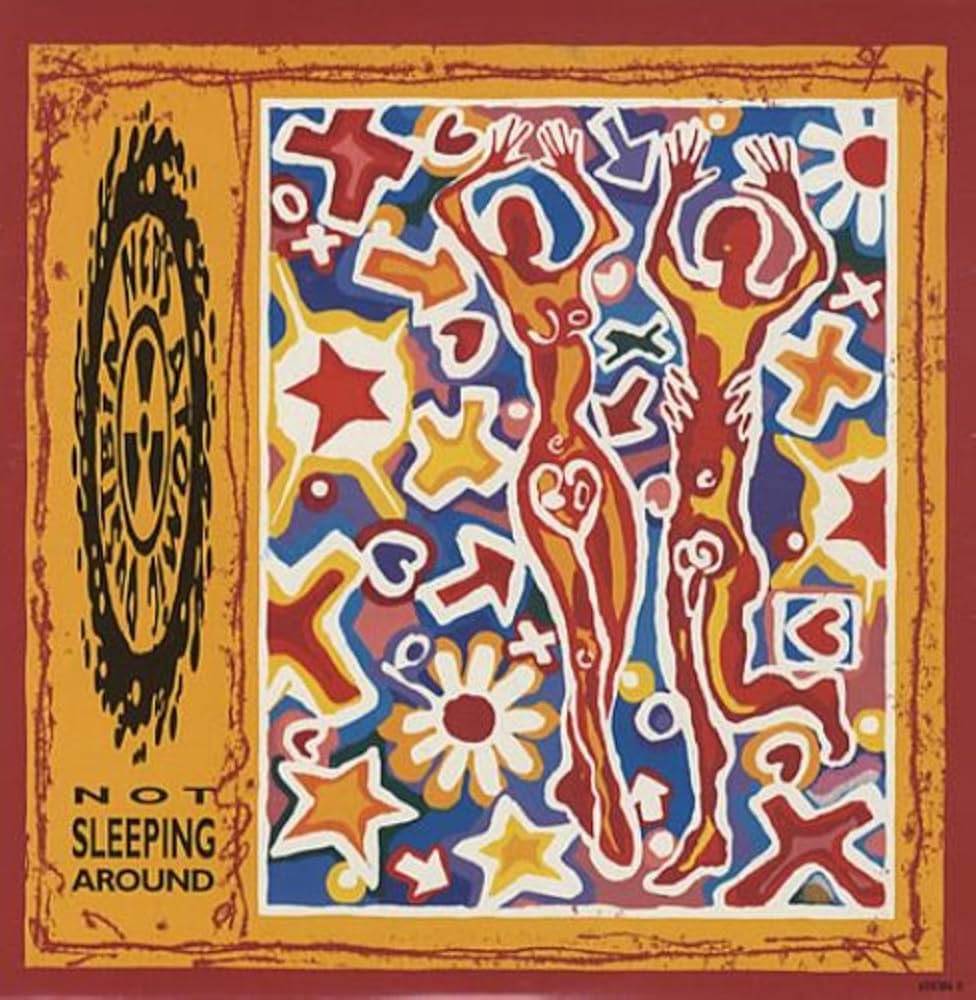
On lead single "Not Sleeping Around," those lyrics are all about romantic confusion. There aren't many early-'90s alt-rock songs about having sex, but "Not Sleeping Around" is one of the few that's explicitly about not having sex. Jonn Penney sings about a breakdown in communication wrecking a romantic situation: "You keep thinking I'm tired of you, but I'm just tired/ While I keep saying you're sick of me when you're just sick." This couple doesn't seem very close, but Penney also doesn't want it to end. He -- or at least his narrator -- also seems to think that he's taking some great moral stand by opting not to cheat, like he wants a cookie for it. As a neutral observer, it sounds like these two should probably just break up with it and move on with their lives, but you know how young folks are. In any case, "Not Sleeping Around" isn't a song written with much perspective. This guy sounds like he's in it, and maybe like he's sorting out his feelings in public, on record.
But even with that eye-grabbing title, "Not Sleeping Around" isn't really about the lyrics. It's about the groove, and the groove is tremendous. The intro riff could've come straight from the White Zombie record that Andy Wallace produced, but when the drums come in, everything gets dazed and plummy and jangly. The two basses go wild -- one doing Peter Hook-style melodic riffing, another in Flea-esque funk-churn mode. The guitars, meanwhile, get into Isaac Hayes chicken-scratch territory, and Jonn Penney howls over the top of it in his lovably clueless derp-whine. The drums absolutely pummel, and it all moves quickly enough to achieve the bleary grace of some of that moment's best dance-rock jams. It shouldn't all fit together, but it really, really does. I don't think I could sing "Not Sleeping Around" for you; the melody isn't memorable enough to linger in my brain. But when the song is on, it's a blast.
I have enormous affection for the vibe of a song like "Not Sleeping Around." It's entirely tied to its moment, and my soul floods with nostalgia when I think about that moment. This was a point in alternative rock history when bands and labels were still fumbling around in the dark, trying to figure out what worked. The ecstatic sugar-rush self-pity of"Not Sleeping Around" didn't resonate as widely as some other approaches, but that doesn't make it any less fun.
Are You Normal? sold pretty well in the UK, but it still marked a slight step down from God Fodder. Ned's Atomic Dustbin worked hard to break through in the US, and they toured for years, but it didn't really work. The album sent one more single into the Modern Rock charts: "Walking Through Syrup," which peaked at #13. Ned's Atomic Dustbin only made the Modern Rock charts once more after that, and they did it by covering a '70s bubblegum jam, just as the Wonder Stuff had done before them. NAD remade the Bay City Rollers' "Saturday Night" for the soundtrack of the 1993 Mike Myers vehicle So I Married an Axe Murderer, and it peaked at #26. For what it's worth, that's the only Ned's Atomic Dustbin song that I can actually remember hearing on the radio. Maybe the programmer at my local station just wasn't a grebo guy.
The world moved on. In the US, grunge and grudge-adjacent stuff took over the radio. In the UK, the more theatrical Britpop stuff blew up. Ned's Atomic Dustbin tried to move in a more rave-friendly direction on their third album, 1995's Brainbloodvolume. People weren't trying to hear that. First single "All I Ask Of Myself Is That I Hold Together" got a bit of traction on the UK pop charts, but as every Democratic political consultant is trying to say these days, the headwinds just weren't favorable. Sony dropped the band one day before their two-month American tour started. That tour ended with a show in New York, and Ned's Atomic Dustbin broke up immediately after that gig ended.
Jonn Penney started a new band called Groundswell, but they broke up before their first album even came out. In 2000, Penney put together a new NAD lineup to play a proper farewell show in the West Midlands, but the show went well, so he kept that version of the band going for a little while. They released the comeback single "Hibernation" in 2006; it's not bad.
The original Ned's Atomic Dustbin lineup got back together in 2008, and they play occasional festival and UK tours, but they haven't released anything. All three of the Stourbridge bands are back together these days. I'm glad that there's still a world out there where people are psyched to go see Ned's Atomic Dustbin. I bet those shows are fun as hell. Maybe Ned's Atomic Dustbin were never fated to go down in history as a canonical band, but they had their place, and I think of them warmly.
GRADE: 8/10
BONUS BEATS: The "Not Sleeping Around" reached #19 in the UK, and that allowed Ned's Atomic Dustbin to give their second and final performance on Top Of The Pops. Here it is: