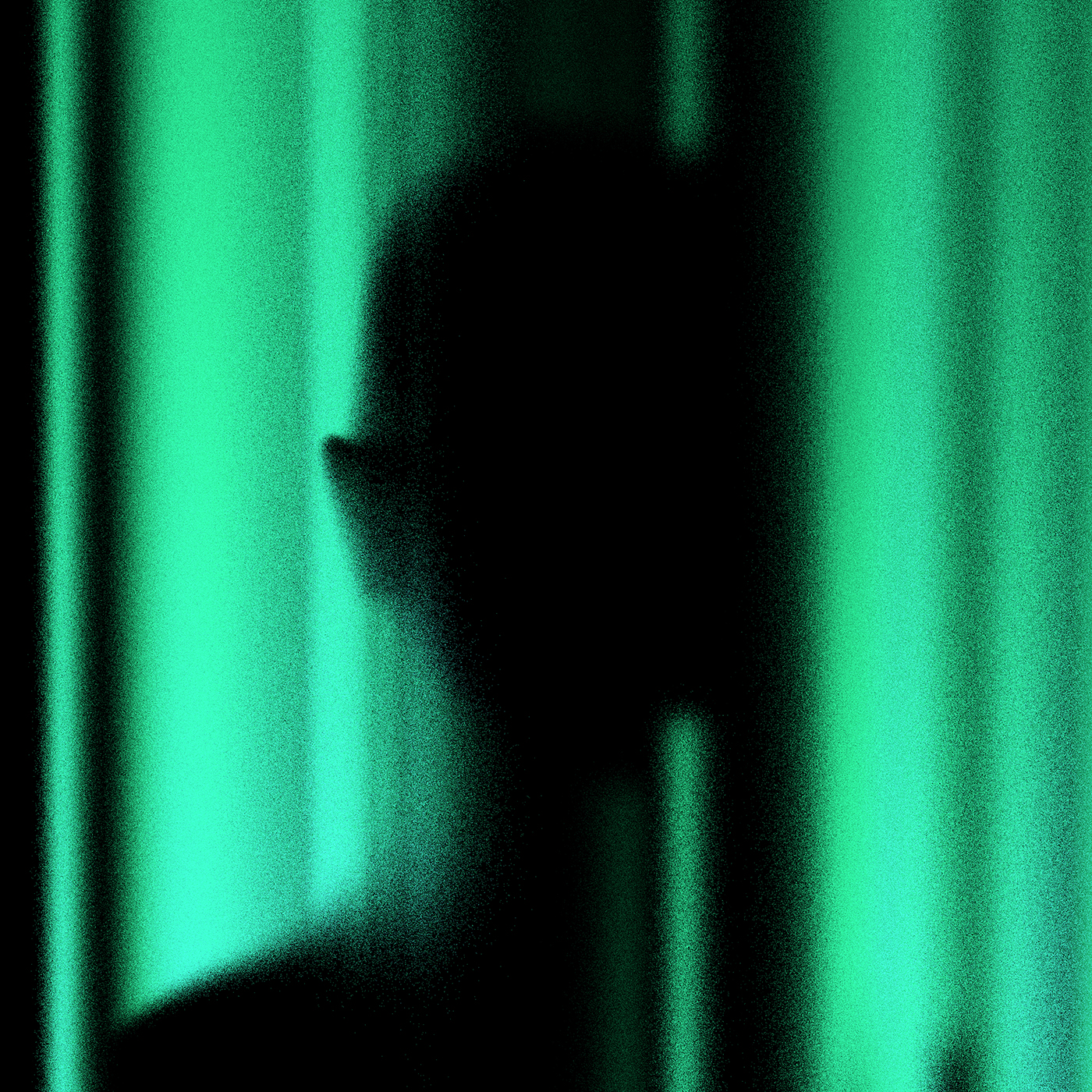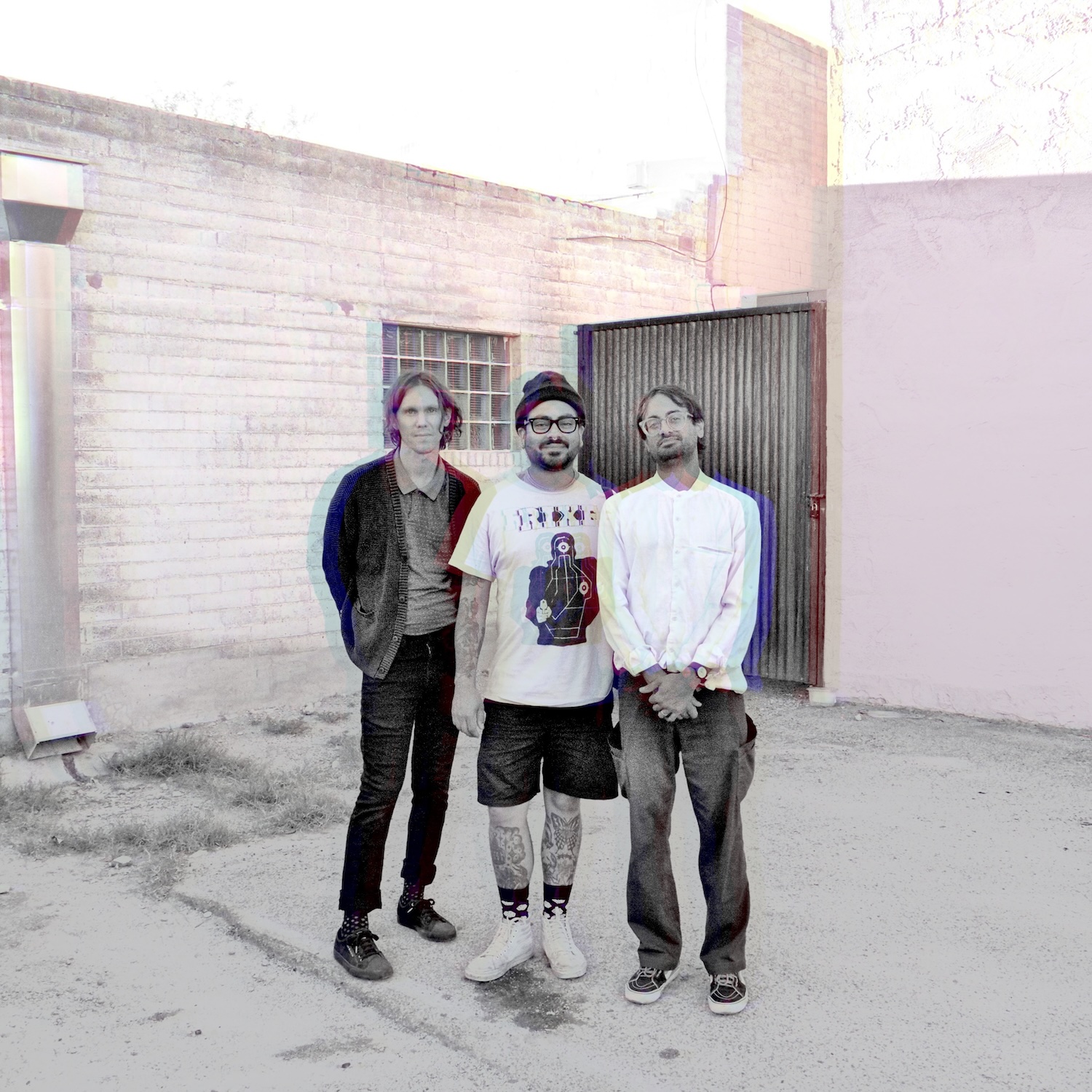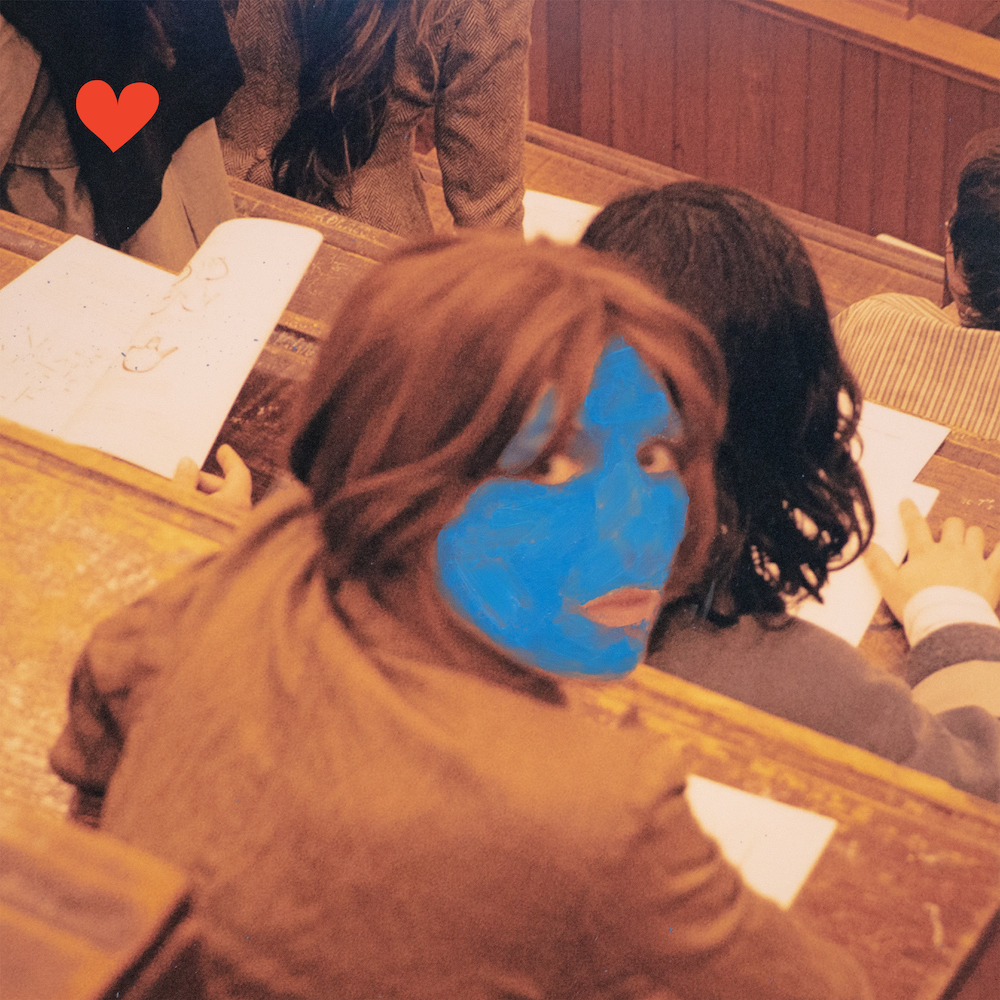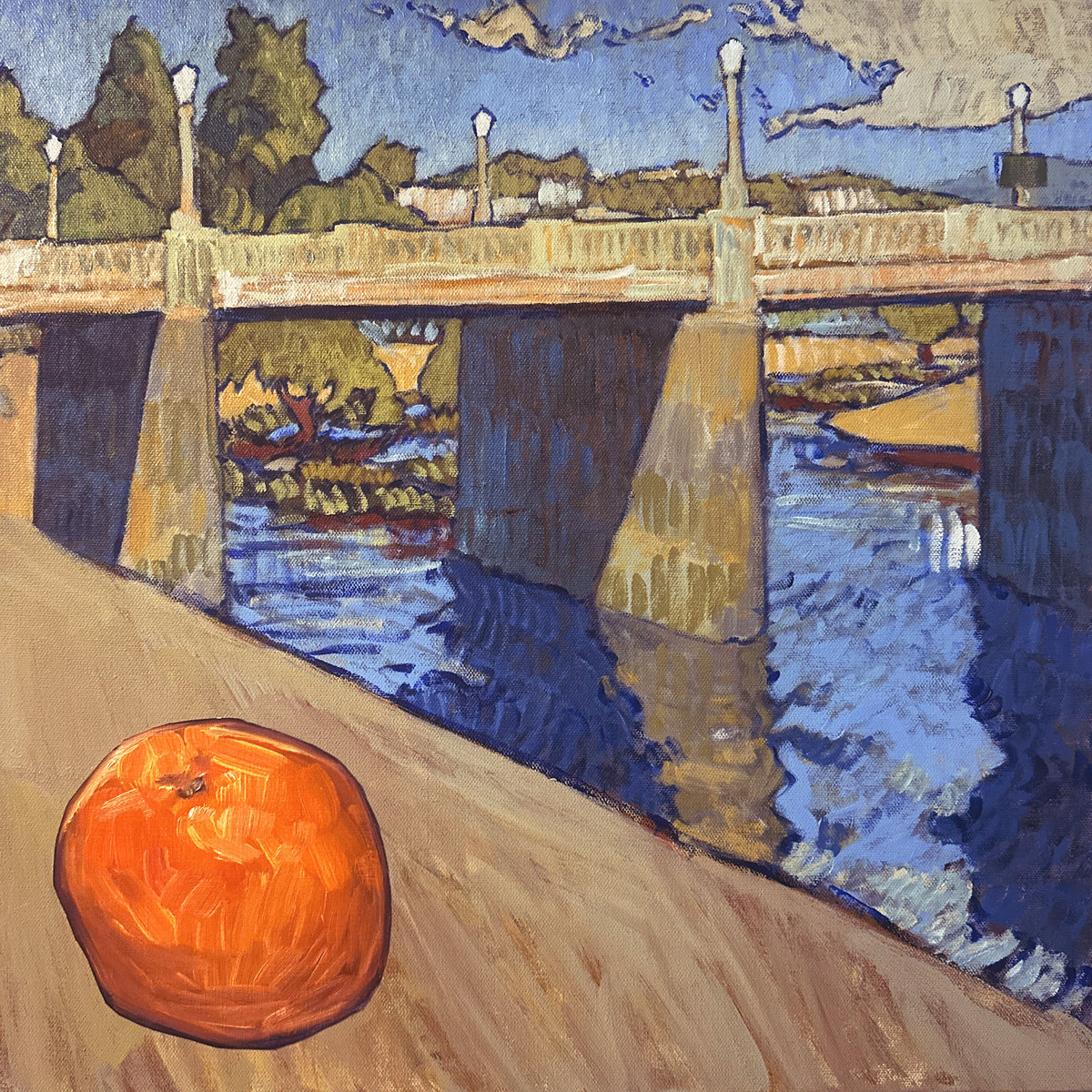

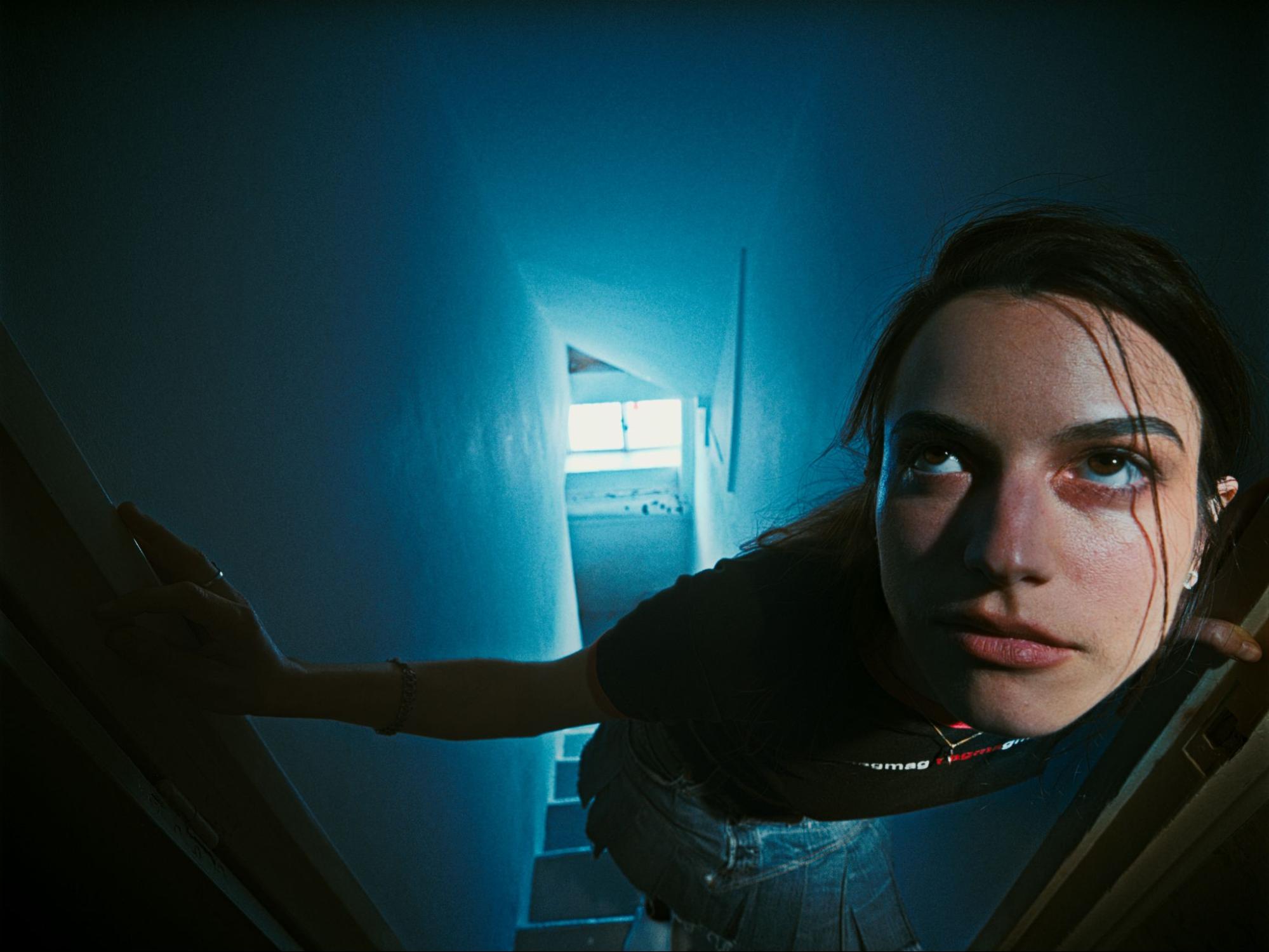
From the art she puts out as Oklou, it'd be easy to imagine Marylou Mayniel as a forest nymph casting surreal enchantments on classic pop songs or a cupid studying romance's metamorphosis. She embodied the former, alongside collaborator Casey MQ, while making 2017's For The Beasts EP, and the latter on 2020's Galore mixtape. In between, she released 2018's The Rite Of May EP, a holographic fusion of found sound, trip-hop, classical, and daydreamy synth-pop. It's no surprise she's opened for fellow pop folklorist Caroline Polachek and worked alongside innovative artists from NUXXE Collective and PC Music. Each adventure has further solidified her as a modern day mythmaker, conjuring a new realm with experimental electronic and pop music.
But when I meet with Mayniel, it feels exceptionally familiar rather than otherworldly. She's lying in bed under pink and light beige sheets, wearing a ribbed, navy blue long sleeve that's freckled with pink and white flowers. Her dark brown hair is cut into cool Lydia Deets-style bangs, and her wide brown eyes are outlined by smudged black eyeliner. I sit on a small white couch next to her bed. Mayniel, several months pregnant, carefully articulates her thoughts surrounding her forthcoming album while resting after this quick New York trip, with a flight out later that night. The dishwasher hums in the background while we chat.
Oklou's creative work continues to bloom, now readying for the release of her debut album Choke Enough. But whereas her previous releases found her exploring a fantastical sound, her album maintains that magic with a closer grasp on reality.
"It's what I can do," she explains in her plush French accent. "That's the reason why it felt like a bit of a challenge for me as well. I choose to mentally not be too much in these imaginary places, but the sound itself is still very much in this realm of fantastic music — sparkling, shining and so many things happening. It's pretty new for me to try and talk about adult things while still using this very childish music."
On her debut, Mayniel masters playfulness with looming unease. "Forces in everything/ Speak louder than me," she earnestly sings during the chorus on "Obvious." Over cherubic horns and a reggaeton-inspired beat, she watches flowers grow and submits to the greater powers at play that feel beyond human comprehension. It exemplifies how Choke Enough feels simultaneously like the manic spiral of an existential crisis and opening a small door to another world that you discovered in the back of a closet, while spring-cleaning.
The hour quickly passes by as we discuss everything from her creative growth and artistic intentions to natural disaster YouTube videos and the dizzying amount of questions she and collaborator Casey MQ asked themselves during recording. "I think I've always loved this kind of contrast. I wouldn't want to, I guess, use whimsical words too much on whimsical music. It's so much whimsical," she says, softly laughing. "It's actually important to notice the fact that even though this album is more focused on real-life stuff, the music is still, and will always, forever, have this wonderland aspect to it."
Below, hear new single "blade bird," out today, and read our conversation.
Asking Questions That Don't Have An Answer
I'm curious about the differences in escapism of what you're exploring on Choke Enough versus Galore?
OKLOU: Yeah, the two are totally different. There's been this need for me in these recent years, without even talking about music, to get closer to real life and what's happening around me. I don't know how much of it's related to me growing up or or also just a post-Galore effect. Because indeed, as you said, Galore, the story that I wanted to tell [she makes a soaring sound] I had to go very far in the universe. I enjoyed it, but I choose to tell the story in a certain way. I was like, Okay, I want to tell this story in the most beautiful way I can even if some aspect of the experience I'm relating to is not beautiful at all. So I have this like a hyper-romantic prism on what I had experienced at the time in the context of a relationship.
Then after that, my life changed. I met someone new as well. My focus changed. The conversations with my friends also changed. It felt like a new movement, a new way to look at things and to get involved in things. It impacted me a lot, especially on my capacity to use my imagination. I was a bit torn actually, because I was so interested in these real life subjects, sometimes very political as well. And then I was going to the studio, and I was like, "Oh yeah, let's make magic.' It's really hard when you think about real life stuff.
It could be easy, I guess, sometimes to actually use art in that regard. But I find it hard for myself to disconnect and reconnect and disconnect. I chose to stay connected to my social life and spiritual, not in the way of beliefs, but what was interesting to me.
It resulted in hours of discussions with Casey, which is my main collaborator. Hours of discussion. It was almost funny, because at some point for each track we're talking about the concept of the lyrics, etc, for like an hour, two hours, and then at the end of the conversation, we were almost systematically in a dead end of the conversation. We were turning in circles, provoking questions and realizing that there's no answer at all. [Laughs] So that was really special. It was actually kind of tiring. It's what happened. It's really part of the creative process. So it's, I think, relevant to mention.
Thinking Outside Of Herself
OKLOU: I think it also comes from a place where I want to stop thinking too much about myself, too. I think it's even what's happening to me right now. [Laughs] Without mentioning it too much in the interview. Even that is for me, like, a sign of me being ready to defocus, you know, decenter from my own being. I think I've always been a very self-sufficient person. There's good sides to that, but there's also maybe some aspects of it that I think I could do more to benefit humanity.
Think a bit less about my own existence, my own comfort, and the impacts that the choices have on everything you know. I feel some form of pride to enter this new era of my life, because I really think it is the best thing that we can do. You start to think outside of yourself.
How did thoughts on motherhood and family impact the conceptualization of the album?
OKLOU: As far as the thoughts on motherhood, when I wrote the lyrics to "family and friends," first of all the pregnancy was a total surprise. I had the album to release and the tour to do.
It's a different kind of birth.
OKLOU: Exactly. But my evocation of motherhood in the context of "family and friends" illustrates, in my opinion, the moments where I've been thinking about, why do I feel like I'm necessarily gonna have kids one day? I think, like a lot of women, our age and our generation, are asking themselves these questions — what do I really want to experience? I've been growing up in a family where every woman is a mother, and there's no question about that. And every father is doing the barbecue on Sunday. You know, everything is very like women and men and family driven. It's great, because my family is good people, and everybody's saying I have this chance to have a functional [family] having grown up in a functional and loving environment.
But what was not there though was questioning everybody's posture in the family. I think I've become more and more aware of how conditioned we were as women in my family.
It's been a few years that there's been this pretty natural conversation in myself regarding the path I want to take in my life, and how much I actually want to be a mother just because all these women before me have done that.
"family and friends," the chorus is me wondering if it's even worth asking myself all of these questions. It's very schizophrenic in that sense. I keep going back and forth between thinking too much if I feel good and enjoying my life as it is, how much you know you have to put yourself in this discomfort of actually questioning everything. What good does that really make for yourself and for people around you?
Crowds And Creating A Sense Of "The Other"
OKLOU: In my visuals, and moodboards for the visuals, you can find this interest for outside. I made lots of YouTube playlists of videos where it's about a lot of people, crowds sharing a common energy — whether it's a party or a protest.
Without, again, [Laughs] being able to really say why I knew, for all the visuals I didn't want to be the only human being in the frame. That was non-negotiable. It was a clear need that I had to really be surrounded by people. So that's why I've made the album cover, also with people in the back, and in all the videos I'm always with somebody.
I think it was one of the ways for me to imagine that sense of "the others."
Online Footage From Other People's Real Lives
OKLOU: I've had this playlist for almost 10 years — it's a curation moment where, okay, which videos, which pictures do I want to pin on my wall? I always do that when I am in my studio, I gotta print my favorite images, even if it's just a screenshot from videos. And I've noticed that the selection I made was only like real-life situations. Nothing too fictional. Nothing too fantastic. No imaginary universe. Really just screenshots of and pictures of the actual lives of real people, whether it was on TikTok or YouTube.
I remember this video of a kid with his father. He's playing in a suburban neighborhood and there's a plane that is flying right above their heads, flying so low and it's making a huge noise. This is one of my inspirations, it's weird [Laughs] but I don't know. I guess in these videos, there's always something a bit odd happening, in that case, actually it's the plane. It's disturbing a normal, random moment.
What else was on the mood board? Did you pull from any other artists or other art that also grappled with existential or grander forces or the unanswerable questions?
OKLOU: It's a very interesting question. Actually, I've never thought about it before, but while you ask it, I realized that I had no inspiration from other art pieces. I don't think so.
In music, I have references. When I think of Choke Enough, I didn't have a reference musician or other album. If you take each track, I will have references.
There's a movie called Plague Dogs —
I didn't even realize that was a film reference, because when you were talking about the plane and the boy and his dad, because that's a song that also samples a helicopter sound, right?
OKLOU: Yes. The helicopter sound we hear in "Plague Dogs" is a sample from one of these videos that I was collecting. This video has been shown to me by my boyfriend when I was showing him my references, in terms of images. This video is insane. It's a drone shot of someone running away from the police on the beach. It's this guy running away from the police in his car on the beach. You can see, sometimes in the shots, the helicopter that is doing circles. Then the guy jumps out of the car, and he's obviously inebriated, he's entering the sea with his bottle. He's going into the sea and he's drunk as fuck. He feels like he's indestructible. You can really feel this energy. It's like wahhhhh! Have you seen Plague Dogs?
No.
OKLOU: So it's an animated movie and there is this final scene that I'm not going to spoil too much, where the two protagonists, plague dogs, are entering the sea seeking something. You don't really know what they're looking for. But I made the connection between these two scenes that was really inspiring for me.
Catastrophic Videos And True Crime
A sort of voyeurism or spectatorship seems like a major theme within how the videos have been shot but also within the lyrics. Was that coincidence or intentional?
OKLOU: That was very intentional. My boyfriend is also the person who's been directing these videos [Gil Gharbi], and we wanted to have that one concept of having only videos and images that make you feel like the camera is part of what's happening. We gathered a lot of references like surveillance cameras, dash cams, webcams and all these different ways to shoot videos.
It's funny, I've never used that word before, "voyeurism" — but that's really what it is. It's a new thing for me, is that I've always been very into watching really hard catastrophes online, videos of natural disasters, and I love true crime. I'm unable to watch people being murdered in real life, like I can't watch the normal news, the reports of wars happening around the world. It's unbearable for me; I cannot watch that. But the documentaries where everything is measured in terms of what you can see and what you see — I love watching that. Serial killer stories – I'm fascinated with that.
Recently, my stepfather said to me, "I don't understand how your generation is so appealed to such morbid stuff." And, what he said, that's so true. Why? What do I really like in this? Also these types of documentaries have so much success.
Sometimes the stories are so horrible. I've made actual nightmares post-watching these things. I know this appeal is something that I've been questioning a lot, with Casey, in the lyrics. I talk about it in "Thank You For Recording." I guess it belongs to the many themes and questions that come when I look outside of myself, what do I watch and why? Still don't have the answer. [Laughs]
Manipulating Her Own Recorded Sounds
OKLOU: I was walking in Paris, I was going to grab something to eat in the area of my studio space. I heard this really weird sound, which I think was like a working machine that goes like [mimics the sound of a rotating siren]. I recorded it because it was something that reminded me of the sound effects that you can find in movies like Ghost In The Shell or Blade Runner or Akira. I'd never heard a noise like this one, plus there was like a natural reverb in that street that day. It was pretty mesmerizing. No further reason, I recorded it. This is the sound I've been waiting for months, and I'm gonna use it because I loved the sensation that you get when you hear it. It's an interlude. It almost sounds like a weird bird.
Then there's the moments, I guess, where I've been trying to imitate, the intro for "Thank You For Recording" I spent a few hours trying to look for the best way to make it sound actually, I actually recorded it from the speakers, but make it sound like it was like a stolen moment.
What's that siren sound from?
OKLOU: It's from the "(:´༎ຶٹ༎ຶ`)" interlude.
Where is that visual from?
OKLOU: I don't know. It's also on my wrist. [She points to a tattoo.] I love this emoji face, because you don't really know what's happening for this person. It feels like it gets overwhelmed and I love that. I can relate. The album is a bit overwhelming for me. Even when I talk about it, I go to so many places. There's a lot of things that cross my mind in comparison with Galore which was a simple subject, one idea. This experience, It's totally different for me.
Being Patient And Working With Intention
OKLOU: I was also waiting for things to come to me in general. Which is something I also tend to do in other aspects of my life. I'm not a proactive person. I like to interact with life when it feels hyper spontaneous. It's a bit of the schizophrenic reality of being an artist. When you work in an industry it's because you have to deliver. It's normal. I made that choice of making a living out of this activity. So if there's no activity, there's no living. [Chuckles]
Sometimes as an artist you can feel the limits of what requires that choice to make a living out of your art. You don't always want to make art. Sometimes you really need time. In a world where money was not something, in a very imaginary world, I potentially could have stayed, I don't know how many years, without making music. It's a hypothetical, but I've been aware that I'm not a machine. I really need the time.
Your relationship with time is more about marinating and incubating ideas? Or is that delay in a project about perfectionism, wanting to have something fully realized before you put it out?
OKLOU: This is very important, actually, because it's something also that is dysfunctional, in my opinion, within the industry and what you're being asked to do. There is so much content, so much information, and so many things being shared. Often I find myself like, I really want this thing that I share to be worth it, to be beautiful, to be incarnated, because I feel, especially in hard times, it's overwhelming, and things are being shared for the wrong reasons. Many things that are not actually art-focused enough. For me, it's a shame. I feel bad when I do things in that regard, to run after a result. It's incompatible with the concept of the industry, obviously, but it's what's been at stake recently for me. It's all about the choices you make at the end of the day.
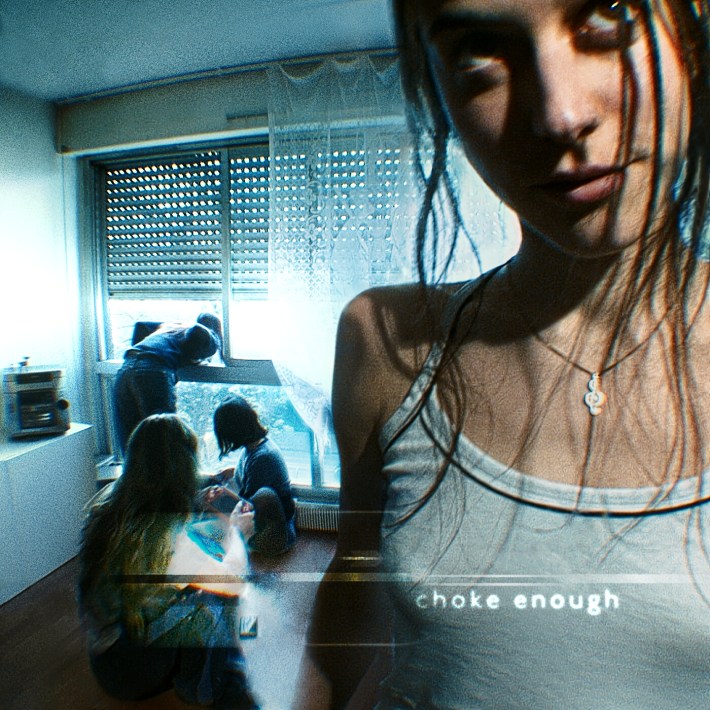
Choke Enough is out 2/7 on True Panther.