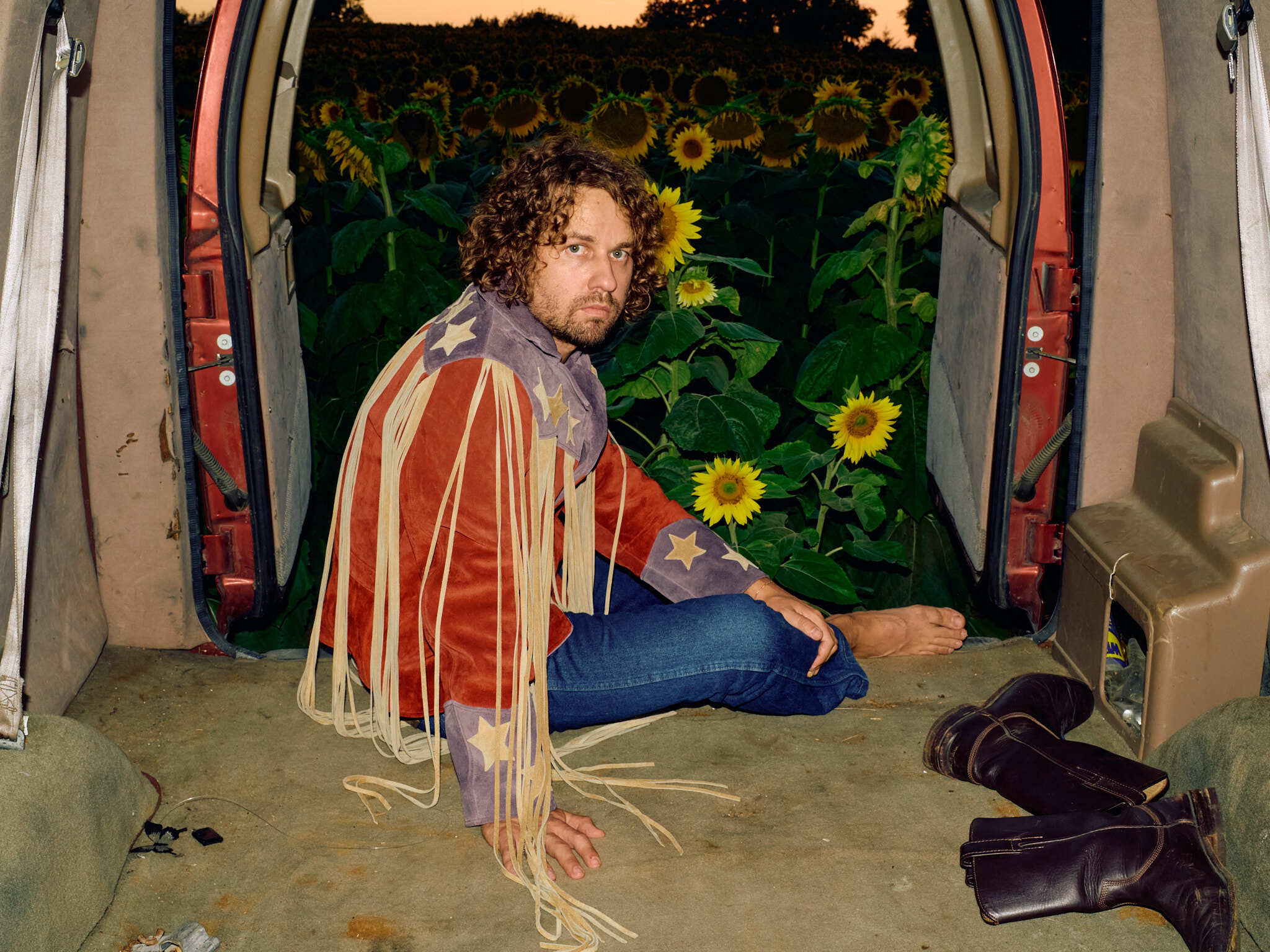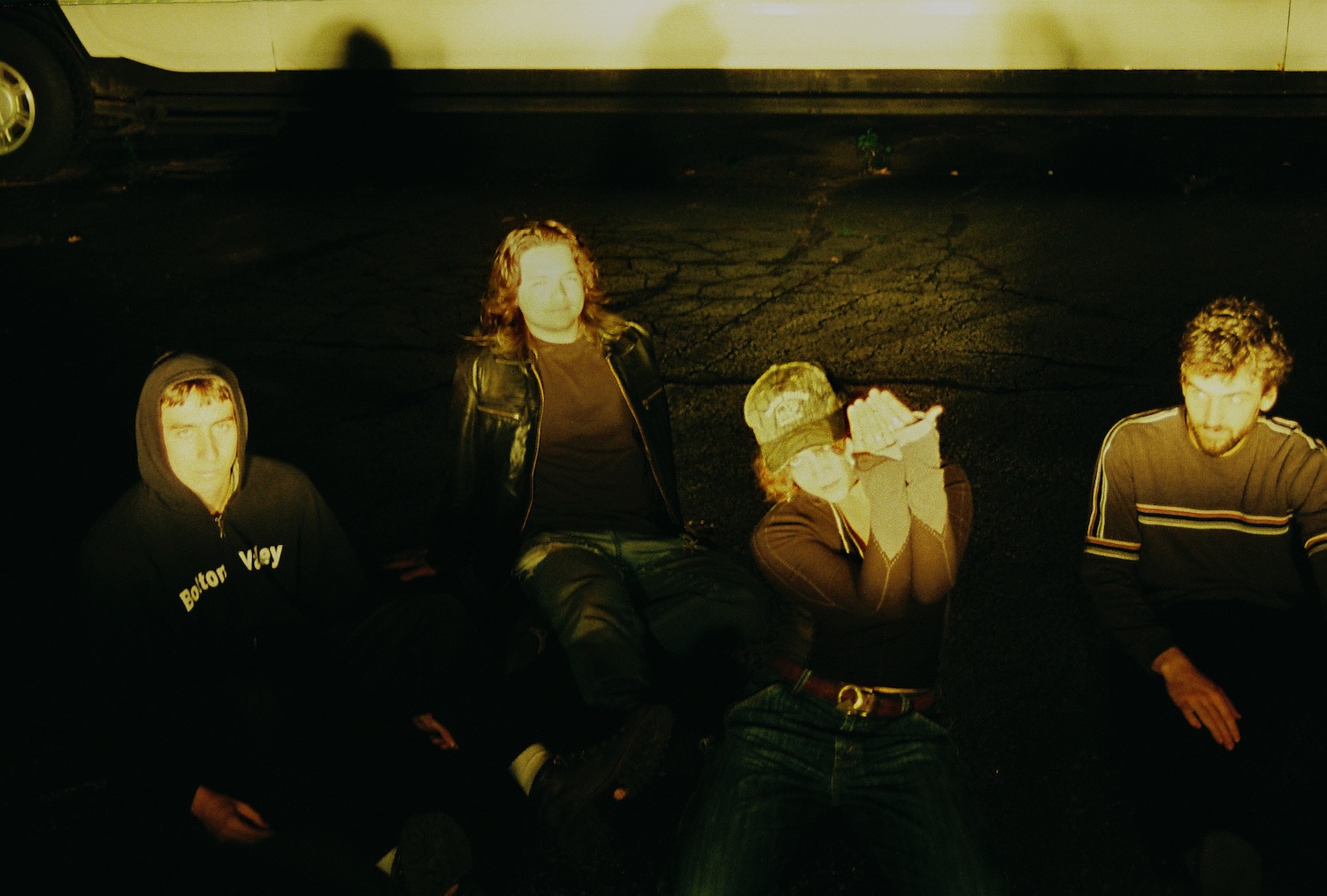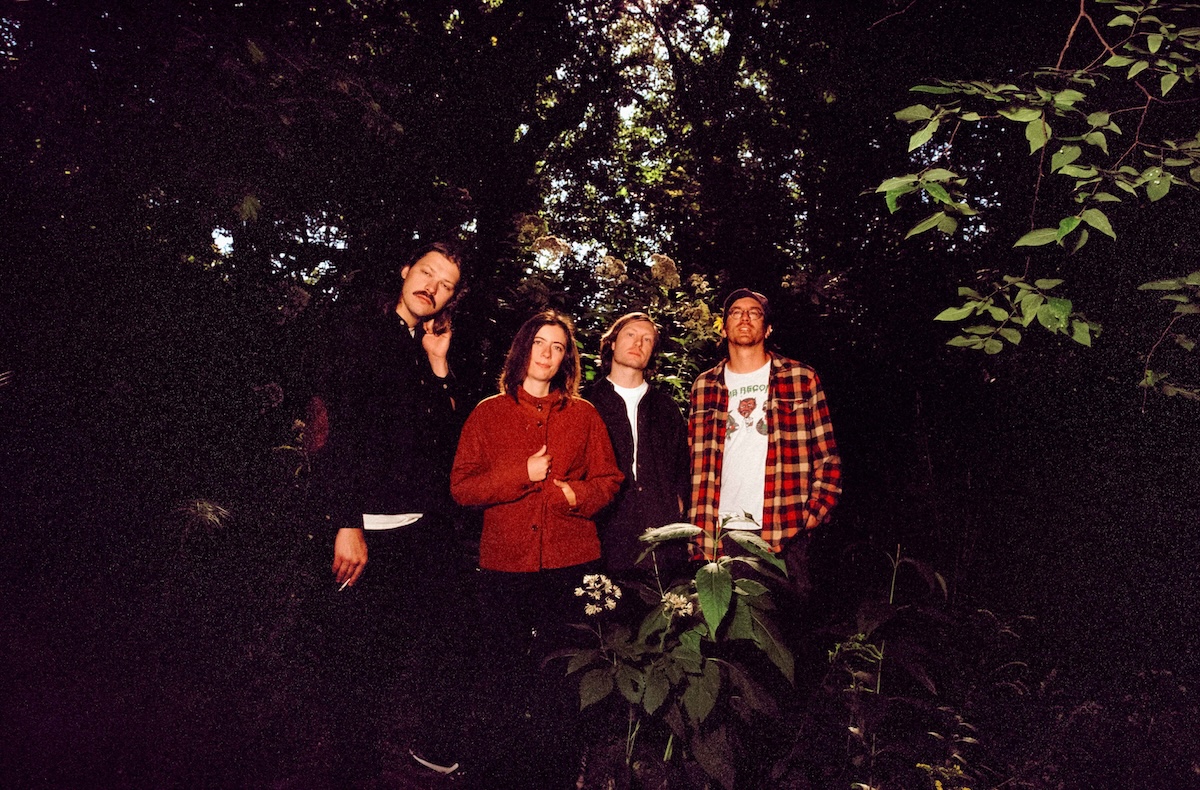


After nearly two hours of chatting, Izzy Hagerup throws her hands up in the air and admits, "I'm just really scared of music right now." Her eyes widen below her short-trimmed brown bangs. A smile tugs at her lips, and she shifts in her seat, as if trying to shake off creeping anxiety. The Western Massachusetts musician, who transplanted to LA a few months ago, makes music under the moniker Prewn with rickety, goosebump-inducing cello-rock. When we talk via Zoom, it’s a week away from last Friday's release of System, the vehement follow-up to her 2023 debut Through The Window.
The 28-year-old musician talks about her work with equal frustration and awe. "It's been a slow burn," she says of her music-making journey. In second grade, she started taking cello lessons and as a teenager moved to the guitar. She wrote her first song when she was 15 and didn’t return to songwriting until college. She studied psychology and writing, but never expected to be a musician. Even now, as she’s in the thick of it, it all seems like a mystery to her. "I don't know how I'll ever write a song again," she says, revealing she currently has no writing process. "I really feel writer's block all the time, especially right now. But, I know I'll get through it,” she says. She speaks about her artistic tension as something both inevitable and insatiable. It's the same hunger that fuels her songs.
This new collection is essentially her demos from the past four years, written mostly in the middle of the night and described as a journal of her mid-20s. As I ask her details about each song, she tends to only speak in half-sentences, the thoughts in her mind expanding too fast for her words to contain. When thinking about how she navigates her persona within her work, she spirals slightly. "Okay, I'm thinking too much. I'm thinking too much," she admits. "But yes, totally, it's definitely an outlet of some version of myself that I'm not even conscious when I'm doing it," she says, laughing at the mysticism of creativity.
As our conversation flows, it's evident that the primal black hole of emotion her songs tap into is both a source of confirmation and unease. With her music, she wants to go deeper even though she identifies as someone that represses a lot of feelings. "Something horrible will happen and I’ll be like I don’t know and then a few years later I’m like Waaahhhh!" Hagerup says. "I think a lot of that does come out in my music. It’s the only time sometimes where I can feel things because there’s somewhere to put it. I don’t know if I’ve been letting myself feel enough lately." That numbness is a shield and a creative block.
The first time I heard Hagerup’s music, I was immediately struck by a feral intensity that brought to mind artists like the Pixies or PJ Harvey. Her voice is unmistakable – spidery, strange, carnal – and her pen is equally bizarre and enrapturing. Each song is a vortex of feeling, moving towards the unknown and attempting to intuitively decipher it. System begins by oscillating between numbing ease of the modern world ("Easy") and the fight-or-flight response that each new day in a world of crumbling institutions brings ("System"). But by album's end, Hagerup finds resolve in humanity. "Don’t be scared/ Of the sound/ Of your broken beating dripping heaving heart," she sings on the sobering close "Don't Be Scared."
Where she wants to go next with her writing mirrors that sentiment: "I need to tap into my grief and sadness and stuff because it’s there. And when you don’t live in it then you’re just numb. You can’t see the beauty and you are running from the pain. It’s this Groundhog Day feeling. I feel that’s the antithesis to art, love, and connection, and giving a shit about the world."
Listen to System below and read Hagerup's insight on each song.
1. "Easy"
IZZY HAGERUP: In one sense, its energy felt like a good opener, starting very simple. That song in particular was a reflection on some mistakes I made in a particular relationship-friendship kind of thing. I was a little bit taking accountability and realizing -- it starts out like, "Oh, I'm walking over town, I forgot about you." But it's like, oh no, the realities that you think you can avoid, or things you cannot take responsibility for, are gonna follow you wherever you go and eat away at you and affect you.
I reflect on this easy route I tend to take of comfortability. "I don't know," is probably one of the phrases I say the most. It’s this avoidant nature. But I think that song is calling myself out. It's easy to not go deep with people, and it's easy not to look inside; it's easy to live on the surface. The damage that you do, when you do that, it's easy to think you're innocent, but that in itself can have a lot of damage from being complacent and give in to the world of destruction. I think I was always excusing myself for that, but no, life is supposed to be hard.
"I was sniffing a flower/ And I snorted a bug." I never write things when I am out in the world. I wish I did, but that part I was on a hike and had to sing it the whole way back so I wouldn’t forget it.
2. "Commotion"
HAGERUP: It’s hard to remember what was totally going on -- but I know that was inspired by men. I think as a people pleaser, and also a lot of ingrained feminine traits and stuff of just, you know, you knowwwwww... it was stuff I was going through at my job and with my boyfriend at the time. I can't help but do my version of pleasing. But I’m like, [in a low-pitched mischievous tone] you don't even know... If I had the strength or if this was a safe place. It's kind of about that patriarchal reality.
It was kind of inspired by having to put on this happy face and having to mold to everybody else. But "You don't even know what I’m thinking inside!" I think I could relay that to my day to day as well, of not knowing how to be bold enough to outwardly show how, like, "I'm like a little evil too!" You know? It’s kind of just a fuck off, men-kind of song.
I could see that with the "I’m so holy in your eyes" lyric. I was wondering who you were directing that to.
HAGERUP: I guess this song must be three years old, because this was a different boyfriend in mind during that. I feel crippled a little bit by my people-pleasing. Even someone so close to me, you can’t even see me or you’re not able to see me deep enough to see that I’m not this thing that you just decided I am. I don’t have the strength, at this point in my life, to let you see me in a negative light cause that’s death a little bit.
3. "System"
I’m curious about the time span between songs -- the newest and the oldest.
HAGERUP: "System" was different from the whole bunch because I had this melody I didn’t have words to and was just singing in my head, which doesn't normally happen for me. I was in a train station in Tokyo, and during that time, I was like, "I should be really fucking happy right now because I'm in Japan with my friends." But you know how wherever you go, there you are.
So I wrote the first part of that on the train. That was last March or something. Then I kind of gave up on that song. But my friend Linnea heard it, and she was like, "No! You need to—" With that one and the song "Forgot." She's the next Rick Rubin, for me. [Laughs.] But that one and "Don’t Be Scared" were the most recent ones.
The oldest might actually be "Cavity," because I remember making that when I had a studio. My concept of time is very -- I don't know, maybe it goes back like four years. I would say most of them are within the last two or three years. But also, this whole putting out the album process has taken so much longer than I would have thought.
When you say studio, is it a home studio?
HAGERUP: The one I had most recently in Easthampton in Massachusetts, there’s these big mill buildings. One of them is converted to a bunch of studios. It's just a room with no windows, and I love it. The only thing is the sound insulation, it's not good. So if anyone’s there, like Cooper — you know Lucy? The project Lucy?
Yeah, yes.
HAGERUP: He has a studio right above me. It's great, because I love him, and we'll do, like, a 3 a.m. cig and then go back into our little cube. But it’s so audible. I'm like, "Oh, he's having a phone conversation right now." I can only work [when I think] nobody can hear me. It’s just a room with drums in it and an amp. It’s not proper, I’m just using my Scarlett [recording interface]. It’s messy.
And you recorded all the instruments on this album?
HAGERUP: I did all of it, on all of the songs. I play guitar. I picked the cello back up. Everything is my best version of it but I don’t really play drums. It’s all amateur in that sense.
4. "It's Only You"
HAGERUP: That’s probably one of the most almost positive songs I’ve ever written. It’s probably the only love song I’ve ever written. I guess it’s kind of straightforward but that experience of what is this? Is this projection? It’s exploring that feeling, questioning it the whole time, and never really getting to the bottom. We never really figure out what all was at play. That one feels very vulnerable and honest, from a very sweet time.
I think I can struggle with feeling locked inside of myself, and maybe that's related to the people-pleasing thing of I’ll just shut down very quickly. That was an experience feeling like you’re opening the door to the cage that I can feel stuck in a lot.
5. "My Side"
HAGERUP: There's more the reality of when I actually wrote it and it was more about someone… I think it's also about living in this world, or at least this privileged side of the world where we have stuff, stuff, stuff. Everything is at our fingertips, and everything's available — it's such a lonely experience when we have so much. It’s classic: Mo' money, mo' problems. It’s about codependence.
It’s written from the perspective of struggling with someone I love, but feeling maybe a little bit used and feeling critical at the time. We are all capable of the systems in place to make us unendingly miserable. No matter how many prescriptions you have or how much you drink, or how much material wealth you can get—the last lines are like ‘I'm gonna run away from heaven’ or something. Well, yeah, I guess it's a bit masochistic.
Structurally this one is so interesting. I love the metronome, and now it makes sense knowing it’s a demo, but if you re-recorded it how would it change? I think it feels unedited in a really cool way.
HAGERUP: The metronome I got pretty attached to. And then as I was thinking about it, it’s this ticking time bomb kind of thing. If you can't find in the company of yourself what you need, you can pull and pull from people, but soon — it just can't. I feel like that's one of many happy accidents on this album.
We rely on reader subscriptions to deliver articles like the one you're reading. Become a member and help support independent media!
6. "Forgot"
There’s the line, "My words are made of dust," that I love. It’s really beautiful but also seems to be saying something about mortality.
HAGERUP: Those lyrics I actually stole from a song that I wrote when I was 19. I plopped those there. That was a combo song.
Do you keep notebooks?
HAGERUP: I have so many notebooks, but the organization is so -- I actually put that one out on my SoundCloud. It was a totally different song, but I went back. Honestly, that was my friend’s suggestion. I met her at the beginning of college, and she’s been my cheerleader the whole way through and made me start to believe in myself. I just went back into my SoundCloud from like 10 years ago and was like, "What was that part again?" And I guess [both songs] are talking about dripping… I think they’re from the same world, but a decade later.
What is that world?
HAGERUP: I kind of see it as Alice In Wonderland. It's absurd a little bit. Its role in the album is a moment of lucidity -- it’s kind of the most gentle and loving to myself a little bit... The 2020-something version and 2016 version were like, "Oh look at you! Oh honey!" It’s a little self-compassion with that one. I don’t know [Laughs.] Kind of like BLEHHHH! It’s my insides, in a gentle way.
A gentle explosion.
HAGERUP: Yeah, I do see it as, "Okay, we’re gonna shrink on down and go in" — like the Magic School Bus.
7. "Dirty Dog"
HAGERUP: “Dirty Dog” is an example of one of the more random songs. I wasn't taking it super seriously. It was more just letting out this temper tantrum-y, the worst side of myself. I was just playing with it. And then kind of got into it. And I actually joined two pieces -- the outro bit was something I was working on and I was like, what if it kind of morphed — because it also feels kind of in a dream world, and then it falls apart, and now we're here, you know? Nothing is very intentional until after the fact, for me.
You just didn’t know at the time that it was meant to be one song.
HAGERUP: I feel like that’s how songwriting feels most of the time. It’s all trial and error, and after the fact I can interpret it and it can teach me something. It’s a back and forth.
That’s the fun or beautiful part of it, that you can’t control it.
HAGERUP: I’ve never taken an album from demo to -- and did it with a producer, in a studio with someone else.
I'm curious how these songs would have evolved through their second and third — but I justified the way that this album is like if someone makes a painting. I used this as justification, and someone was like, "No, people edit and redo paintings all the time." And I was like, "Oh, okay." But you make some crazy art and that's what it is. It's not perfect, but you can't recapture exactly what that was. This is a capturing of these moments, and that's what it is.
8. "Cavity"
HAGERUP: I got a MIDI keyboard, and when I use the MIDI, it's like candy. It was more just like a fun experimental song. It's mainly MIDI and electric guitar. It has been so long since I wrote it. That was one I was very uncertain about. It's a weird one, but it was the one where, sometimes it's like, "Fuck yeah!" And other times, I don't know! It comes from a trippy, nightmarish dreamland.
How did that become so disorienting? It does expand into a really weird universe in a great way.
HAGERUP: I had a studio that was like 30 minutes away from me, and it was more out in Western Mass, some weird zone. And I had this studio that was really long, but very narrow. Also, nobody was really there, but there was this guy next door to me who definitely was living there, and he had two dogs. There was something about that space that was trippy to be in. And it was my first studio, and I was so excited, but I also felt too uncomfortable to make loud music, because the guy next to me could hear. I think maybe I was doing a lot on the MIDI, because I could use headphones.
Also this song, I have no idea what this is about. I have no idea what a cavity hall is, and there’s that line about Kennedy?
HAGERUP: It was kind of sung in one go. I interpret it at this point as, I sang free association and afterwards, normally I'm going to correct that. But I was kind of going through it, and I can make sense of this enough. It’s got this type of wish fulfillment in it too, this Freudian thing going on, and "I just want to feel it all, but everything's...!" It just feels like dystopia — earnest but also [makes RAAAAWWRRRR sound] this demonic thing, too, going on.
When I was taking notes on the album, I wrote that some of these songs feel like an exorcism.
9. "Don't Be Scared"
HAGERUP: I wrote it from a perspective speaking to someone in my life, but then after the fact, I was very much speaking to myself. It's just about the void that we're all dancing around and pretending is not there. Maybe some people don’t, but I think we all know about it somehow. That unexplainable black hole of "What the fuck is life?" and the darkness and the scariness of that. It also seems to be what fuels all these systems in ourselves and in our world — the patriarchy, power, oppression — it’s all fleeing from the void.
It's pretty dark, I guess, but I like to think that there's a hopeful twist at the end. It's there. The running from it is what causes all this harm and violence, and so maybe find a little curiosity or something around it.
System is out now on Exploding In Sound.