
September 5, 2020
- STAYED AT #1:3 Weeks
In The Number Ones, I'm reviewing every single #1 single in the history of the Billboard Hot 100, starting with the chart's beginning, in 1958, and working my way up into the present. Book Bonus Beat: The Number Ones: Twenty Chart-Topping Hits That Reveal the History of Pop Music.
"Dynamite" wasn't supposed to happen. When the South Korean boy band BTS became the most globally popular K-pop group in the late '10s, they kept their Korean identity fully intact. BTS are a product of South Korea's carefully controlled, vaguely militaristic K-pop star system, but they went against that system's conventional wisdom in a few ways. They were first conceived as a rap group, though that didn't last. They sang about love and partying but also, in the vaguest possible way, about generational discontent. They didn't come from one of the mega-successful major Korean entertainment agencies that controlled most of the K-pop landscape. Where other K-pop groups shot for global domination by recruiting members from different countries, all seven of the adorable young men in BTS were Korean. Most significantly, they didn't sing in English. This was important to them.
It took a long time for South Korea's distinctive take on pop music to find any real commercial purchase in the US, and the conventional wisdom was that Americans wouldn't get excited about any music that wasn't in English. If you look back at the history of this column, you will see that the conventional wisdom has mostly been correct. We'll occasionally get a big novelty hit in a different language, but that's been pretty rare over the decades. There's more Spanish-language music on the charts these days, but a lot more Americans speak Spanish than Korean. When K-pop groups did attempt to launch commercial campaigns in the US, they generally recorded English-language songs and collaborated with American stars. But that's mostly not what BTS did.
The BTS phenomenon seemed to come out of nowhere, but it took a while to fully set in. I started seeing the group's name getting thrown around sometime around 2017, and the stuff I saw was less about their music, more about the waves of fan enthusiasm that would greet them everywhere. At the time, Stereogum and Billboard were owned by the same parent company, and they operated out of the same New York office. I'd come to the city and work out of that office for a few days maybe once a year, and famous people would occasionally stop by that office for reasons that were obscure to me. The first time I showed up to work there, they were like, "Oh, you missed Miss America, she was here earlier today." I wasn't at the office the day that BTS came to visit, but that's apparently the one time that Billboard had to deal with mobs of screaming fans outside the building. If a BTS member wanted to go to the bathroom at the office, a bodyguard would go in first and make everyone leave. Right away, they got that Secret Service treatment.
In 2018, BTS started to rack up top-10 US hits, and they did it without singing in English. American radio stations didn't play BTS. They got their chart placement through the organized and devoted efforts of the BTS Army, their legion of extremely online and vaguely terrifying fans. Like every K-pop group, BTS would throw in occasional English phrases, but they weren't going to pander to the American masses by releasing an all-English song. The only BTS member fluent in English was RM; the PR narrative was that he somehow learned the language by watching Friends DVDs as a child. In 2019, RM told Time, "We don't want to change our identity or our genuineness to get the #1. Like, if we suddenly sing in full English and change these other things, then that's not BTS."
As that quote implies, the people involved with BTS knew that they probably could reach #1 in the US by recording an English-language single. They just didn't want to do it. It didn't fit their identity. Without singing in English, BTS were able to fill American stadiums and to break into the top 10. But then the pandemic hit. BTS had to cancel their touring plans, and they didn't want their momentum to slow. Suddenly, the idea of an English-language song didn't seem so bad. So they did it. They caved. BTS didn't just sing a song in English. They sang a song in the most meaningless word-salad version of English that anyone has ever encountered. "Disco overload, I'm into that, I'm good to go." "I got the medicine, so you should keep your eyes on the ball." "Cup of milk, let's rock 'n' roll." "Ding-dong, call me on my phone/ Iced tea and a game of ping pong." That kind of English.
It worked. Thanks to their craven and obvious attempt to finally dominate the American market, BTS landed atop the Hot 100 for what would turn out to be the first of many times. They achieved things that nobody from their country had ever done, racking up all kinds of chart-history firsts and demonstrating just how globally inclined the American charts had become. From a '90s alt-rock standpoint, their song "Dynamite" is the baldest sellout move imaginable, but that kind of thinking was never part of the BTS equation anyway. For BTS fans, the ultimate validation was to conquer commercially, and BTS did that. They accomplished it in part through their fanbase's reliance on chart-manipulation tactics. But "Dynamite," more than some of BTS' later chart hits, actually served as a real hit in the way that I understand the term. It became the kind of song that you might hear at Target or at a middle-school dance. In its way, that's more of an achievement than the song's actual chart numbers.
So "Dynamite" is a big song that had a big impact. Some of its impact is encouraging. The world has changed enough that something previously far outside the mainstream could become legitimately huge over here. That's mostly a good thing. But BTS' success was also a clear example of successful corporate strategy, and it's hard to get too excited about that. Ultimately, "Dynamite" is a song with a twisty, complicated legacy, but that's probably better than no legacy at all. The song itself is OK, too.
In my book, I wrote a chapter about "Dynamite." It's the last chapter. The song came out when I was working on the book, so there was some prognostication involved there. Ultimately, I think it was probably the wrong choice, though I don't think that even the people who read this column care that much which songs I chose as the most pivotal in pop-chart history. In retrospect, I probably should've given that spot to "Old Town Road," which was a one-off in many ways but which deserves its place in history as the first TikTok song. When I was writing the book, I didn't fully understand that TikTok was quickly becoming even more important to the pop charts than MySpace and YouTube were before it. I thought TikTok was just a variation on those models, and it basically is. But now it's bigger and weirder, and it's effects that nobody could've predicted.
I chose "Dynamite" for a couple of reasons. One was the was that "Dynamite" allowed me to tell the story of K-pop breaking in and becoming a part of the American mainstream. That has happened, but it hasn't been quite as dramatic as what I envisioned. BTS themselves briefly became a tremendous chart force, though I totally forgot to factor in the group's built-in expiration date. Thanks to South Korean law, all seven members of BTS had to go off and serve their compulsory military service. The country actually passed a law specifically intended to give BTS a little more time before they went on hiatus, but that hiatus eventually had to happen.
The hiatus is over now. All the BTS members have finished serving, and they're back together and working on new music. When that music starts to come out, we'll see if they managed to maintain their momentum through all that. The K-pop takeover hasn't quite happened yet, either. At this point, only one K-pop song that isn't by BTS or one of its members has topped the Hot 100, and that song is from a fictional group in a kids' movie. But that one just happened, and it was big, so maybe the K-pop takeover is still on the way. Time will tell.
I chose "Dynamite" for the book for another reason, though, and I think I've been proven right on that one. BTS fans thought that it was important to elevate the group to #1, so they did that. Through a coordinated online effort, they propped their boys up and took their boys to the top, and then they kept doing that over and over again. Record labels have been gaming the charts since the charts existed, but fans haven't done it. Online fan armies were already part of the equation in #1 hits, as we've seen in all the big-name collaborations that topped the Hot 100 in summer 2020, and some fan armies actively attempted to secure the #1 spot for their favorites. Beliebers, for instance, tried to push Justin Bieber's "Yummy" to #1 through a coordinated campaign, but they couldn't beat Roddy Rocch's "The Box." ("Yummy" is a 3.) But the BTS Army could not be denied.
I don't really understand the mentality involved there -- not just supporting the artists that you like, but actively trying to distort reality to make it seem like they're bigger than they probably actually are. On the one hand, the zeal of a fan is a beautiful thing to behold, at least in some circumstances. If people find a sense of community in that kind of collective action, then who am I to argue? On the other hand, why would someone put in unpaid work to prop up someone else's corporate interests? That's some weird shit. On a fundamental level, it seems like such a waste of effort. Those tactics served BTS well, but they also broke containment. Since "Dynamite," lots of different online communities have used the Hot 100 as an ideological battlefield. Things will only get weirder from here.
To get into the story behind BTS, I'll have to get into the story of K-pop itself, since this is the first time the music has appeared in this column. I am by no means an expert in this stuff. If you read my book, shout out to you, and you have already experienced me flailing through the general history of K-pop once. I will try not to repeat myself too much here, and I'll give the shortest possible version. The shortest possible version is still pretty long.
Basically, South Korea was a military dictatorship for nearly a half-century after the Japanese occupation ended in 1945 and the peninsula was divided into two countries. The nature of that dictatorship changed over the years, as different people came into power through coups and assassinations, as well as the all-out devastation of the Korean War. But South Korean pop culture was pretty strictly controlled throughout that time. The country became a democracy after a new constitution was enacted in 1987, and military censorship stopped about a decade later, when the government started to realize that a vibrant national popular culture could serve as a tool for international soft power.
During the dictatorship years, the South Korean government was militant about limiting cultural influence from the rest of the world, especially from Japan. South Korea had plenty of its own music. It had rock bands and protest-folk singers in the '60s, but the state-run media was not interested in that stuff. Before the K-pop years, the only South Korean act that ever made the US charts was the Kim Sisters, a family act that sang for American servicemen during the Korean War. After the war, the group performed at American casinos and on The Ed Sullivan Show, and their 1962 cover of the Coasters' "Charlie Brown" was a novelty hit, reaching #7 on the Hot 100. (It's a 5.) So the Kim Sisters were a pop group from South Korea, but all of their success was in America, and their presentation really rode the line between cutesy and racist. They were not K-pop. K-pop is something else.
By most accounts, the first-ever K-pop single was Seo Taiji & The Boys' 1992 song "I Know," a giant South Korean hit in 1992. Those guys basically did a New Kids On The Block thing, with cheap-sounding keyboards and metal guitars and Public Enemy samples and ultra-primitive rapping. A few years later, that group was torn apart by public backlash when they criticized the government on one song. Yang Hyun-suk, one of the Boys, founded YG Entertainment, which became one of the big K-pop record labels and talent agencies. YG and the other two big firms, SM and JYP, adapted the system behind Japanese idol music in the late '90s. They would find cute and talented kids, organize them into groups, and then send them to boot camp for years. Those kids would live together in dorms. They would take lessons in singing, dancing, different languages, and presenting themselves on TV -- a hyper-charged version of the old Motown charm-school model. Naturally, those kids were often abused and financially exploited to all hell. When they were ready, these new groups would make their hyped-up TV debuts, and they would perform songs that the labels generated for them.
In the '00s, some K-pop groups started getting really, really popular all over Asia, and some of them started to gain a foothold in the rest of the world. Those efforts were often supported by the South Korean government, which pushed the country's popular culture everywhere. K-pop was especially big in Japan, and K-pop groups would often record Japanese-language versions of their music. American hitmakers like Teddy Riley and Sean Garrett would sometimes head over to Seoul and help make tracks for some of these groups. I got really into it sometime in the early '10s, after seeing YouTube videos of groups like 2NE1 and BigBang. These songs and videos were big and glitzy and fun and inventive. They went for pure razzle-dazzle, and they achieved it spectacularly, putting Western pop stars to shame in that department. I loved the idea that these groups could pack stadiums around the world. A completely different culture had taken hold of the TRL era's ultra-pop and turned it into something almost hallucinatory. I loved that.
Before BTS, some K-pop groups nurtured internet-driven fanbases in the US, and they'd play occasional shows in big cities. Wonder Girls' 2009 English-language single "Nobody" made it to #76 over here, and Girls' Generation performed on Letterman in 2012. But the first time K-pop really made an American chart impact wasn't because of any of those idol groups. Instead, it was "Gangnam Style." Psy was a veteran of Seoul's underground rap scene, and he was friends with YG Entertainment founder Yang Hyun-suk. Despite being in his mid-thirties and not looking or acting like a pop star, Psy was part of the YG roster. In 2012, he recorded a sarcastic dance-rap track about cultural materialism, and he made an extremely silly video for that song. It went mega-viral, becoming the most-watched video in YouTube history. If Billboard counted YouTube streams in its Hot 100 tabulation at the time, "Gangnam Style" would've almost certainly been in this column. Even without that, the song reached #2. (It's an 8.)
"Gangnam Style" was a novelty hit, and it didn't necessarily say much about the American commercial prospects of K-pop. But then BTS happened. BTS basically started in 2010. Bang Si-hyuk was a staff songwriter at JYP, one of the big K-pop labels, but he left in 2005 to start his own optimistically named company BigHit Entertainment. BigHit later became Hybe, which is now a global entertainment powerhouse, largely thanks to what Bang did with BTS. Bang first had the idea for BTS when he met and signed a 15-year-old kid who called himself Rap Monster. (He's just RM now, which is too bad. I really like the name "Rap Monster.") Bang wanted to build a rap group around RM, but he quickly decided to change course and turn it into a regular idol group instead. Still, Bang wanted BTS to be different.
BTS' name, by the way, does not stand for "Behind The Scenes" or "Built To Spill." Instead, it's "Bangtan Sonyeondan," which apparently is Korean for "Bulletproof Boy Scouts." Bang Si-hyuk was working at a disadvantage, since he didn't have the funding or resources of the big labels. He decided that BTS sound stand out essentially by being more genuine. The group members would get to help write the songs, and they would speak to a vague feeling of generational longing, giving a voice to kids who felt beaten-down by parents and schools and systems that expected too much of them. Sometimes, BTS would make references to cultural discontent, calling themselves "dogs and pigs" on one track after one politician claimed that the country needed a stronger caste system and that people needed to be treated like those animals. But when I say all this, I'm just going on what I've read. I don't know the language or most of the cultural context, and almost every BTS single just sounds to me like a sleepier, more sentimental take on regular K-pop. They've got the big hooks, the rapped verses, and the constant switch-ups between which of the seven members is doing the lead vocal. They have never been my favorite K-pop group. I generally don't get them. That's fine. I don't have to get everything.
BTS released their debut single "No More Dream" in 2013, and it didn't find much commercial success. But something about the group struck a chord, and the fan group known as the BTS Army immediately started to form around them. BTS gradually picked up steam in South Korea, and their 2016 single "Blood Sweat & Tears" became their first chart-topper over there. By 2017, they were big enough to tour the world, headlining arenas in New York and LA. That year, their song "DNA" became their first single to reach the Hot 100, where it peaked at #67. Shortly afterward, they made it to #28 with "Mic Drop," a collaboration with superstar DJ Steve Aoki and former Number Ones artist Desiigner. This was probably around the time that BTS visited the Billboard offices and caused general hysteria. The snowball continued rolling, and they reached #10 with their 2018 single "Fake Love." (It's a 5.)
"Fake Love" wasn't a mainstream hit like "Gangnam Style," but it also wasn't a novelty. BTS made it into the top 10 without singing in English or resorting to gimmicks. In terms of presentation, they pretty much came off like any other male K-pop idol group, albeit with maybe a little less focus on frantic energy and a little more on moody sincerity. All seven of them had distinct looks, which allowed fans to pick favorites, in classic boy-band fashion. They did elaborate dance routines and had lots of special effects in their videos. They followed the playbook, but they resonated so much more than all their contemporaries. BTS released a lot of albums; their first six all came out in a four-year window. One of those albums, 2018's Love Yourself: Tear, debuted at #1 on our album charts. The group scored another top-10 single later in 2018, when "Boy With Luv," their collaboration with former Number Ones artist Halsey, made it to #9. (It's another 5.)
In 2019, RM appeared on one of the "Old Town Road" remixes that helped keep that song stay at #1 for so long, and all of BTS joined Lil Nas X's performance of that song at the 2020 Grammys. BTS continued their chart momentum with "On," a mostly Korean-language song that went all the way to #4 early in 2020. (It's a 6.) The group's momentum was huge, and they probably could've eventually made it all the way to #1 just by singing in Korean. They ultimately did top the Hot 100 by singing in Korean, and we'll get to that. Before that, though, the pandemic forced them to cancel all their touring plans, and someone made the decision: BTS would release a single in English.
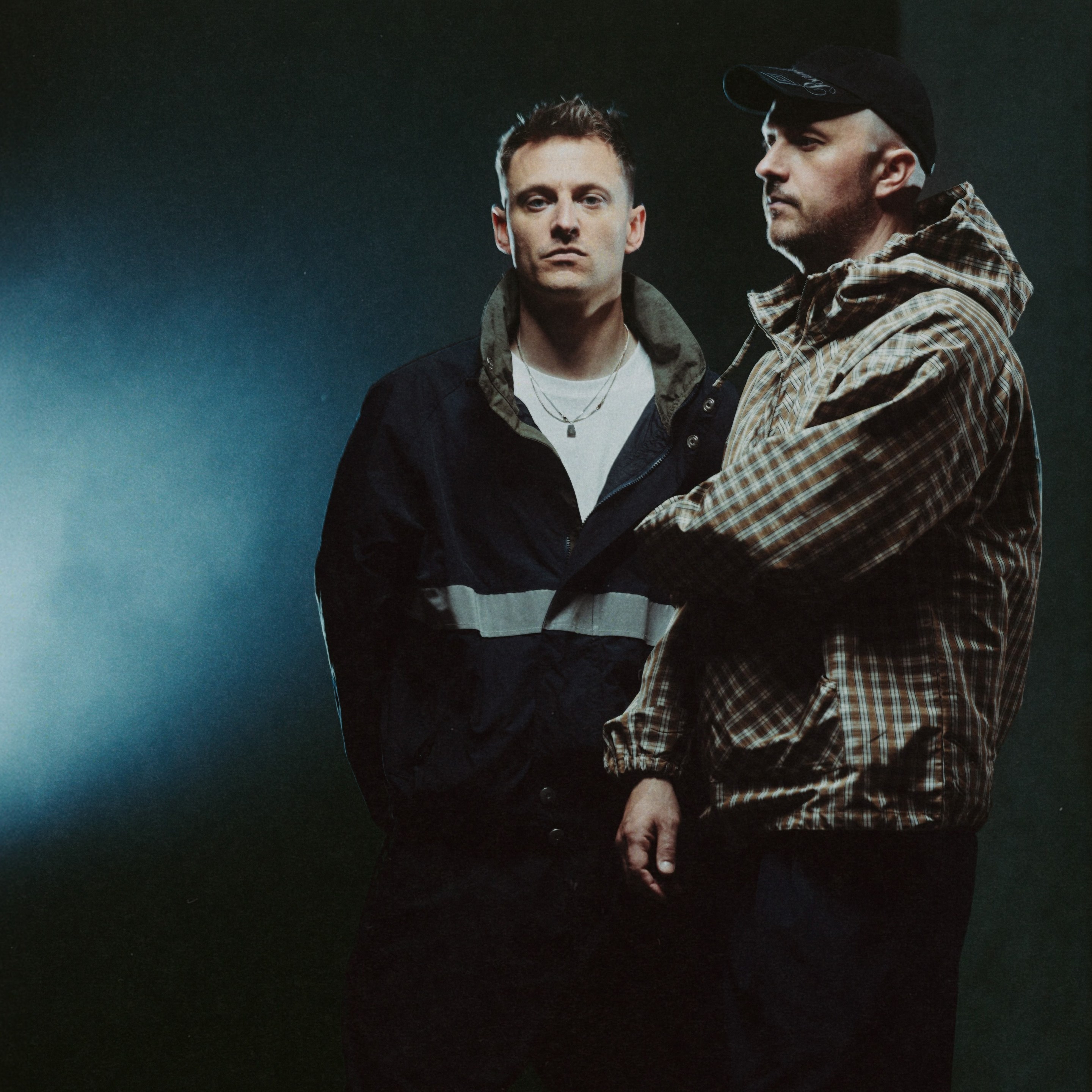
Tons of songwriters and producers wanted to be the ones to write BTS' first English-language song. Fans were mad that Columbia, the group's American label, for supposedly not doing enough to push them to #1, and Columbia made that a real priority. People had to submit song demos to Columbia boss Ron Perry, not to BTS or their Korean management. The song that Columbia selected was "Dynamite," which came from the UK songwriting team of David Stewart (not the one from Eurythmics) and Jessica Agombar. Stewart, the son of an apparently-famous British pantomime actor, got his start as the touring guitarist for the UK rapper Example, and he racked up early production credits working with British artists like Tinie Tempah and TroyBoi. For at least a little while, he did A&R work for Interscope. Sometime around 2020, Stewart started writing songs with Agombar, a former member of the UK girl group Parade. Together, Stewart and Agombar worked on "What A Man Gotta Do," a song that former Number Ones artists the Jonas Brothers took to #16 early in 2020. I like that song.
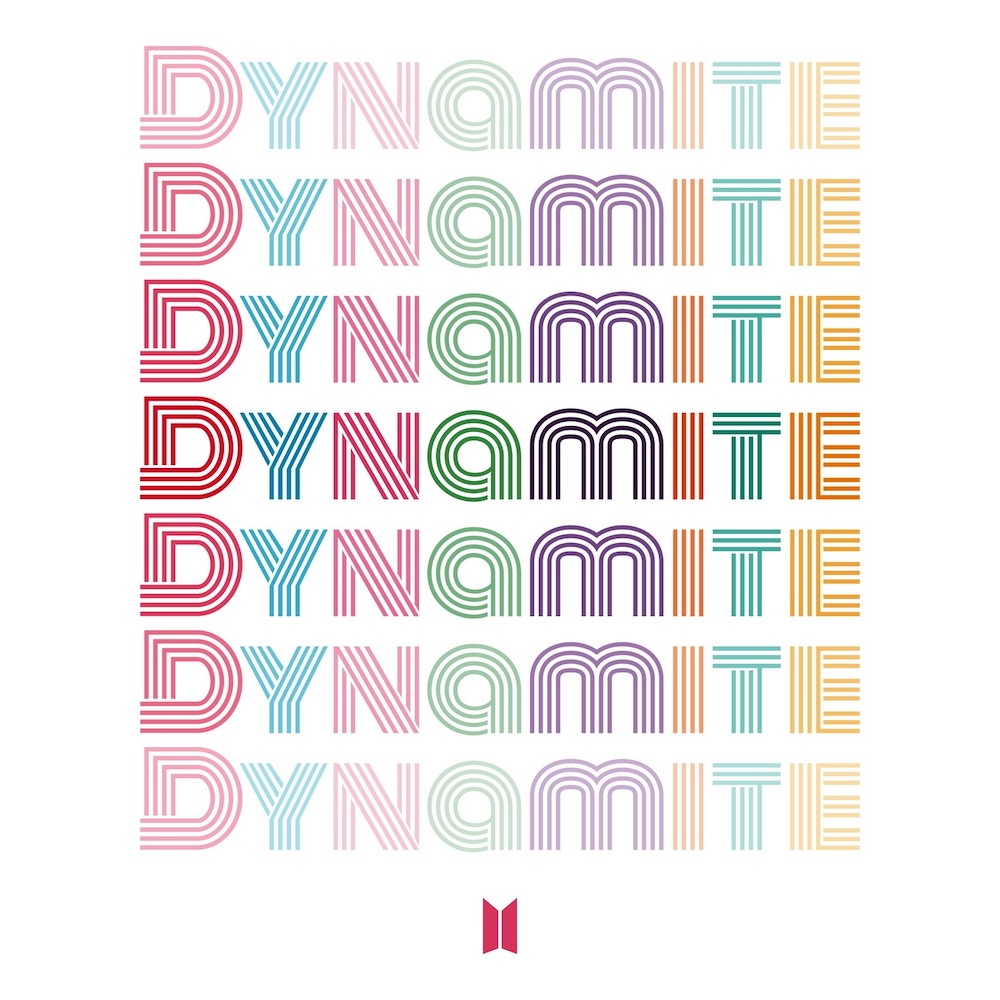
Columbia had specific requirements for a BTS English-language single; it had to be positive and catchy and energetic. David Stewart and Jessica Agombar did their best to fulfill those requirements. Agombar has cited Katy Perry's "Firework" as an influence on the explosive imagery. You would have to imagine that the other "Dynamite," the one from former Number Ones artist Taio Cruz, was a factor, as well. (That "Dynamite" peaked at #2 in 2010. It's an 8, and it's still the "Dynamite" that I usually get stuck in my head when I try to remember how the BTS song goes.) The BTS "Dynamite" isn't really about anything. Its lyrics are a frantic, nonsensical collage of things that kids might like or at least recognize: King Kong, LeBron James, rock 'n' roll. At the end, BTS leave words behind and just sing "na na na na" and "hey." Musically, the references are only a tiny bit more specific.
The only "Dynamite" lyric that I really liked was the bit on the chorus where BTS sing that they're shinin' through the city with a little funky song. I thought that's what they were singing, anyway. They were not. The real line turns out to be "a little funk and soul," which is way clumsier and less accurate. "Dynamite" is a little funky song. That's what's good about it. As a producer, Stewart went for Bruno Mars-style cleaned-up pastiche. (Stewart played all the instruments on the track except the horns. Those came from Johnny Thirkell, the same guy who did the "Uptown Funk!" horns.)
"Dynamite" is the same kind of sleek, shimmery retro-disco that Dua Lipa made with her Future Nostalgia album, though it never gets as juicy as anything on that record. "Dynamite" has all its pieces in the right places -- the guitar-ripples, the squiggly keyboard chords, the slap-bass, the horn-stabs, the handclaps, the whoas. If you can get past the awkward inanity of the lyrics, it's a perfectly effective pop song, though not a life-changing one. You can get the chorus stuck in your head, as long as the Taio Cruz "Dynamite" doesn't get in there first. The key change at the end is really satisfying.
David Stewart and Jessica Agombar submitted the completed "Dynamite" to their publisher, who submitted it to Columbia in the early days of the pandemic. The writers heard back from the label a few weeks later. "Dynamite" was a go. Since most of the BTS members didn't speak English, they had to learn their parts of the song phonetically. You can tell. They all hit their notes just fine, but I don't exactly detect a lot of passion in the song. It's not that kind of song, anyway. It's the type that could exist in any language, where the words are almost incidental.
BTS sent Stewart literally hundreds of vocal stems, and Stewart knitted them all together into a completed track. The group's Korean-language singles typically involve lush, intricate vocal arrangements. "Dynamite" doesn't really have that, even though all seven members take turns singing lead. Instead, "Dynamite" is a textbook example of an ultra-simplistic Western-style pop song. BTS management worked with Stewart to edit the lyrics. Apparently, there were originally a couple of slightly risqué rap references that had to go. BTS weren't going to make anything that was even the tiniest bit hedonistic or rebellious. They were going to take their rock 'n' roll with a cup of milk. Maybe that's why the lyrics are such gibberish, even though they come from two songwriters whose first language is English. In the end, the words are so wholesome that they almost feel subversive. It's like BTS are selling Americans this song while making fun of the dumb bullshit that we like over here.
BTS shot a bright, sunny, generally pretty cute "Dynamite" video. In the clip, they look like high-school kids in the world's blandest sitcom. They giggle and mug and pull little Michael Jackson moves. The big choreography moments are so fluid and masterful in ways that really set off the bits where they look like they're just playing around. As in: They had to convey the impression that they were just playing around. When the single arrived, BigHit claimed that the decision to make an English-language song was a gift to the world, a thing to lift spirits during the pandemic. It worked. "Dynamite" debuted at #1, selling hundreds of thousands of downloads in its first week. For a few weeks, "Dynamite" fought over the top spot with Cardi B and Megan Thee Stallion's "WAP," a very different song. Eventually, "Dynamite" even got decent radio rotation.
The members of the BTS Army had a clear objective to push the group to #1 in the US, and they were successful. The group helped them out, too, releasing a few different barely-tweaked remixes to bolster the track's chart position. Fans could buy multiple versions, and those multiple versions would all help BTS out. I don't get it, but there are people willing to pay actual money out of their actual pockets to make something like that into a reality. Today, "Dynamite" is quintuple platinum, and it has upwards of two billion streams on both Spotify and YouTube. BTS and their Army did it. They reigned over the Billboard Hot 100, and not for the last time. In the weeks ahead, we'll see a whole lot more of BTS. Get used to them.
GRADE: 6/10
We rely on reader subscriptions to deliver articles like the one you're reading. Become a member and help support independent media!
BONUS BEATS: Mike Judge rebooted Beavis And Butt-Head for Paramout+ in 2022, and I'm really going to need you to watch those two experiencing the "Dynamite" video. They came out of retirement and honestly did some of their best work.
The Number Ones: Twenty Chart-Topping Hits That Reveal The History Of Pop Music is out now via Hachette Books. This book cha-ching like money, or at least it would if you bought it here.