
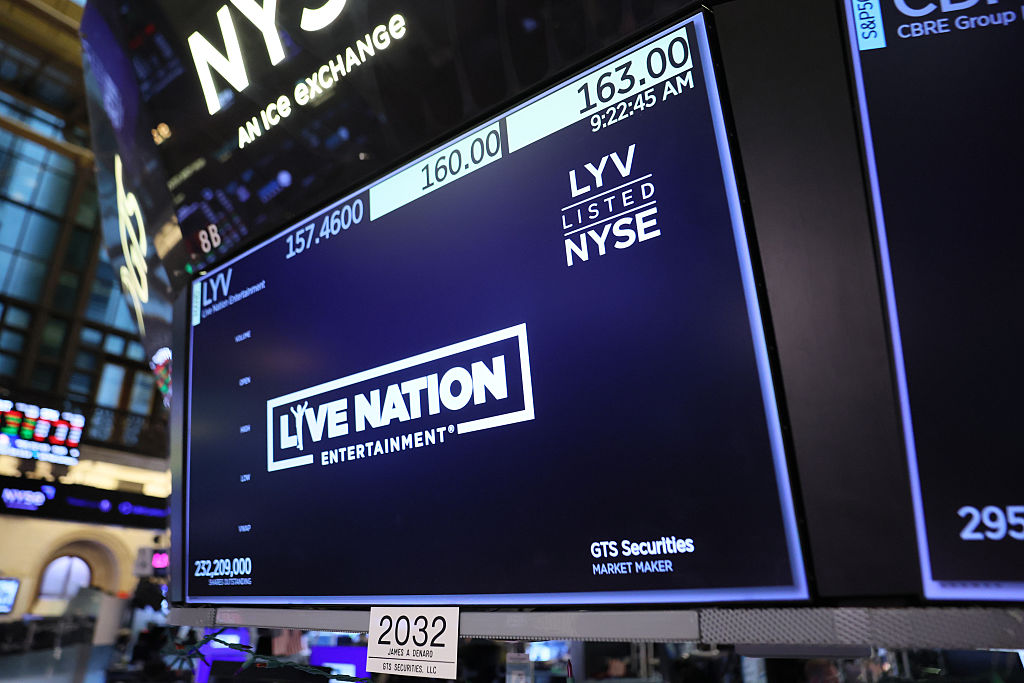
In 2024, Joe Biden's Department Of Justice filed an antitrust lawsuit against live-entertainment giants Live Nation and Ticketmaster, intended to break up the monopoly of the two companies that merged in 2010. Now, the DOJ, currently operating under Donald Trump and Pam Bondi, has settled that lawsuit before the case could go to trial.
Last year, the Federal Trade Commission accused Live Nation of colluding with aftermarket ticket brokers. In January, Donald Trump ally Kid Rock testified against the Live Nation/Ticketmaster "cartel" at a Senate hearing. But even with all that, the Trump administration has an absolutely abysmal record on taking big corporations to task for anything other than opposing the Trump administration and its various deranged pet causes.
Now, as reported this morning by the Associated Press, the DOJ and Live Nation have reached a settlement. This means that Live Nation does not have to face trial for illegally monopolizing the live-entertainment space and driving up ticket prices. The deal prevents the company from being broken up, though it'll make it easier for other promoters to compete for business in Live Nation venues.
As of this afternoon, terms of the deal have been shared with the public. There are 13 main sections to the agreement.
Point 1 requires Ticketmaster to develop a standard API or other such measures "for the listing, verification, authentication, and delivery" of tickets for use with any third-party primary ticket marketplace chosen by the venue, and the system must not include any roadblocks that would incentivize ticket vendors to prioritize Live Nation venues. Ticketmaster must also loosen exclusivity provisions in existing contracts.
Per Point 2, Ticketmaster must make its back-office system available as a standalone product and allow venues to use multiple back-end systems if they choose. Ticketmaster must limit any exclusive agreements with venues to a maximum four-year term. They must not initiate renewal negotiations early, condition any terms on a venue's agreement to forgo requests for proposals from other parties, and must not include auto-renew provisions. Live Nation must allow promoters putting on events at Live Nation venues to distribute up to 50% of tickets through non-Ticketmaster vendors. Ticketmaster's service fees at Live Nation venues must be capped at 15%, and they must not use customer information collected in connection with the transfer of a ticket on third-party platforms.
Point 3 requires Live Nation to sell off 13 of their venues, while Point 4 forbids the company from reacquiring them. These are the venues:
Empower FCU, Syracuse, NY
Maine Savings Amphitheatre, Bangor, ME
BMO Pavilion, Milwaukee, WI
American Family Insurance Amphitheatre, Milwaukee, WI
Bethel Woods Center for the Arts, Bethel, NY
Germania Insurance Amphitheater, Austin, TX
Riverbend Music Center, Cincinnati, OH
Brandon Amphitheatre, Brandon, MS
Cynthia Woods Mitchell Pavilion, Woodlands, TX
Ford Idaho Center, Nampa, ID
Pine Knob Music Theatre, Clarkston, ΜΙ
Walmart Amphitheatre, Rogers, AR
Wharf Amphitheatre, Orange Beach, AL
Point 5 requires Live Nation to allow artists to rent Live Nation venues even if the artists aren't under contract with Live Nation. Point 6 prevents Live Nation from entering into a contract with a Major Concert Venue (the term is capitalized in the document) that provides Live Nation with exclusive or preferred access to the venue. Per Point 7, Live Nation must terminate its ticketing services agreement with the global venue development and management company Oak View Group, whose venues must be allowed to open up a new RFP in search of alternate partners. Additionally, Live Nation must enter into any further agreement with Oak View Group or any other business that rewards the agent for converting contracts to Ticketmaster.
Point 8 prevents Live Nation from retaliating against a venue that chooses a primary ticketing platform other than Ticketmaster and from steering content to favor Ticketmaster clients. Point 9 ensures that artists have access to all information on the people who buy tickets to their shows (subject to standard privacy protection) and requires that artists be made aware of this option. Per Point 10, Live Nation and Ticketmaster must notify the US government of any further acquisitions. Points 11 requires a monitor to remain in place to enforce the agreement for its duration, and Point 12 sets that duration at eight years.
Finally, Point 13 sets a fee of $5 million per infraction whenever Live Nation and/or Ticketmaster violate the agreement, allows plaintiffs to sue for more money in the event of repeated infractions, and creates a settlement fund of more than $280 million to settle claims and penalties brought forward by individual states.