

- Sub Pop
- 2006
Everyone knows “The Funeral.” OK, not everyone, but anyone for whom the name Band Of Horses rings a bell. The song is a towering indie rock power ballad, and it towers indeed over the rest of their catalog: the Band Of Horses song most likely to appear in a 2000s documentary or period piece, the one sync’d to valhalla by Hollywood music supervisors and sampled by multiple hip-hop producers, an obvious choice for placement on one of the chapter soundtracks in my book about the evolution of 21st century indie rock. On Spotify, “The Funeral” has more than triple the amount of streams as the next-biggest Band Of Horses track. It is their signature song, and it merits that status. It is five minutes and 22 seconds of explosive, solemn catharsis. It’s like the Shins tried to make an Arcade Fire song and succeeded beyond their wildest expectations. It rules, and they should be very proud of it.
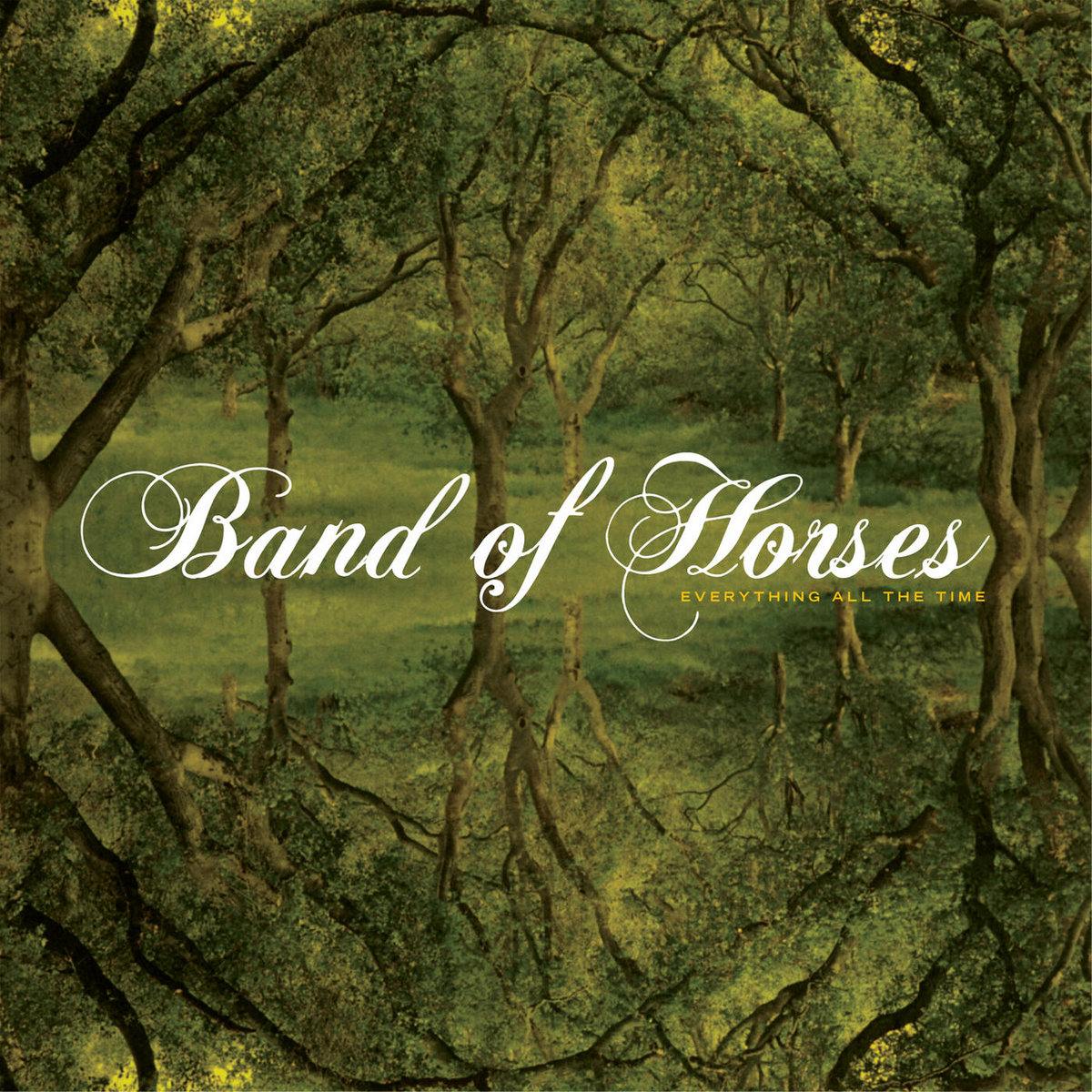
Yet Everything All The Time, the debut album Band Of Horses released 20 years ago this Saturday, is so much more than “The Funeral.” This is not one of those situations where one timeless single was propped up by a bunch of filler and marketed to what remained of the CD-buying population. The album is a classic through and through — maybe not life-changingly great, but worthy of blaring in Natalie Portman’s headphones after Oh, Inverted World all the same. Until I revisited it recently, I had forgotten just how many amazing songs Ben Bridwell and his fellow horses strung together here. But just about every track elicited a giddy “Oh yeah, this one!” response. Those boys freaked it. They really earned that 8.8.
Band Of Horses launched in 2004 after the disbandment of Carissa's Wierd, the Seattle-based indie band in which Bridwell backed up co-leaders Mat Brooke and Jenn Champion, his former pizza shop coworkers. After joining forces in Tucson, that group eventually made its way to Seattle, releasing albums on Bridwell’s upstart label Brown Records. Before falling into his role as a teenage indie rock drummer with no prior band experience, Bridwell had aspired to be more of a behind-the-scenes figure. But once he’d lived the rock band life, he wasn’t thrilled about leaving it behind. Thus, he formed his own band out of necessity.
“I didn’t want [Carissa's Wierd] to break up, but it was out of my control,” Bridwell said years later, explaining his decision to pull a Dave Grohl and step from behind the drum kit. “I really enjoyed the life on the road, the practicing, and dreaming of bigger things. Also I really hated the shitty jobs I had to keep between tours. Now, those jobs were all I had. Also I’d become very opinionated about music and jealous of other bands doing so much better than we ever did. I figured I have no place to complain until I try the songwriting myself. At least that way, I’d only have myself to blame if I were to make a career out of washing dishes for minimum wage.”
Carissa’s Wierd dealt in pensive low-key indie-pop threaded with elegant strings, mumbly vocals, and generally morose vibes. Band Of Horses would swerve in a more accessible direction. As heard on Everything All The Time, their songs were bigger, brighter, and louder, rendered vibrantly by Phil Ek, the producer who’d spent the prior decade-plus helping a staggering number of the Pacific Northwest’s indie greats realize their visions. Band Of Horses flowed naturally from that Built To Spill/Modest Mouse/Shins lineage, accenting it with the rootsy dream-pop of Mercury Rev. The results were potent — and well-timed, arriving at a moment when a wide pop-cultural lane had opened up for user-friendly indie rock but before that kind of music had forfeited its blog-world cachet.
Though it’s easy enough to mentally summon a Band Of Horses signature sound, Everything All The Time is a surprisingly varied listen. “The First Song” glides out of the gate with glacial grandeur. It’s immediately followed by “Wicked Gil,” which shifts from a tense, agitated rocker to an R.E.M.-worthy pop song. The deeply pretty, subtly propulsive “Our Swords” comfortably co-exists with banjo-laced folk tunes like “Monsters.” The wide-open splendor of “The Great Salt Lake” gives way to the sensitive joyride “Weed Party.” All of those tracks triggered a nostalgia I didn't even realize I had, and they all hold up.
Though Bridwell would one day move back to his native South Carolina and collaborate with fellow Sub Pop Southerner Sam Beam, the most Iron & Wine-like offerings here are deep cuts “I Go To The Barn Because I Like The" and “St. Augustine,” a pair of ballads from Mat Brooke of Carissa’s Wierd, who was briefly part of Band Of Horses during the group’s early era. The difference between his low grumbles and Bridwell’s clarion call on the duets is instructive.
If there’s one unifying factor on this album, it’s Bridwell’s high-flying tenor. Part twang, part twee, part extraterrestrial, his voice cuts across these tracks like a lightsaber. He makes lines like “I'm shaking, ass cold” sound like divine poetry, so of course even the most pedestrian love songs become powerfully resonant when he steps to the mic. “The Funeral” is about Bridwell’s desire to be antisocial, but when he’s wailing so pristinely, common alienation takes on galactic stakes. It’s no wonder so many Hollywood people have relied on that song to pump their project’s climax full of unearned gravitas.
Everything All The Time was not the end of Band Of Horses’ story. As with this album, their 2007 sophomore effort Cease To Begin includes many more nostalgia-triggering gems than I remembered, and 2010’s softer Infinite Arms earned them a Grammy nomination. By that point, Band Of Horses and the zeitgeist were veering in separate directions, never to meet again. But they’ve continued to do well for themselves in their post-buzz era. At least one friend of mine cites them as her favorite band, and all that continued touring and recording suggests she’s not the only one checking for Bridwell like that. They’ve built themselves far too solid a career to be remembered as a one-hit wonder or even a one-album wonder. Yet within that career, their debut LP stands as both a creative triumph and a vivid time capsule for its moment.