
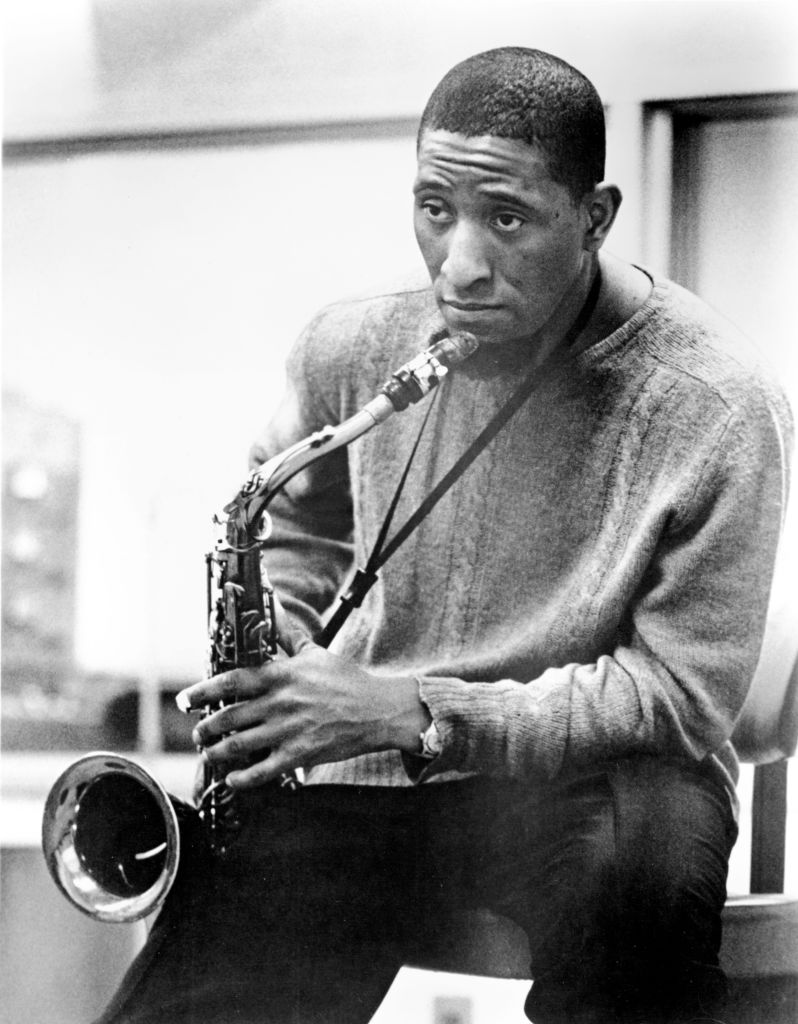
Saxophone colossus Sonny Rollins, one of the most important and influential figures in jazz history, has passed away. Rollins died at home in Woodstock, New York on Monday according to a statement from his family. No cause of death has been reported. Rollins was 95.
Walter Theodore Rollins, the son of immigrants from the Virgin Islands, was born in Harlem, and he started studying art and saxophone as a child. He graduated high school in 1948, and he began playing tenor sax professionally soon afterwards. He started out playing for the singer Babs Gonzales, but his career paused when he was arrested for armed robbery in 1950 and served a 10-month stint on Rikers Island. In the early '50s, Rollins had more trouble with the law because of his heroin addiction, but he also recorded with titans like Charlie Parker and Thelonious Monk. Rollins released his debut album Sonny Rollins With The Modern Jazz Quartet in 1953, and he composed a few future standards, recording them with Miles Davis on the 1954 album Miles Davis With Sonny Rollins.
In the mid-'50s, Rollins successfully kicked his heroin addiction through experimental methadone therapy. He recorded his 1956 album Saxophone Colossus with a band that included drummer Max Roach, and he combined jazz with calypso on compositions like "St. Thomas." On the title track of his 1956 album Tenor Madness, Rollins duetted with John Coltrane. Rollins' full-bodied, rhythmic, improvisational saxophone style inspired a great deal of scholarship at the time. In 1958, Rollins was one of 59 jazz musicians who posed for Art Kane's famous photograph A Great Day In Harlem, and he outlived everyone else in that photo.
Starting in 1959, Rollins took a two-year break from performing and recording, frustrated by what he saw as his own limited skills. He famously spent that time practicing on the Williamsburg Bridge's pedestrian walkway so that he wouldn't disturb his neighbors. Decades later, the New York City Council considered but ultimately rejected a bill to rename the bridge after Rollins. Rollins returned in 1962, signing with RCA and releasing a classic album called The Bridge. Over the next few years, he recorded with sidemen like Don Cherry and Herbie Hancock, released a collaborative album with his hero Coleman Hawkins, and scored the 1966 film Alfie.
Rollins took another two-year break from music in 1969, and he spent much of it in an ashram in India, studying yoga and meditation. After he returned, he was awarded a Guggenheim Fellowship, and he began exploring jazz-rock fusion, often earning the ire of that moment's critics. He performed for Jimmy Carter at the White House, and he played unaccompanied on The Tonight Show. He played overdubbed and uncredited sax parts for the Rolling Stones' 1981 album Tattoo You.
Rollins continued to tour and record into the 21st century. He lived near the World Trade Center, and he finally moved out of NYC when the 9/11 attacks forced him to evacuate his apartment. In 2005, he released the acclaimed LP Without A Song: The 9/11 Concert. His final studio album Sonny, Please came out in 2006. He established his own Doxy label and released recordings of a number of his live performances. He was awarded the National Medal Of Arts in 2010, and he retired from performing four years later.
Below, check out some of Sonny Rollins' work.