
August 14, 2021
- STAYED AT #1:7 Weeks
In The Number Ones, I'm reviewing every single #1 single in the history of the Billboard Hot 100, starting with the chart's beginning, in 1958, and working my way up into the present. The column is now biweekly, alternating with The Alternative Number Ones on Mondays. Book Bonus Beat: The Number Ones: Twenty Chart-Topping Hits That Reveal the History of Pop Music.
In 2024, The New York Times profiled Mk.gee, an LA musician with a warped, prismatic take on '80s radio-rock. Mk.gee was a fast-rising cult star, and the Times interview broke the story that he was hard at work with a surprising new collaborator: Justin Bieber.
At the time, Bieber was in the wilderness. He hadn't released an album in a few years, and he seemed to be drifting further from the spotlight, popping off at paparazzi in videos that were both slightly concerning and extremely meme-ready. Bieber sold off his music catalog and split from his longtime manager Scooter Braun. He posted a lot of cryptic messages online. TMZ put together a Hulu documentary inferring that Bieber's pastor had become his cult leader and that he was on the verge of growing broke. None of that mattered. To Mk.gee, Justin Bieber simply was pop music.
Here's how Mk.gee put it two years ago: "Anything that comes out of his mouth: That’s pop music. You can really do pretty wild stuff behind that, just because it represents something." I think about that quote all the time. Mk.gee was right. In his attempt to escape the kind of pop stardom that he once embodied, Bieber holed up with musicians like Mk.gee and his closest collaborator, the R&B desconstructionist Dijon. There was no guarantee that this music would even see release, but when Bieber finally released his first Swag album last year, the stuff that he made with Mk.gee and Dijon really did resonate as pop music. We'll get into that further down the column.
Before his wilderness years, Bieber had a run where he could turn practically any song into a giant hit simply by jumping on a remix. That's what he did in 2017, singing on Luis Fonsi and Daddy Yankee's Spanish-language sensation "Despacito" and helping it become one of the biggest hits of all time. By 2021, Bieber wasn't quite in that imperial-era zone anymore, but he still had plenty of juice. That spring, he released "Peaches," a chart-topper that featured alt-R&B singers Daniel Caesar and Givēon. A little while after that, Bieber appeared on a track with a teenage Australian sing-rapper who bore a striking similarity to a much younger version of Justin Bieber.
As I write this, Justin Bieber hasn't quite landed a #1 hit since he appeared on The Kid Laroi's 2021 single "Stay." Over the past year, though, Bieber has proven himself to be part of the pop firmament, a nostalgic favorite for the generation of young people who watched him grow up right along with them. Bieber has been in this column a great many times, and there is every chance that he'll return. For now, though, this is a goodbye. When it comes to the little pop-history keyhole that this column examines, nobody stays forever.
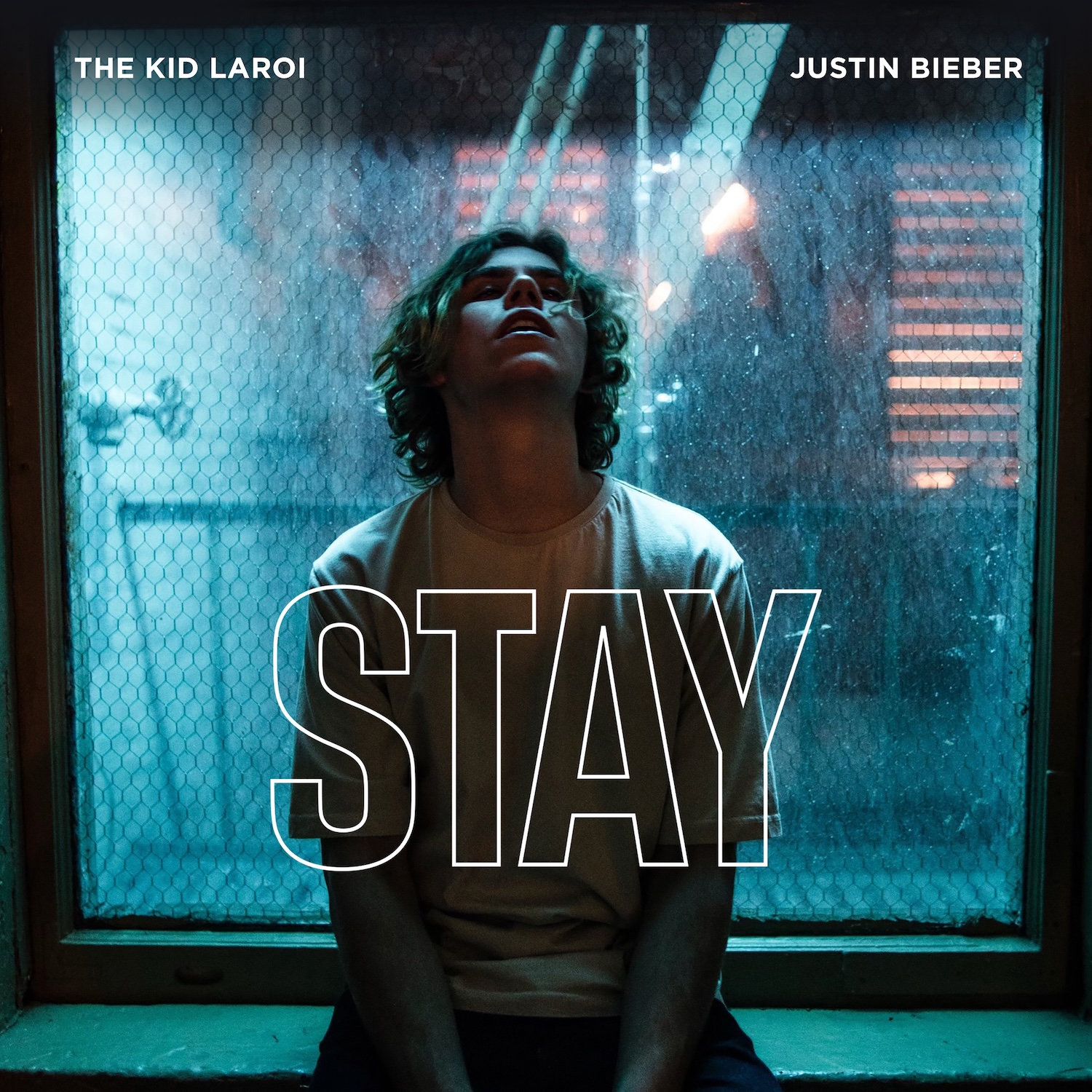
"Stay" really isn't Justin Bieber's song, so we should talk about the other guy. The Kid Laroi, the other guy, celebrated his 18th birthday just a couple of days before "Stay" became his first and only #1 hit. Laroi was pretty new to the pop landscape, but he'd arrived as a protege of Juice WRLD, the Chicago emo-rapper who died of an accidental drug overdose in 2019, at the age of 21. (Juice WRLD's two highest-charting singles, 2018's "Lucid Dreams" and the posthumous 2020 Marshmello collab "Come And Go," both peaked at #2. "Lucid Dreams" is an 8, and "Come And Go" is a 7.) Before his sudden passing, Juice WRLD struck me as a more pop-friendly version of the underground SoundCloud-rap figures who'd come up slightly before him. The Kid Laroi, in turn, struck me as a more pop-friendly version of Juice WRLD.
Charlton Kenneth Jeffrey Howard comes to us from the Sydney suburb of Waterloo. (When the Kid Laroi was born, Beyoncé and Jay-Z's "Crazy In Love" was the #1 song in America. In Australia, it was R. Kelly's "Ignition" remix. Moving on!) Laroi's father is an Australian record producer, and his mother had at least some experience as a music manager. When Laroi first came along, I wrongly assumed that he was white. Instead, he's part Aboriginal on his mother's side, and he takes his stage name from the Kamilaroi people from whom he's descended.
The Kid Laroi went to private and performing-arts schools as a child, but he dropped out to make music. For a little while, he lived in public housing, and he posted his debut mixtape 14 With A Dream on SoundCloud in 2018. A year later, the podcast No Jumper did a half-hour YouTube video where Laroi took the hosts "inside the 'ghettos' of Australia." He looks like a tiny baby in that video. At the time, he was recording with Australian rappers and trying to get American rappers' attention whenever they came through town, even if that meant waiting outside of a hotel until one of them showed up.
At 14, Laroi signed a demo deal with Sony's Australian branch. At 15, he signed with Grade A Productions, the label founded by the Chicago drill rapper Lil Bibby. Grade A's flagship artist was Juice WRLD, so Bibby put the two of them together. Laroi opened for Juice WRLD when he toured Australia in 2018 and 2019. Around that time, Laroi moved to California and lived in Juice WRLD's house for a little while. His music was already finding an audience online, but Laroi got his first real boost in America when his Juice WRLD collaboration "Go" came out in 2020, after Juice WRLD's passing. ("Go" peaked at #52 and eventually went triple platinum.)
"Go" was the lead single from Fuck Love, the mixtape that Laroi released in summer 2020. The tape debuted at #8 on the album charts, and that was when I started paying attention. At the time, I wrote that Laroi was "the sad-rap Silverchair" and that his ascent might mark the moment that the singsong SoundCloud-rap wave drifted into corniness, which is where grunge was headed when the adorable Australian teenagers of Silverchair arrived in the mid-'90s. That SoundCloud-rap style has definitely slipped from those commercial heights in the years since then, but I don't know if Laroi really had anything to do with that, since Laroi was already moving away from anything that anyone might call rap.
In some ways, the Kid Laroi's route to fame doesn't look all that different from the one that fellow Sydney rapper and former Number Ones artist Iggy Azalea took seven years earlier. Just like Iggy Azalea, Laroi moved to the US, worked with established Black American mentor figures, and delivered lyrics without much trace of Australian accent. But unlike Iggy Ig, Laroi never went over-the-top with half-parodic exaggerations of American rap tropes. Instead, he seemed fully sincere. Also, he had TikTok working as a career catalyst, and the context-warp effect of TikTok turned out to be plenty hospitable for Australian rappers. Earlier in 2021, for instance, the Sydney rapper Masked Wolf's 2019 song "Astronaut In The Ocean" became a random-ass TikTok hit and climbed all the way to #6 on the Hot 100. (It's a 7.)
The Kid Laroi almost certainly faced some barriers as an Australian rapper in the US, but I don't know what they were. He still enjoyed a pretty seamless ascent, thanks in part to that Juice WRLD association. The same summer that he released Fuck Love, Laroi appeared on "Hate The Other Side," a song from Juice WRLD's posthumous album Legends Never Die that also featured former Number Ones artist Polo G and big-deal dance DJ Marshmello. (Marshmello's two highest-charting singles, the aforementioned Juice WRLD collab "Come And Go" and the 2018 Pompeii collab "Happier," both peaked at #2. "Happier" is a 6.) "Hate The Other Side" became Laroi's first top-10 hit on the Hot 100 when it peaked at #10. (It's a 7.)
In November 2020, the Kid Laroi released an expanded edition of Fuck Love that's got a lot of extra songs without being substantively different. It's mostly post-breakup rage-venting, something that the era's emo-rappers picked up from the actual emo bands that influenced them. All the big artists were just mad at girlfriends and ex-girlfriends all time time. Even when it wasn't actively sinister, it sounded exhausting. One track pushed Laroi a lot further in the pop direction: "Without You," a bummed-out acoustic duet with past and future Number Ones artist Miley Cyrus. Laroi even joined Cyrus on Saturday Night Live when she was the musical guest and Elon Musk was the host. Again: Moving on! "Without You" became a real-deal hit that peaked at #8, giving Laroi some serious momentum. (It's a 7.)
Early in 2021, Laroi appeared on Justin Bieber's "Unstable," a deep cut from his Justice album. (It peaked at #62.) Laroi said that the collaboration came together when Bieber DM'ed him on Instagram to tell him, "You got the sauce." Before that, though, Laroi started working on "Stay," a song that would become a much bigger Bieber duet. The track, which Laroi first teased in a September 2020 Instagram post, came out of a recording session with a bunch of big-deal pop producers who were all near the top of their respective games at that moment.
Blake Slatkin was one of the producers of 24kGoldn and Iann Dior's "Mood," a difficult-to-categorize song that shares a lot of DNA with "Stay," and he held the session at his house. He was there with Omer Fedi, the Israeli producer who'd also worked on "Mood" and on Lil Nas X's "Call Me By Your Name." Cashmere Cat, the Swedish dance-pop experimenter who's been in this column because he had a hand in Camila Cabello and Young Thug's "Havana," also got involved. (Cashmere Cat's only Hot 100 hit as lead artist, the 2015 Ariana Grande collab "Adore," peaked at #93.) And then there was Charlie Puth, one of these guys who can credibly claim the mantle of "pop star" even though he often seems more like a cult favorite. Puth has been in this column for an all-time smash, but certain people still maintain that he should be a bigger artist.
The way Laroi tells it, some of them were at Slatkin's house, just kind of noodling around, when Puth played the central "Stay" melody on keyboard. Laroi loved it, so they put the track into ProTools and started developing it. A few months later, Laroi decided that he wanted to get Justin Bieber on the song, so he drove over to the studio where Bieber was working and took it straight to him. Laroi told NME, "He just went into the booth and just freestyled the shit off top; it was the craziest shit. I was like, 'Yo, this guy’s out of his mind.'"
The reality was probably a little more complicated than these little spur-of-the-moment jam sessions that Laroi describes. "Stay" has nine credited songwriters: Laroi, Bieber, Puth, Cashmere Cat, Blake Slatkin, Omer Fedi, and three other guys. Both members of FnZ, the Australian production duo of Michael "Finatik" Mulé and Isaac "Zac" De Boni, have writing credits on "Stay." Those guys started off in the blog-rap trenches in 2009, doing a lot of work with people like Denzel Curry and A$AP Rocky; we'll see their work in this column again. Another Australian producer also got songwriting credit: Subhaan Rahman, known professionally as HAAN, a regular Laroi collaborator. "Stay" is a fairly simple and straightforward track, and we might never know who did what on it. But you can tell it's a true product of the song machine if all these people contributed enough to get a piece of it.
"Stay" is a short and airless track, and it doesn't really belong to any particular genre. In the right light, you could hear it as rap or emo or new wave or the internet-damaged mutation that's come to be known as hyperpop. It's got an '80s-style midtempo synth-preset gallop that reminds me of the Weeknd's "Blinding Lights," but without quite so many layers of ear-candy. It's got Auto-Tune smeared all over the singers' voices as the two of them, Laroi especially, dip into the deadpan singsong so common among that moment's young quasi-rappers. Mostly, though, "Stay" is just a big, sad, simple pop song about knowing that you're a fuckup and feeling powerless to change that.
On his "Stay" chorus, the Kid Laroi laments that he's been leading someone on but that he'd be useless without this person: "I do the same thing I told you that I never would/ I told you I'd change, even when I knew I never could." On his opening verse, he sings about waking up and realizing that he's still drunk from the night before, a situation that can only cause the most visceral and physical kind of regret. (If you've never woken up drunk, I don't recommend it.) Bieber, more audibly emotional but less openly regretful than Laroi, chips in to sing sweet nothings about his own devotion. He's got the most memorable line of the song, if only because the wording is awkward enough to stick in my head: "Ain't no way that I can leave you stranded/ 'Cause you ain’t ever left me empty-handed." Both of them have the same message. They'll be fucked up if you can't be right here. They need you to stay, need you to stay, yeaaah.
"Stay" is an exceedingly generic pop-song title that describes an elemental need, and that title has been used for some great ones. On Sugarland's 2007 single "Stay," for instance, Jennifer Nettles plays the role of the other woman, ripping out her guts while begging some cheating asshole not to go back to his wife. (Sugarland's "Stay," a #2 hit on the country chart, peaked at #32 on the Hot 100.) Rihanna and Mikky Ekko's 2013 song "Stay" is less specific in its storytelling, but its spare arrangement and Rihanna's raw delivery make for some real emotional gutpunch shit. Did you ever hear the Low cover? Holy shit. (Rihanna's "Stay" peaked at #3. It's a 10.)
The Kid Laroi and Justin Bieber's "Stay" can't possibly hope to live up to the Sugarland and Rihanna songs with the same title. It's just too lightweight. I never get the sense that either singer has a lot on the line. When they talk about their faults and their needs, those things sound like idle thoughts flitting across their brains. Even Laroi's wordless moan ("ahhh-wuaaahh") isn't as articulate as a wordless moan should be. Instead, this "Stay" efficiently breezes right by me.
This "Stay" opens with a few halting piano notes before the chorus, which is mostly monotone except for a few random falsetto notes thrown in to keep things interesting. The Kid Laroi's verse is a kind of syncopated chant that doesn't really count as singing or rapping. When Bieber arrives, he plays around with the cadence, finding his own little pockets and generally making everything sound a whole lot smoother. It's what he does. Anything that comes out of his mouth: That's pop music. Bieber sounds effortless, which isn't necessarily what you want on a song about desperation.
There are lots of nice little production tricks on "Stay": the drum fill before the chorus, the clicking guitars on the second chorus, the big climactic staccato synth-notes. By the time the song ends, it really builds up into something sleek, but it doesn't stick around long enough for that sleekness to really register. If "Stay" had a great bridge, I could imagine the song ascending to a different level, but it doesn't have a great bridge. It doesn't have any bridge at all — surprising, considering how many professional song-machine types worked on it. Instead, it just cuts itself off very quickly, ending after two minutes and 21 seconds. This was conventional wisdom at the time; SoundCloud rap hits could easily clock in at 90 seconds. But when you're dealing with a relatively conventional pop song like "Stay," the bridge is important.
Laroi and Bieber shot a fancy "Stay" video in downtown LA. It's the two singers moving through a world of frozen people, and it must've been expensive to shut down enough streets to make it possible. But the video never really stays with me, and neither does the song itself. "Stay" was a legitimately huge hit, a seven-week chart-topper that eventually went platinum 11 times over, but it never ascended to the level of a cultural phenomenon. Instead, I felt like I heard the song lots of times without even registering that it was playing. It's so short, and it slides between genre categories so fluidly, that it can slip right past you on a playlist. Before you have time to make up your mind whether you like it or not, it's over, and the next song has begun.
"Stay" came out in July 2021 and debuted at #3. It took a month to finally outmuscle the BTS songs that held down the #1 spot for most of that summer. BTS racked up all those weeks at #1 mostly because of fans buying the singles. People didn't buy the "Stay" single in remotely comparable numbers, but they streamed the song a whole lot more. Radio got on board with "Stay," too; it even got heavy airplay on adult contemporary stations.
"Stay" never had a firm hold on the #1 spot, and its run at the top kept getting interrupted by other songs, including one final week for BTS' "Butter" in September. But "Stay" stuck around for months, and it kept returning to the top spot until mid-October. Anytime there wasn't a big, splashy single ready to debut at #1, "Stay" seemed to get another week of supremacy. Laroi and Bieber probably gave the song a bit of a boost when they performed it at the VMAs that September.
The Kid Laroi has never had another song that did anywhere near as well as "Stay." "Stay" appeared on yet another deluxe edition of the Fuck Love mixtape and finally pushed that tape to #1 on the album charts, more than a year after its initial release. Fuck Love ultimately went triple platinum. Laroi's follow-up single "Thousand Miles" peaked at #15. That was the lead single from The First Time, which was sold as Laroi's "debut album" even after all those editions of Fuck Love. Labels love to do that. They love to call something a "debut album" when someone has already released multiple album-length records. In this case, it didn't work. The First Time stalled out at gold.
The Kid Laroi hasn't faded away. He's still in the mix. "Too Much," a First Time single with BTS member Jung Kook and UK rapper Central Cee, peaked at #44 in 2023. (Jung Kook will appear in this column as lead artist. Central Cee's highest-charting single, the very fun 2024 Lil Baby collab "Band4Band," peaked at #18.) Laroi made his acting debut in the extremely shitty 2024 horror-comedy Y2K as Soccer Chris, a popular high-school asshole who dies via microwave. (I really wish that movie was any good at all, but it's not.) For a while, Laroi dated Tate McRae, an artist who will eventually appear in this column, and the two of them reached #43 with the 2025 duet "I Know Love."
Earlier this year, the Kid Laroi released Before I Forget, which is officially his sophomore album. I don't even remember that one coming out, and the rest of America seemingly didn't really notice, either. Before I Forget debuted at #2, but only one of its singles has even touched the Hot 100: "Rather Be," a collaboration with fellow Australian sing-rapper Lithe, which only made it to #77. So Laroi has fallen a long way since "Stay," but he's still just 22 years old, and he looks like he's maybe 17. Life is long, and I won't be surprised if he returns to the spotlight sometime.
Justin Bieber is a different story. Bieber can't avoid the spotlight even when that seems to be the only thing he wants to do. After a few years of relative radio silence, Bieber returned with the 2025 surprise album Swag, a step into glitchy alt-R&B that felt like a personal statement and a commercial comeback. I don't think Swag is a great album or anything, and its months-later follow-up Swag II definitely felt like too much Swag, but the whole mini-run was still a triumph on pretty much every level. "Daisies," a song that Bieber recorded with a cast of collaborators that included Mk.gee and Dijon, peaked at #2 without a music video or a proper single push. (It's a 9.)
Earlier this spring, Justin Bieber headlined both Coachella weekends, and those sets were big, big deals. Tickets sold for vast sums of money. Millions of people watched online. Bieber devoted most of those Coachella sets to his Swag albums, but the most talked-about portion was the bit where Bieber sat at a laptop and pulled his old songs up on YouTube, leading nostalgic full-crowd singalongs of his past hits. On the second Coachella weekend, Bieber hit play on "Stay," and the Kid Laroi popped up as a surprise guest.
From a certain perspective, it's a little sad to think of the Kid Laroi as a human prop in Justin Bieber's nostalgic Coachella mini-set when he's still too young to legally rent a car. But on the internet, there is no past and no future. Time does not move forward. If anything, that Coachella cameo is a sign that Laroi still has a foothold in the cultural consciousness, and that's a valuable thing to have. As for Justin Bieber, he hasn't had another #1 hit since "Stay," but I bet we'll see him in this column again.
GRADE: 6/10
BONUS BEATS: Here's the slowed-down, echo-heavy "Stay" cover that indie-ish singer-songwriter Girl In Red released as a Spotify Single in 2021:
The Number Ones: Twenty Chart-Topping Hits That Reveal The History Of Pop Music is out now via Hachette Books. I need to to buy, need you to buy, yeaaah.