
April 11, 1992
- STAYED AT #1:4 Weeks
In The Alternative Number Ones, I'm reviewing every #1 single in the history of the Billboard Modern Rock Tracks/Alternative Songs, starting with the moment that the chart launched in 1988. This column is a companion piece to The Number Ones, and it's for members only. Thank you to everyone who's helping to keep Stereogum afloat.
The meow always gets me. It's not even a meow, exactly. It's more of a pay-attention-to-me whoop. Have you ever met a particularly needy cat? I've got one of them. My family currently has way too many cats. We started fostering them during the pandemic, and there was no way my kids were ever going to be OK with the idea of not keeping those foster cats permanently. One of those cats, Birdie, is a diva type who always wants attention. She'll walk into the room and kind of screech at you until you start petting her, and then she'll bat at your hand when you stop petting her. When the Cure's Robert Smith makes the cat noise on "High," he kind of sounds like Birdie.
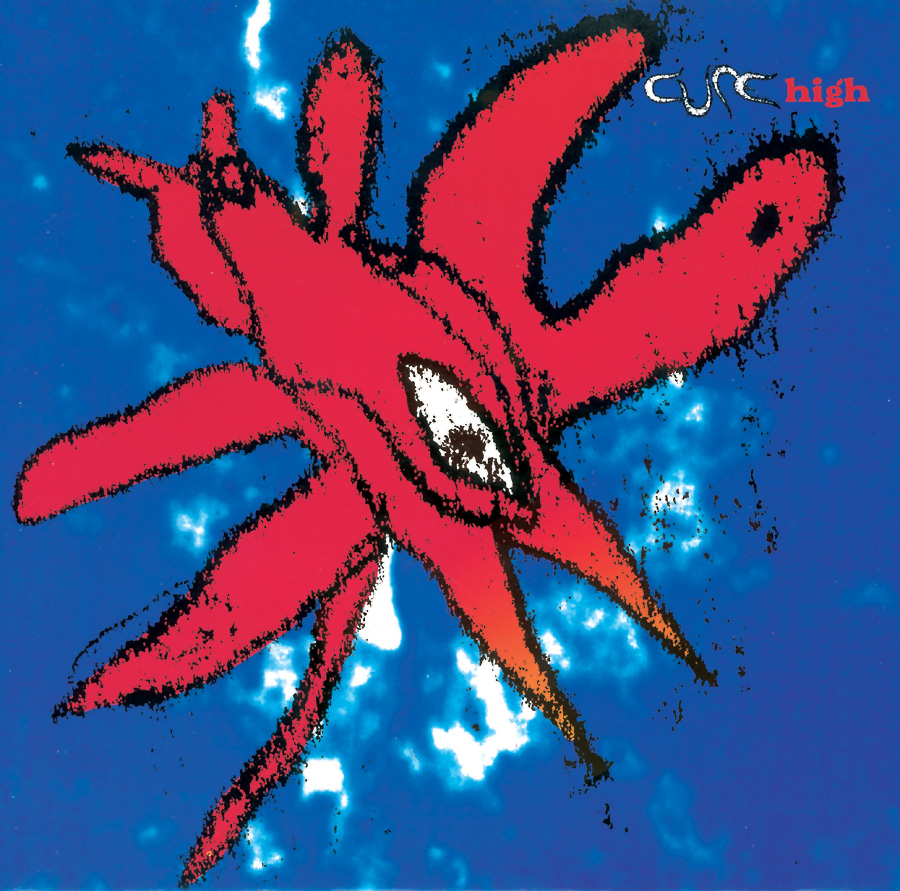
"High" is an aggressively silly jangle of a song, and its silliness is never more aggressive than on that meow moment. Here's the line: "When I see you kitten as a cat! Yeah, smitten as that! I can't get that small." After the "kitten as a cat" bit, Smith lets loose with that cat-yelp, as if to reassure you that yes, you did just hear him correctly, he really said "kitten as a cat." (To the best of my knowledge, "kitten as a cat" is not an expression that's ever been used anywhere other than this one Cure song.) Robert Smith had meowed on record before "High"; there's a whole lot of that on the Cure's 1983 classic "The Lovecats." But that meow moment on "High" still works as a signal: We're in Wacky Cure territory here.
In the early '90s, critics didn't seem to acknowledge that Wacky Cure mode ever existed. The Cure's public profile was too defined, the band's place in the world too predetermined. The Cure were a sad band. That was how people knew them. They dressed like hobo mimes, and so did their fans. Robert Smith moaned about life's injustices as he and his bandmates put together moody-goop soundscapes that sounded as sad as his lyrics read. This was a popular conception, and I think it's one of the reasons that the Cure didn't quite get the critical respect that a masterpiece like 1989's Disintegration should've afforded them. In the SPIN review of Wish, the Cure's 1992 follow-up, the lede is literally this: "Sob, sob. Whimper, sniff."
The Cure's gloom-rock perception went way beyond rock critics. Consider a couple of unofficial cinematic depictions of Robert Smith. Two years before the Cure released "High," Johnny Depp played Edward Scissorhands, a lonely and macabre misfit trapped in suburbia, unable to express his love in ways that made sense to the people around him. Edward Scissorhands was an obvious stand-in for director Tim Burton, but Burton still goes to the barber and tells then to give him the Robert Smith.
Two years after "High," Brandon Lee played the Crow, a sad expressionist wraith who plays guitar solos on rooftops and who can only mourn his lost love through the medium of vigilante murder. The Crow came out in a changing mall-goth era, and its classic soundtrack album is full of industrial growlers. But the Cure still contributed the opening song to that soundtrack; their song "Burn" scores the scene of Lee putting on his makeup for the first time. Both Edward Scissorhands and the Crow are styled in stringy black hair and pale makeup, and both seem pretty clearly modeled on Robert Smith. This was how the world saw the Cure.
People really thought they had the Cure figured out. They thought wrong. You can't be the saddest band on the planet when you're talking about "kitten as a cat" and then making cat noises. It doesn't compute. Too often, we fall into the trap of judging our mental image of a band's fans rather than the band itself. The Cure's giddily playful edge went all the way back to the band's beginnings. They made plenty of dark, immersive music -- that's most of Disintegration -- but they made plenty of other stuff that's bright and ridiculous. Wish has a fair amount of both.
Wish didn't come out of a particularly dramatic time for the Cure, except to the extent that every Cure record comes out of a dramatic time. Disintegration was a luxuriously heavy-hearted sprawl, and Robert Smith openly spoke about it being the last Cure album, which it obviously wasn't. Smith's relationship with his old childhood buddy Lol Tolhurst, the only founding member besides him left in the Cure, was on its last legs. After the album's release, Smith fired Tolhurst, and Tolhurst launched a lengthy and doomed legal battle against his old band.
Disintegration proved to be an accidental zeitgeist moment. In America, Disintegration went double platinum, turned the Cure into an unlikely stadiums-and-arenas act, and launched a gigantic pop hit. ("Lovesong" stalled out at #2 on the Modern Rock chart, but it also made it to #2 on the Hot 100, with only Janet Jackson's "Miss You Much" keeping it out of the top spot. The Cure and Janet Jackson, man. America had good taste that week. "Lovesong" is a 9.)
It's always hard to follow a huge moment like Disintegration, and the Cure slowed from from their previous album-per-year pace, taking some time to fart around. Whenever they did anything, American alternative radio treated it as an event. The Cure reached #1 on the Modern Rock chart first with the Disintegration banger "Fascination Street," and they they got there again with "Never Enough," the one new song from 1990's stopgap remix album Mixed Up. Even a pretty-shitty 1990 cover of the Doors' "Hello I Love You" got alt-rock play, peaking at #6. (It's a 4.)
The original plan for Wish, the Cure's eagerly anticipated Disintegration follow-up, was for the band to release two albums -- one relatively normal record and another of expansive, spaced-out instrumentals. But when the members of the Cure settled into Richard Branson's stately Manor Studios, where they lived and worked while recording Wish, they found that it was just too much work. They'd rather fuck around and make one record instead. Robert Smith told SPIN, "It's been really good because we've spent much of our stay actually going to pubs and cycling and stuff. We weren't in the control room all the time thinking whether a certain note should go 'deet' or should it go 'doot.'" If you are now picturing Robert Smith riding a bike in full makeup and teased hair but wearing, like, bright yellow lycra biker shorts, then welcome to the club.
Apart from one song -- a song that is not "High" -- Wish mostly has a rep as a merely pretty-good Cure album. In retrospect, though, that's probably the best thing that it could've been. People were going to be disappointed with whatever came after Disintegration, a miraculous one-off that also happened to be a huge hit. The temptation is always to overthink the next move, and the Cure basically avoided that. Rather than the gimmicky two-albums thing that other big acts like Gun N' Roses and Bruce Springsteen pulled in the early '90s, the Cure fit the whole duality-of-the-Cure thing onto one record, and they managed not to let that one record sound to labored or weighed-down.
There's a moment on "End," the last song on Wish, where Robert Smith sings about how teenage angst has paid off well and now he's bored and old: "I think I've reached that point/ Every wish has come true/ Tired, disguised oblivion is everything I do." And then: "Please stop loving me/ I am none of these things." So the guy who was famous for singing about being depressed was now singing about being depressed that he's too famous for singing about being depressed. But that's a pretty normal routine for rock stars who aren't particularly comfortable with their rock stardom, and Smith was able to handle it better than most.
"End" is a seven-minute dirge, and so is "Open," the album opener about being too drunk too often. But "Open" leads directly into "High," a joyously ridiculous love song. There are plenty of other joyous moments scattered through "Wish," including the wild quasi-funk of "Wendy Time" and the aforementioned best-known song, which will appear in this column soon enough. The Cure wanted to make a record that they could play live without too much trickery, and they documented their Wish tour with two different 1993 live albums. They got their sonic layers out of guitar effects pedals, went light on keyboards, and generally made sure they sounded like a band. The Cure recorded Wish with longtime co-producer David Allen, and the sessions were relatively free of drama. A bunch of band members left soon after the LP's release, but when they were actually making the record, they kept things functional.
All of the members of the Cure have songwriting credits on every Wish track, which was standard operating procedure for the band. In the case of this record, though, they might've all earned it. Robert Smith, for instance, has always been quick to give credit for "High" to bassist Simon Gallup. On Twitter two years ago, Smith wrote, "I first heard 'High' in Simon's kitchen... a hissy but perfectly formed instrumental cassette demo... I knew straight away it had to be the Cure's next single."
I FIRST HEARD ‘HIGH’ IN SIMON’S KITCHEN… A HISSY BUT PERFECTLY FORMED INSTRUMENTAL CASSETTE DEMO… I KNEW STRAIGHT AWAY IT HAD TO BE THE CURE'S NEXT SINGLE #TIMSTWITTERLISTENINGPARTY #WISHLISTENINGPARTY
— The Cure (@thecure) November 25, 2022
"High" is a tingling blast from its opening seconds -- the sound of windchimes giving way to a sparkling guitar riff so blissfully jangly that it might as well be the Sundays. Gallup's bassline is catchy and propulsive like prime New Order, and everything around it pulses with the same sense of headlong joy. "High" doesn't just sound happy. It sounds wildly, dizzily spun-out, as if on such a shimmering sugar rush that you can already tell that the comedown is going to be rough.
In the press kit for Wish, Robert Smith said that his "High" lyrics are "about stopping to think about what you’ve got rather than always wanting something more." Smith had been in love with the same woman, Mary Poole, ever since high school, and they got married in 1988. On "High," Smith sings about all the times that he could've easily fucked up and lost someone, which you can imagine would be an occupational hazard for a presumably monogamous rock star: "It makes me bite my fingers through to think I could've let you go." When he sings about how this person makes him feel, he goes into a full-on psychedelic reverie: "When I see you sky as a kite, as high as I might, I can't get that high." In the song's video, he makes that line literal, strapping himself to a kite and floating up above the clouds, while the rest of the band plays on some kind of airship.
Robert Smith wasn't a stranger to acid, and there's a charming psychedelic loopiness to his "High" lyrics. He plays around with lyrics, coming up with idioms that don't follow grammatical rules. You might've already noticed that "sky as a kite" is another made-up saying. Smith also describes this person as being "sticky as lips and licky as trips" and "happy as a girl that swims in a world of a magic show." You get what he's saying. It's like "kitten as a cat" -- all the more endearing for its nonsensical euphoria. For someone known as a singer of sad songs, Robert Smith sure knows how to channel the uplifting awe of love -- not just the early honeymoon-stage blush of falling in love but also the enduring warmth of staying in love. What a romantic. What a big softie.
"High" isn't the biggest hit from Wish, nor is it the catchiest song. I didn't get "High" at all when I was 12. Wish was the first Cure record to come out when I was an active listener of alternative rock radio, and this song was not what I was looking for. I was tuning my local modern rock station to hear fuzzed-out guitar riffs, not the mime guy singing about "kitten as a cat." I didn't get the Cure until a few years later, when a friend passed me a copy of Staring At The Sea in my high school cafeteria. When I was 12, the Cure seemed like the kind of impenetrable, moany college rock that simply did not speak for me. They were for older people, and "High" was not going to change my mind. But "High" still resonated with the people who wanted to hear it, and it resonates with me now.
Thanks to the success of Disintegration, there was always going to be a lot of anticipation for Wish, which topped the UK chart and debuted at #2 over here. In the UK, "High" was a #8 pop hit, and it also went top-10 in Australia, Ireland, and a few other countries. In Portugal, it went all the way to #2. "High" didn't have that kind of impact over here, but it still made it to #42 on the Hot 100 -- higher than any previous Cure single other than "Just Like Heaven" or "Lovesong." On alternative radio, the grunge era was still getting started, and the Cure didn't need to worry about a new generation of sad-song singers knocking them off quite yet. We'll see the Cure in this column again soon, and when we do, they'll still be in Wacky Cure mode.
GRADE: 8/10
BONUS BEATS: Here's the fired-up "High" cover that the Wedding Present recorded for a 2009 Cure tribute album: